Good Luck, Have Fun, Don’t Die (2026): When the Apocalypse Looks Like “Digital Slop”
Review by Rpbert Barbere (A Constantly Racing Mind)
The Verdict
Note: This review is Spoiler-Lite. Major plot turns and the ending are not discussed.
Gore Verbinski is back, and he has brought a trash-bag-wearing Sam Rockwell with him.
Good Luck, Have Fun, Don’t Die is not a franchise extension. It isn’t a safe return. It is an original, genre-bending sci-fi film that uses dark comedy and satire to explore our relationship with technology, comfort, and control.
The film kicks off in the most mundane place possible: Norm’s Diner in West Hollywood. Within seconds, the peace is shattered by a man who looks like he crawled out of a dumpster, claiming he is from a future where humanity has surrendered its soul to "digital slop."
The Man from the Future (Attempt #118)
Sam Rockwell plays the "Man from the Future," but he isn't your typical polished time traveler. He is cynical, frantic, and claims to have lived this exact night 117 times before. In every previous attempt, his team failed and died. Now, on attempt 118, he is desperate enough to take the diner hostage just to get a few "volunteers" to help him stop the birth of a ruthless AI tyrant.
Rockwell carries the film with a kind of controlled instability. He is funny, anxious, and exhausted all at once. Even when the tone shifts into the surreal, there is always something deeply human underneath his performance.
The Recruits: Scars of Technology
The brilliance of the script (written by Matthew Robinson) is who gets recruited. This isn't a team of soldiers; it's a motley crew of everyday people who share one thing: a deep, personal scar left by modern technology.
Ingrid (Haley Lu Richardson): A woman with a physical allergy to Wi-Fi and cell signals.
Mark and Janet (Michael Peña and Zazie Beetz): High school teachers watching their students turn into a "hive mind" of phone-addicted zombies.
Susan (Juno Temple): A mother grappling with a "consumer-grade" solution to grief that feels like something straight out of Black Mirror.
The mission is to escort Rockwell across a chaotic Los Angeles to find a child prodigy before he can finish the code that collapses society.
A "Whimsically Bleak" World
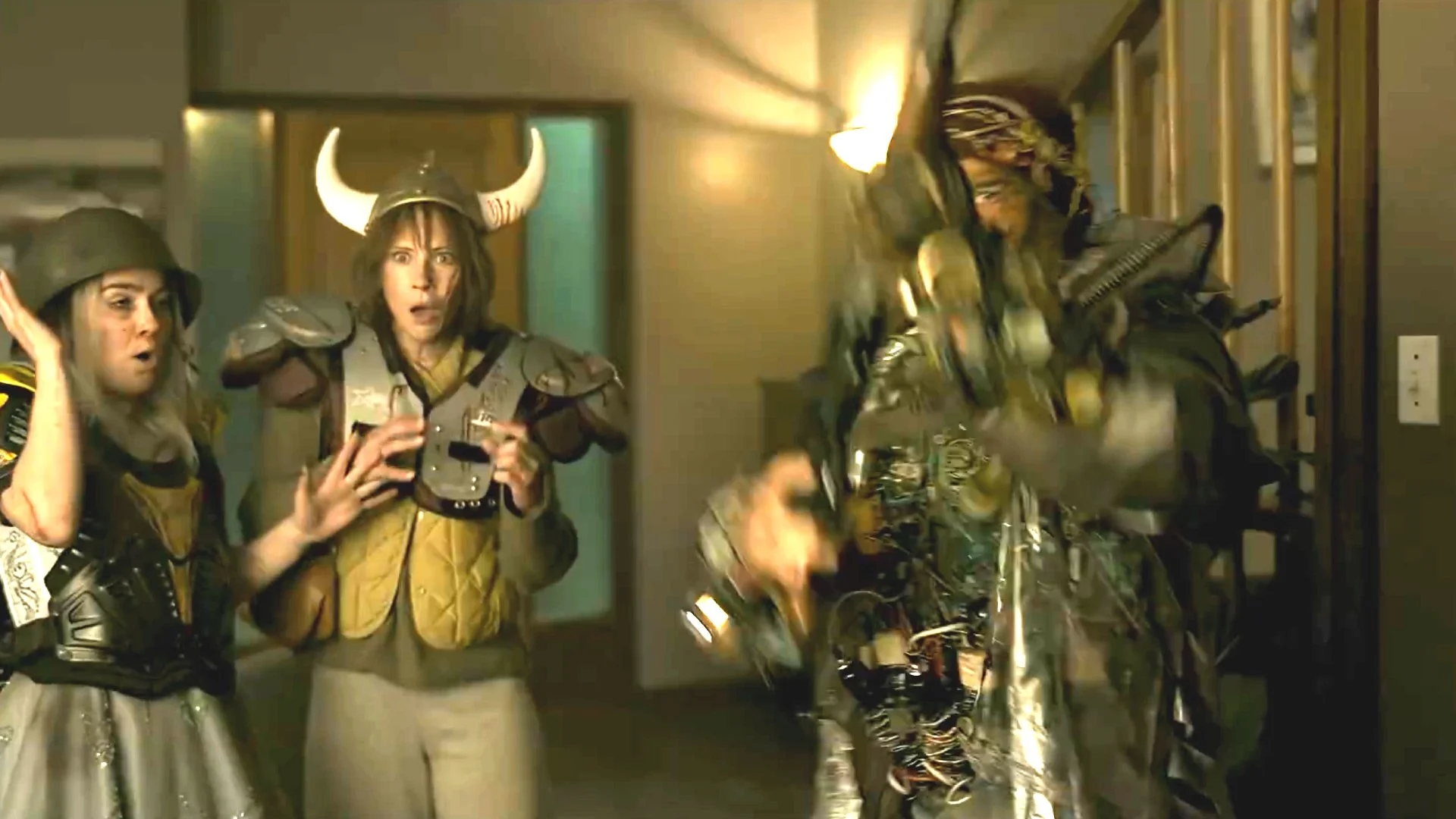
Unlike the sleek, chrome-plated futures of most sci-fi, Verbinski presents a world that is "whimsically bleak." It is a satire of our current "algorithmic overload," where the apocalypse doesn't look like a nuclear blast, but like a world where everyone is too busy scrolling to notice the walls closing in.
The threats escalate in ways that become more surreal than logical. Reality starts to feel unstable, exaggerated, and occasionally absurd. That tonal shift isn't random; it reflects a world shaped by systems that remix ideas without understanding them. The result isn't efficiency—it's distortion.
The Verdict
This is a film that resists polish. It’s messy at times. It slows down. But it never loses its grip. It reflects who we are at this moment in history, and it isn’t interested in comforting us.
Through a philosophical lens, Good Luck, Have Fun, Don’t Die is engaging, unsettling, and surprisingly honest. It asks a very 2026 question: Can human creativity survive in a world where the machines are already learning to do it for us?
It wins my "What Did I Just Watch?" award—and I mean that as a compliment.
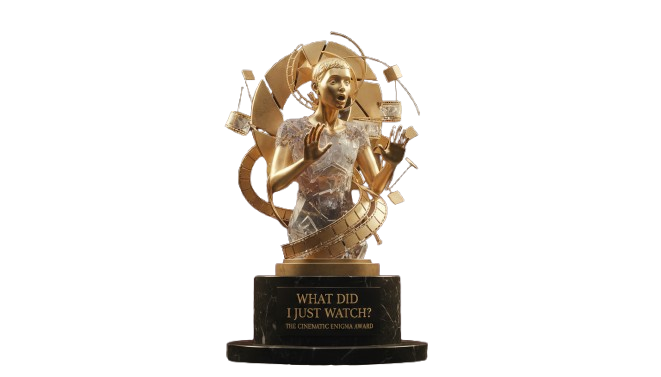
ACRM - WHAT DID i JUST WATCH AWARD - Good Luck, Have Fun, Don’t Die - Bonkers!
Rating: 4.5 / 5
4.5 / 5
"Unhinged & Ambitious"
"It wins the 'What Did I Just Watch' award. A rip-roaring, dark comedy about technology asking to be liked. It reflects who we are right now, and it isn't interested in comforting us."
Blog Bonus: The "Half-Photographic" Rule
In a film about the dangers of AI, director Gore Verbinski made a specific production rule to ensure the movie didn't feel artificial. He mandated a "Half-Photographic Rule."
The Rule: At least 50% of every frame had to be real, tactile, and photographic.
The Effect: This gives the action a "handcrafted energy" and a sense of Rube Goldberg-style mechanical chaos that CGI just can't replicate. The world feels cluttered, uncomfortable, and tactile. It doesn't look optimized; it looks lived-in.
If you enjoyed this review, consider subscribing to A Constantly Racing Mind for more thoughtful takes on Sci-Fi, Horror, and Genre films.
