Rare Exports: The "Anti-Christmas" Classic That Reclaims the Dark Roots of Winter
Rating: 9 / 10 Review by Rob (A Constantly Racing Mind)
Before Santa Claus became a smiley man in red, he was something else entirely. Deep in the Finnish Lapland stands Korvatunturi, a mountain believed to hear everything. But long before Christmas was commercialized, this mountain didn't listen for wish lists; it listened for misbehavior, judgment, and wrongdoing.
If you are tired of syrupy holiday specials and mall Santas with suspiciously sticky beards, it is time to grab your hunting rifle. Today we are looking at Rare Exports: A Christmas Tale, the greatest anti-Christmas classic of the modern era.
This isn't a story about giving. It's a story about surviving what happens when ancient folklore is disturbed.
The Premise: Digging Up the Nightmare
The film reimagines Santa not as a jolly gift-giver, but as a monstrous, horned, pagan being imprisoned beneath the ice. When a foreign drilling corporation led by the enigmatic "Big Hat" digs too deep into the mountain, they aren't mining for oil—they are digging him out.
Soon, reindeer herds are slaughtered, tools go missing, and a mysterious, feral old man is caught in a wolf pit. The local villagers think they've caught Santa. But the youngest among them, Pietari, knows the truth: That’s not Santa. That’s just one of his elves.
What follows is a perfect cocktail of Nordic folklore, horror, and dark comedy as the community tries to figure out how to turn this supernatural nightmare into a profitable export business.
The Heart: Fear and Family
At the center of Rare Exports is a surprisingly emotional core built around the relationship between the gruff reindeer herder Rauno (Jorma Tommila) and his son Pietari (Onni Tommila).
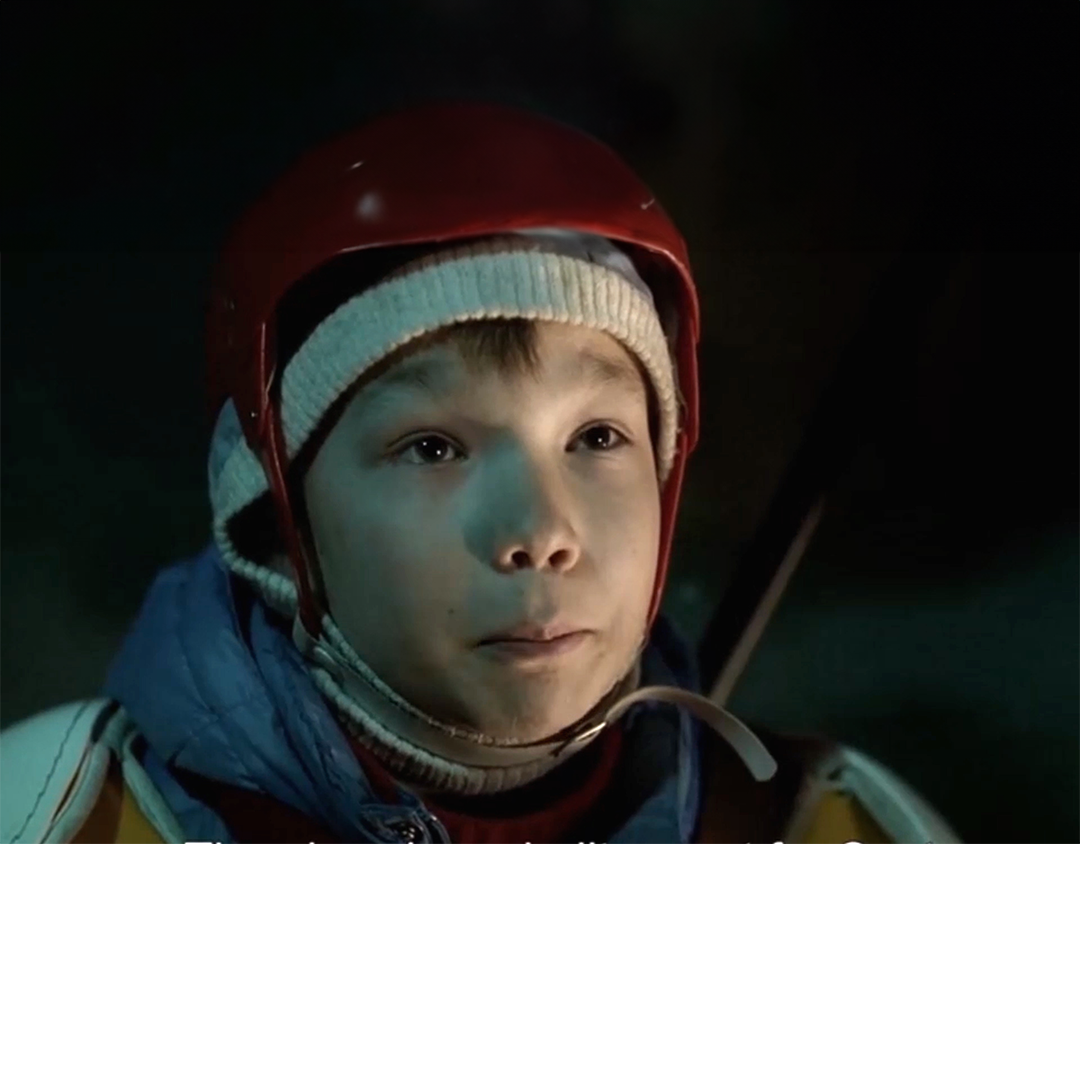
Pietri - Onni Tommilla
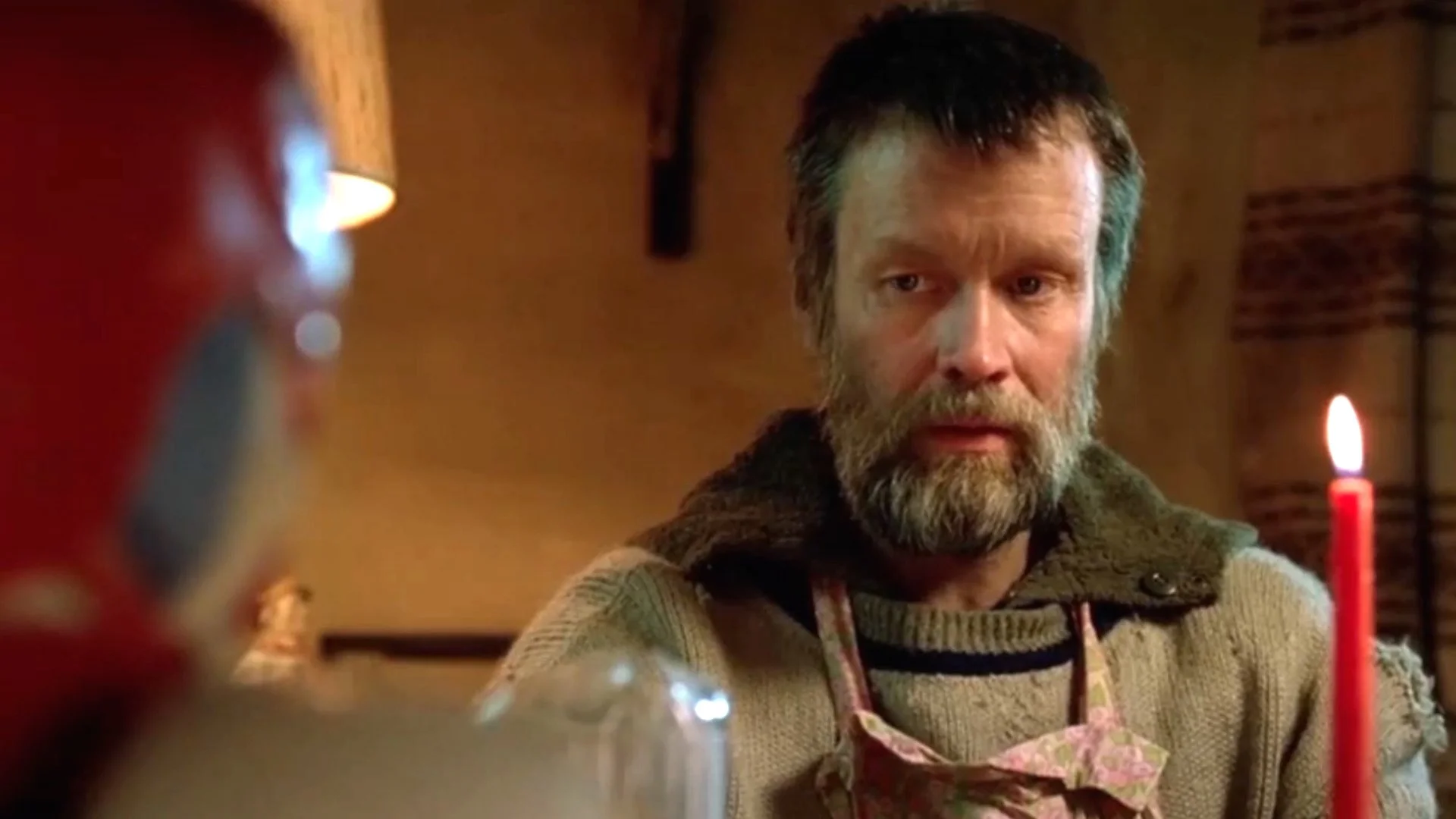
Rauno - Jorma Tomilla
This dynamic feels incredibly authentic because it is authentic—the actors are father and son in real life. Jorma plays the ultimate Nordic survivalist: stoic, no-nonsense, and initially in denial. Pietari, played by a young Onni Tommila, represents the vulnerability of childhood. He is small and terrified, but he is the only one who respects the old folklore enough to see the threat coming.
The film understands that fear isn't just about monsters; it’s about the responsibility of protection. Watching the father shift from skepticism to protective urgency gives the movie a grounding that most horror films lack.
The Tone: Finnish Precision
Director Jalmari Helander walks a tightrope between genuine fear and dark absurdity. The film’s tone is dry, brittle, and precise—like Finnish winter humor. Scenes that should be horrifying become hilarious because the characters respond with such solid, blue-collar practicality. They don't scream at the monsters; they negotiate with them.
Visually, the film is stunning. The cinematographer uses the vast snowfields of Lapland as a blank canvas, creating a sense of isolation so complete that the wilderness itself feels predatory.
Blog Bonus: The Budget Miracle
Rare Exports was produced for roughly €1.8 million—a modest sum for a film with this much scale. Here is how they pulled it off:
The Environment as a Set: Instead of expensive CGI, they shot on location in the harsh Arctic conditions. The frozen forests provide cinematic scale at virtually no cost.
Practical Effects: The massive Santa horns and the feral elves were physical creations, not digital cartoons. This keeps the horror grounded and tangible.
Efficiency: The crew was accustomed to extreme cold and limited daylight, allowing them to move quickly without the delays that would cripple a Hollywood production.
The Verdict
Rare Exports is original, bold, and hauntingly unique. It reminds us that winter legends used to be warnings, not marketing campaigns. It dares to approach Christmas from a completely different direction, stripping away the nostalgia to find the ancient, dangerous roots beneath.
It is unsettling, hilarious, mesmerizing, and absolutely unforgettable. If you want a Christmas movie with real teeth, this is the one.
The Verdict
"It's unsettling, hilarious, mesmerizing, and absolutely unforgettable. One of the most hauntingly unique holiday films you can watch."
- 🎥 Director: Jalmari Helander
- 💰 Budget: ~€1.8 Million
- 📍 Location: Finnish Lapland
- ❄️ Genre: Fantasy / Horror / Dark Comedy
Blog Bonus: The Real Mythology of Joulupukki
Rare Exports isn't just making up a monster; it is digging up the graves of real Finnish history. The creature in the film is a direct callback to the Nuuttipukki and the early Joulupukki.
Here is the folklore you need to know:
Part 1: The Real Mythology of Joulupukki
The creature in the film is a direct callback to the Nuuttipukki and the early Joulupukki.
The Name: In Finnish, Santa Claus is called Joulupukki, which literally translates to "Yule Goat."
The Look: Before the 19th century, the Joulupukki was a figure dressed in heavy furs and a mask with horns made of birch bark. This explains the massive horns found in the ice in the movie.
The Behavior: The original Yule Goat didn't give gifts; he demanded them (usually alcohol).
The "Birch": In the film, the elves carry bundles of sticks. This is the vitsa—a bundle of birch twigs traditionally used to punish naughty children.
Part 2: Santa and the Sami Shaman (Noaidi)
While the movie focuses on the "Goat" aspect, the location of the film (Sápmi/Lapland) brings up another fascinating intersection: the connection between the Sami people's spiritual practices and the modern Santa Claus.
1. The Reindeer Connection For the Sami, the reindeer is not just an animal but the center of their material and spiritual life. Santa's sleigh, pulled by flying reindeer, positions the figure firmly in the Arctic landscape—a realm culturally owned by the Sami. This association is what gives the "Santa lives in Lapland" myth its authenticity and is heavily leveraged in Finnish tourism today.
2. The Figure of the Noaidi The traditional Sami shaman, the Noaidi, shares striking functional parallels with the mythical aspects of Santa Claus.
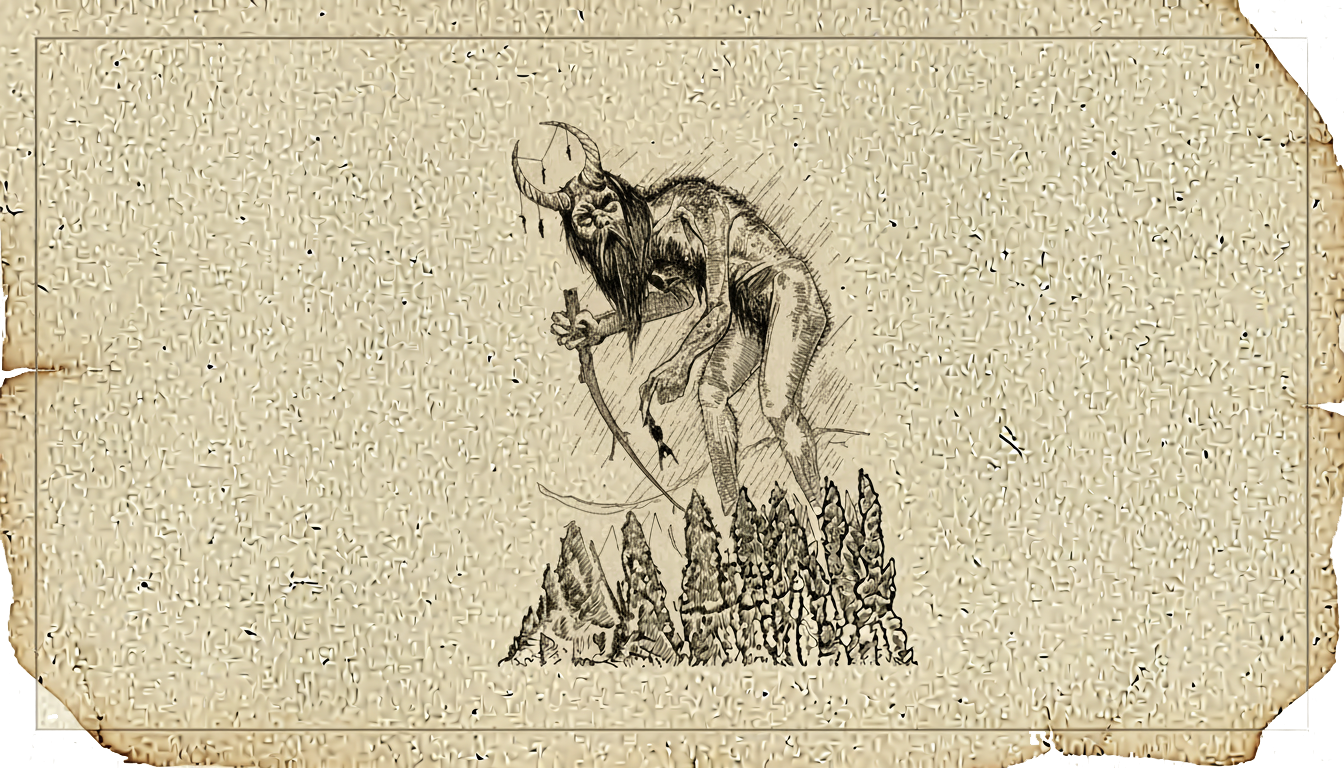
Joulupukki, the Yule Goat."
3. The Solstice and Northern Mythology
Sami traditional religion celebrated Beaivi, the Sun goddess, whose festival was held around the winter solstice. This celebration marked the return of the sun after the long polar night, a time of profound spiritual significance.
Christian Blending: As noted in the document, Sami Christmas (Juovllat) blends Christian observance with this ancient solstice tradition, celebrating the return of light.
Santa's Role: The Santa myth, arriving at the darkest point of the year to bring light, gifts, and hope, seamlessly replaced or integrated with older Nordic and Sami mythological figures associated with the midwinter celebrations and the renewal of the natural cycle.
4. Modern Sami Perspective
In modern Sápmi, Santa Claus is seen primarily as a character of global children's folklore and commercial culture.
Cultural Identity: While some Sami communities may find humor in the global figure of Santa Claus being "at home" in Lapland, it can also be viewed with some ambivalence. The commercialization of Lapland often simplifies Sami culture, reducing the complex reality of their lives—especially reindeer herding—to a background setting for a European figure.
Tourism: Many Sami people are involved in the tourism industry that uses the Santa Claus motif, particularly in Finland and Sweden, creating a necessary but sometimes challenging fusion of indigenous culture and global fantasy.
The Sami beliefs about Santa are complex, often interpreted through these historical shamanic roots. It suggests that the modern "Santa" is a pop-culture echo of a very real, very ancient spiritual authority.
If you enjoyed this review, consider subscribing to A Constantly Racing Mind for more thoughtful takes on Sci-Fi, Horror, and Genre films.
🎅 Shaman vs. Santa: The Parallels
| Feature | The Sami Noaidi (Shaman) | Santa Claus |
|---|---|---|
| Travel / Movement | Used ritual drums (goavddis) to enter trances and travel to the spirit world. | Travels the world in a single night, transcending physical barriers. |
| Knowledge / Judgment | Source of wisdom; judged spiritual or material imbalances in the community. | Knows who is "naughty or nice," delivering rewards or consequences. |
| Attire | Wore specific, ceremonial clothing tied to their spiritual role. | Wears a distinctive red and white suit (ceremonial authority). |
Table: The functional parallels between the ancient Sami Shaman and the modern Santa figure.
The genius of Rare Exports is that it suggests the "Coca-Cola Santa" was invented specifically to cover up this terrifying reality.
If you enjoyed this review, consider subscribing to A Constantly Racing Mind for more thoughtful takes on Sci-Fi, Horror, and Genre films.
