The Architect of the Unstoppable: Happy Birthday, John Carpenter
John Carpenter didn't just direct horror movies; he composed the very atmosphere of dread. On January 16th, we celebrate the man who proved that sometimes, the most terrifying thing in the world is a threat that simply refuses to stop.

Why Carpenter is the "Gold Standard"
We examine the "Blueprint" of genre, Carpenter’s work is essential study:
The Shape of Evil: With Halloween (1978), he created Michael Myers—the first "immortal" slasher who stripped away the "Head" (logic) and left only the "Hands" (the act of killing).
Atmospheric Realism: Much like the desaturated stillness you noted in We Bury the Dead, Carpenter used wide-angle lenses and negative space to make the viewer feel like something was always watching from the frame's edge.
The Sound of Terror: By composing his own scores, he ensured that the "Heart" of his films—the rhythm and pulse—was perfectly synced to the audience's anxiety.
The 1980s Montage: The Legacy of Michael Myers
You’ve previously explored an AI montage featuring the iconic killers of the 80s. Every one of those figures—Jason, Freddy, Pinhead, and Chucky—owes their existence to the success of Carpenter’s Michael Myers. He proved that audiences didn't just want a villain; they wanted a myth.
John Carpenter: The Genre Blueprint
| Cinematic Element | The Carpenter Effect |
|---|---|
| The Antagonist | The "Immovable Object"—Michael Myers or The Thing. |
| The Music | Minimalist, synth-driven scores acting as a ticking clock. |
| The Philosophy | Evil as a primal force of nature, not a choice. |
| Legacy Icons | The Shape, Snake Plissken, and RJ MacReady. |
"He didn't just direct horror; he composed the atmosphere of dread."
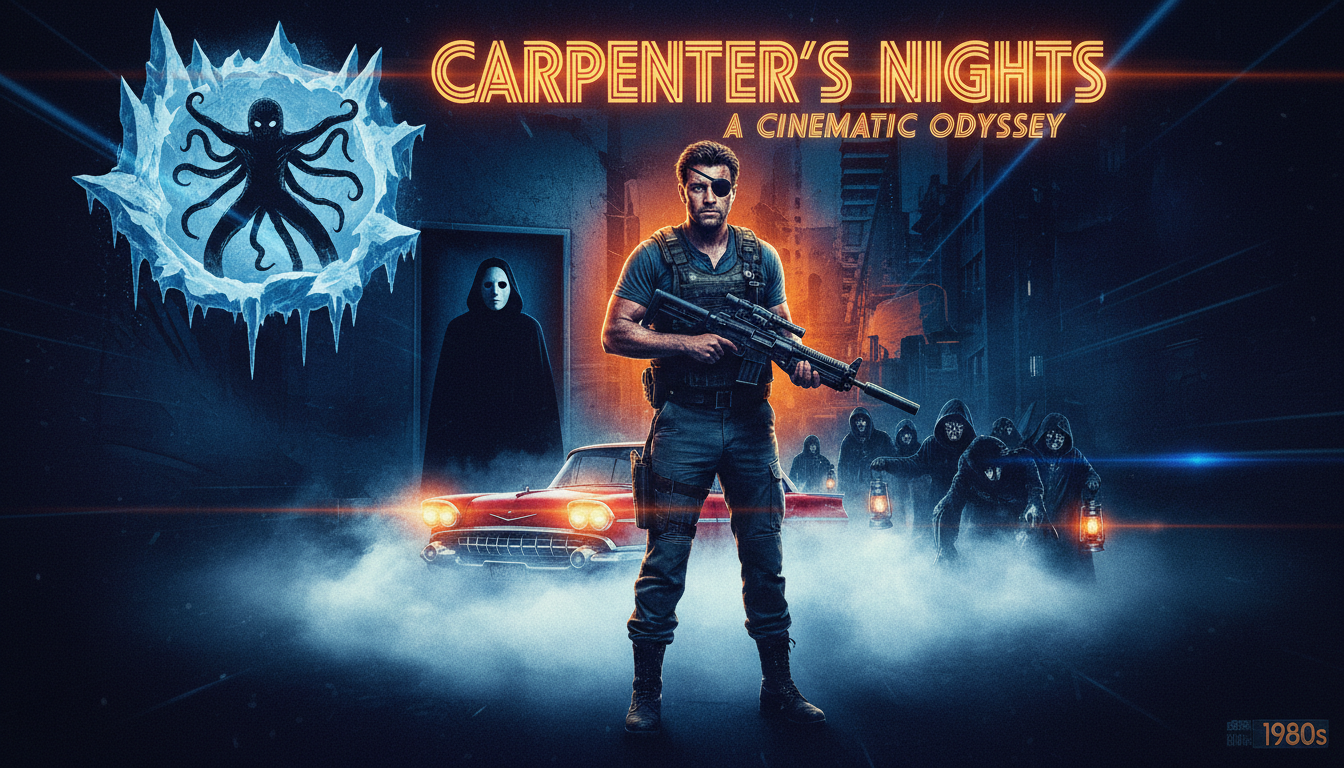
The Carpenter Pantheon
The External Dread
- Michael Myers: Primal, unstoppable evil.
- The Fog Lepers: Relentless vengeful spirits.
- The Thing: Paranoia and total biological collapse.
The Anti-Heroes
- Snake Plissken: The ultimate survivor.
- Christine: Obsession in mechanical form.
- They Live Aliens: The hidden "Institutional" threat.
The Cold War & The Thing (1982)
I was in my 20’s when The Thing came out. Looking back, The Thing is the ultimate cinematic expression of Cold War paranoia. It wasn't just about a monster; it was about the terror of "The Other" hiding in plain sight. In an era where the threat of nuclear escalation or ideological subversion felt constant, Carpenter showed us that the real danger isn't the explosion—it's the breakdown of the group's ability to verify the truth.
The Reagan Era & They Live (1988)
As the 80s progressed, Carpenter shifted from the "hidden monster" to the "hidden system." They Live is a biting critique of commercialism and the widening class divide. It suggests that the "horrors" of society aren't supernatural; they are structural, fueled by a hidden elite exploiting the masses.
The Legacy in the "Horror Forward" Era
Today’s horror is often "trauma-forward," focusing on the internal psychological state of the survivor (like We Bury the Dead). However, Carpenter’s influence is still the bedrock. He taught us that for a psychological story to work, the atmosphere must be a character. Whether it's the wide-angle lenses or the pulsing synth scores, modern directors still use the "Carpenter Aesthetic" to make internal grief feel like an external threat.
