The End of Oak Street Review: Is It Worth Watching?
What if your entire neighborhood disappeared overnight? Not because of aliens. Not because of a nuclear war. But because reality itself simply... broke. Now imagine stepping outside your front door only to discover your quiet suburban street has become the edge of a prehistoric wilderness, where the rules of modern life no longer apply. That premise alone had me interested. But what surprised me most wasn't the dinosaurs. It was how much this movie cared about the people living on Oak Street before everything went sideways
Original science fiction has become surprisingly rare. Studios love franchises because they're familiar, but every now and then something comes along that reminds me why I fell in love with movies in the first place. “The End of Oak Street” isn't trying to be the next “Jurassic Park”. It isn't trying to launch a cinematic universe. It simply asks one fascinating question: what happens when an ordinary family is dropped into an impossible situation? Everything else grows naturally from that idea. This is a movie that's willing to slow down and let its characters breathe before the chaos begins. Because of that, when danger finally arrives, it actually means something.
WHAT WORKED FOR ME
The thing I admired most about this movie is that it never takes the easy road. A lot of studios would've looked at this premise and immediately built an action movie around dinosaurs. David Robert Mitchell had something else in mind. This movie starts with people. It starts with a family. It starts with relationships that already feel like they're under strain before anything extraordinary happens. That slower opening isn't there to delay the action. It's there to make sure the action matters. And for me, it largely succeeds.
Anne Hathaway and Ewan McGregor do an excellent job selling this family dynamic. Nothing about their performances feels exaggerated. They're playing ordinary people dealing with ordinary problems until suddenly those problems become very, very insignificant compared to what's happening around them. I also appreciated how much confidence Mitchell has as a visual storyteller. He rarely stops the movie just to explain something. Instead, he'll let the camera quietly reveal details about these characters through their homes, their belongings, or the way they interact with one another. It's subtle. It's rewarding. And it's something I wish more filmmakers trusted audiences enough to do.
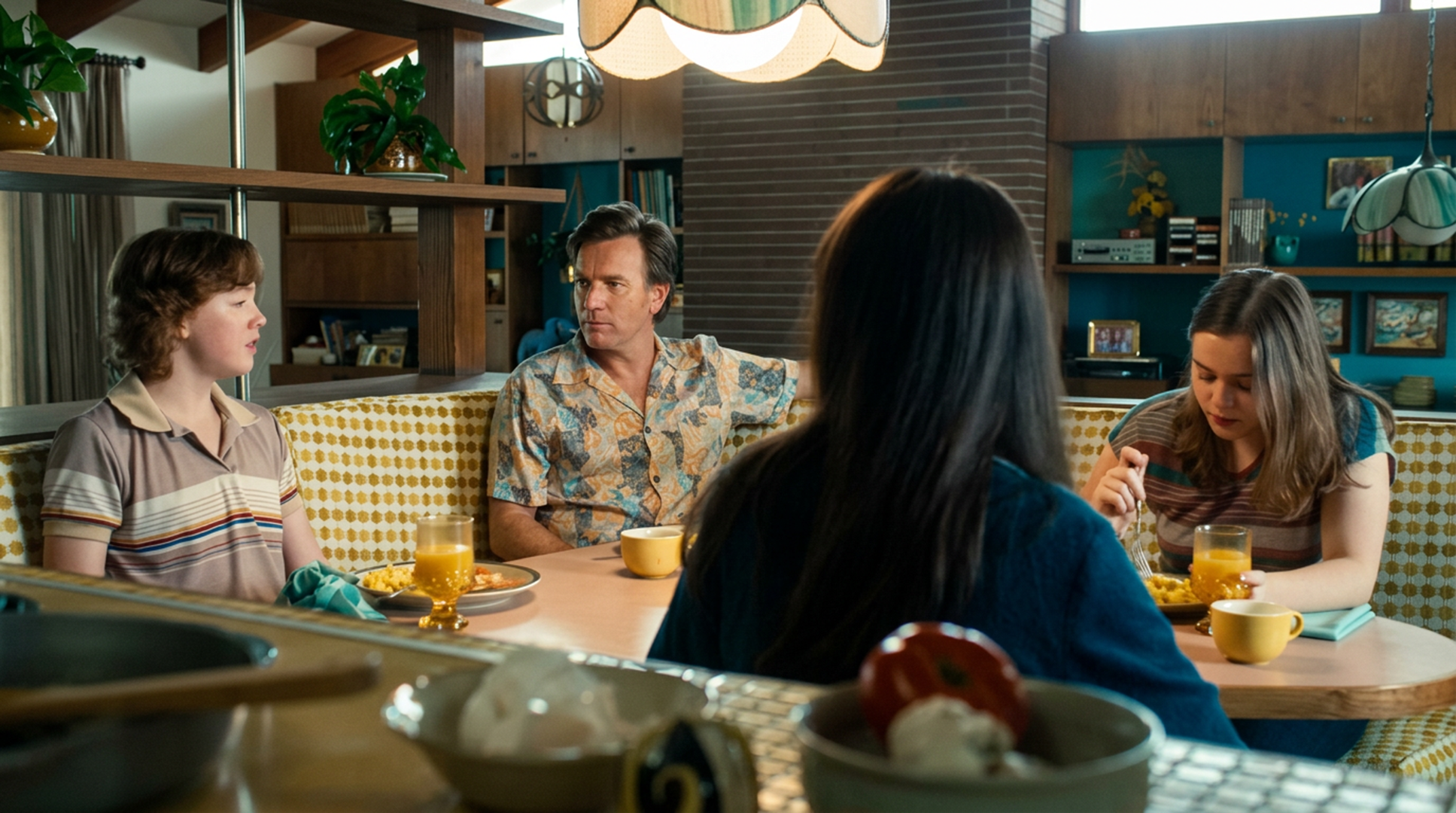
Visually, the movie is outstanding. Michael Gioulakis creates images that are both beautiful and quietly unsettling. Even before the larger sci-fi elements appear, there's something just a little off about the way Oak Street is photographed. You can't quite put your finger on it. You just know something isn't right. Then, once the movie expands beyond that suburban setting, the visual scale becomes genuinely impressive.
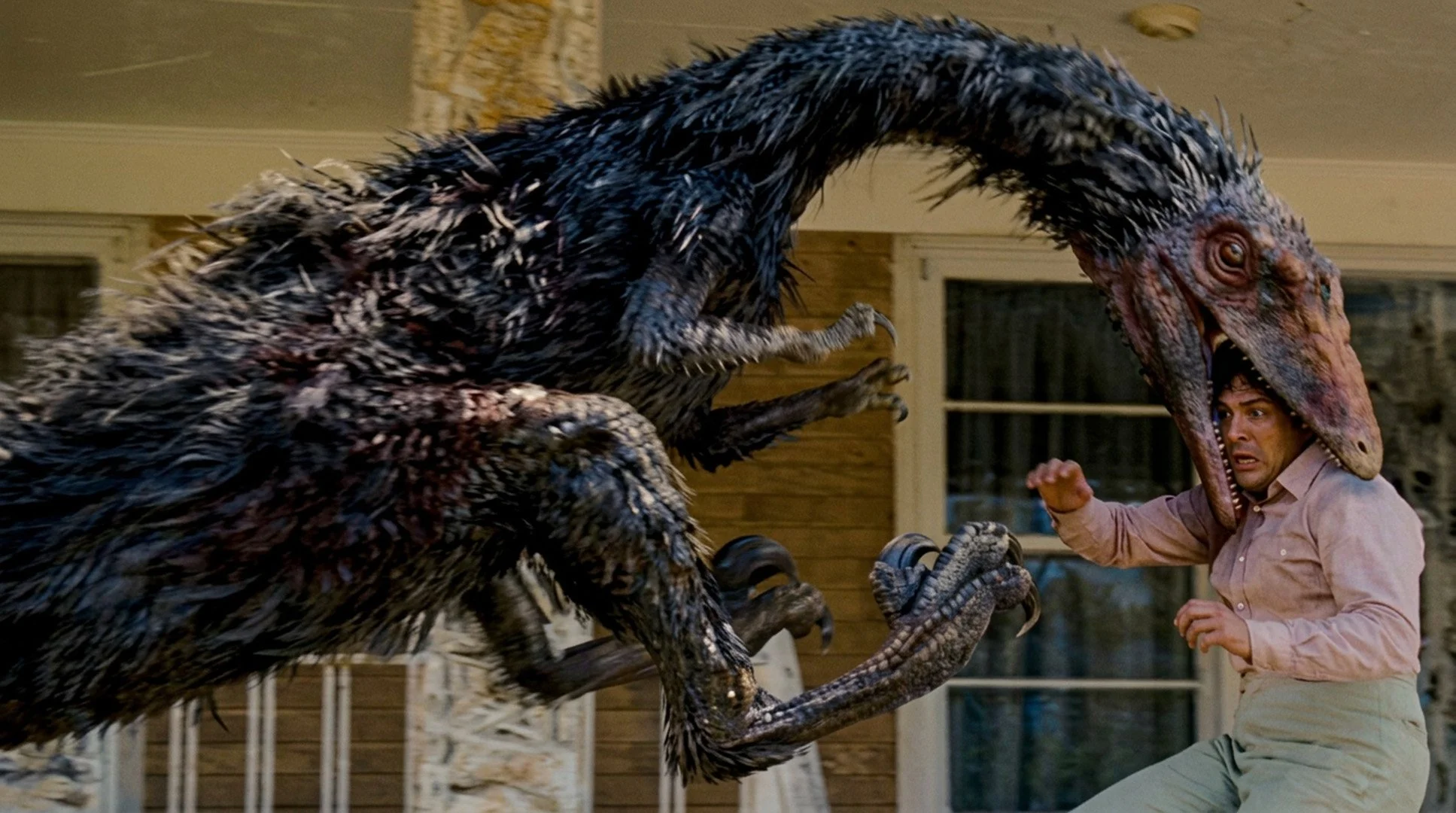
The dinosaurs deserve praise as well. I won't get into specifics, but I appreciated that they behave like animals. They're not villains. They're not monsters. They're simply creatures trying to survive in an environment where humans suddenly don't belong. That approach makes many of the suspense sequences feel far more believable than they otherwise would've. Finally, Michael Giacchino's score ties everything together beautifully. Rather than overwhelming every scene, his music knows when to step back and let the silence do the work. Then, when it needs to become emotional or adventurous, it absolutely delivers. For me, that's one of the movie's biggest strengths.
WHAT DIDN'T WORK
As much as I admired what Mitchell was trying to do, there were a few things that kept me from completely falling in love with the movie. The biggest one is the pacing. Now, let me be clear – slow doesn't automatically mean bad. Some of my favorite movies take their time. But “The End of Oak Street” asks for your patience, especially during the first hour. Mitchell spends a lot of time establishing mood and relationships before the story really opens up. For me, most of that investment pays off. But there were a couple of stretches where I found myself wishing the story would move just a little faster. I think some audiences are going to absolutely love that deliberate approach, while others may wonder when the hell this movie is going to kick into high gear.
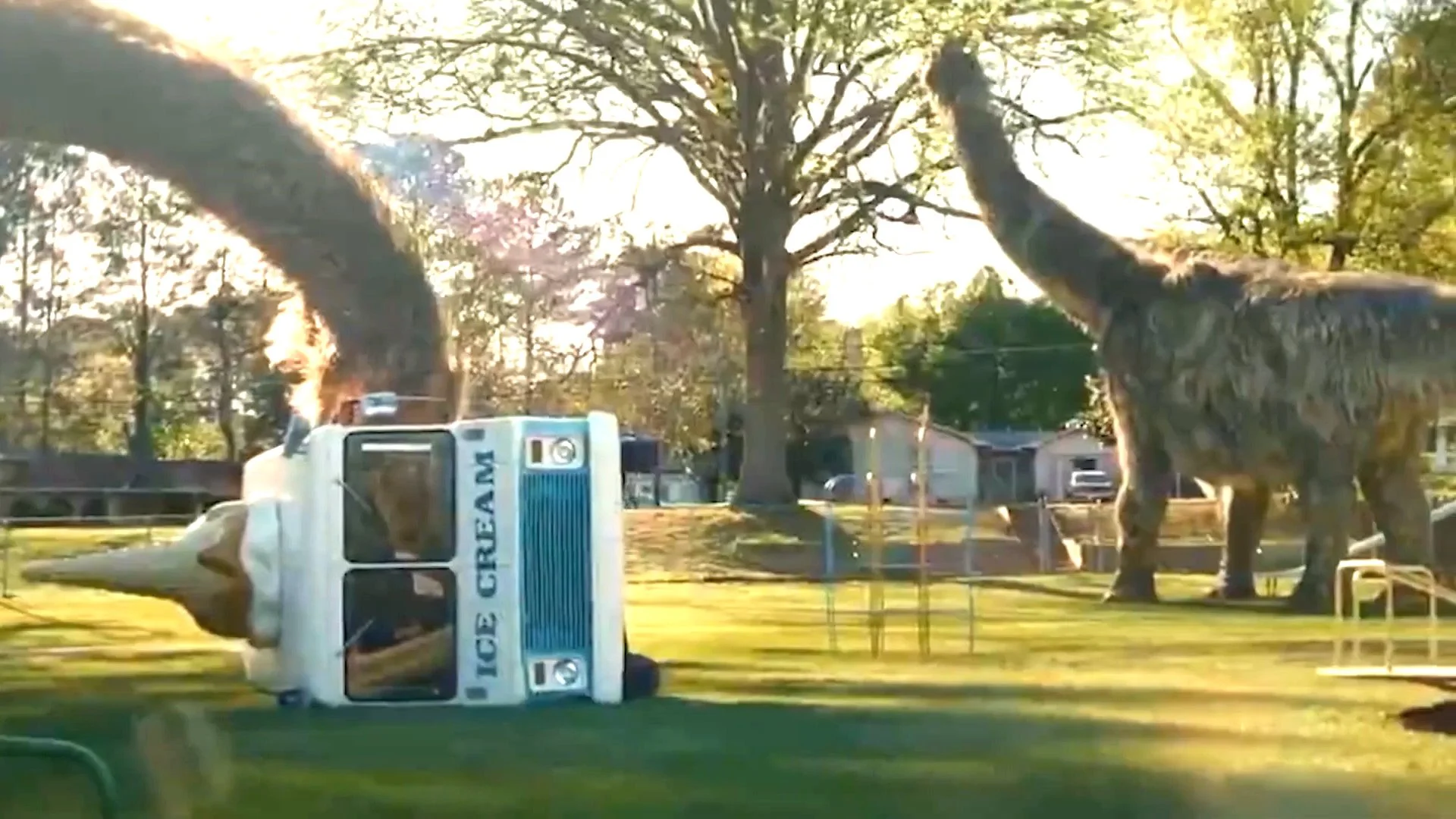
I also think the movie occasionally asks you to fill in a few too many blanks. Normally, I like when filmmakers trust the audience. I don't need every mystery explained. But there were a few moments where I would've liked just a little more context. Not enough to derail the experience, but enough that I walked out with questions I wasn't entirely sure the movie intended me to have. And finally, while I really enjoyed the central family, I don't think every supporting character receives the same level of attention. A few of them feel more like pieces of the larger story than fully developed people. Again, none of these are deal breakers for me. They're simply the kinds of things that kept what I think is a very good movie from becoming a truly great one.
BEHIND THE SCENES
One thing that's impossible to ignore is just how talented the creative team is behind this film. Director David Robert Mitchell continues to show why he's one of the most interesting voices working in genre filmmaking today. Like “It Follows” and “Under the Silver Lake”, this is a movie that's more interested in building atmosphere than simply delivering sensationalism. He trusts the audience to observe, think, and occasionally sit with unanswered questions.
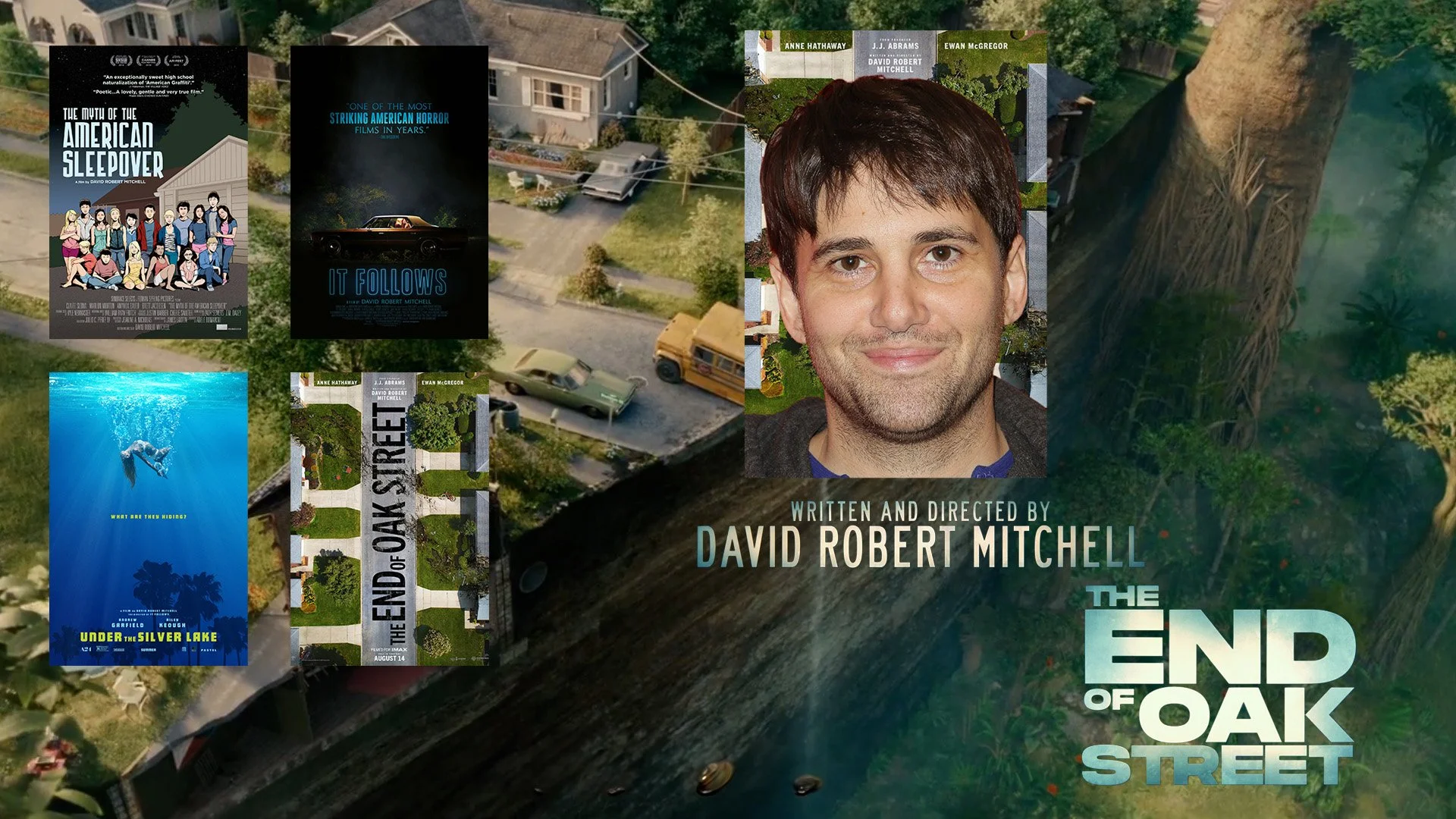
David Robert Mitchell
Cinematographer Michael Gioulakis once again proves he's one of the best visual storytellers in the business. His compositions are beautiful without calling attention to themselves, and he has an incredible ability to make familiar places feel subtly unsettling before anything even happens. Michael Giacchino delivers another terrific score. Coming off “Spider-Man: Brand New Day,” he once again demonstrates why he's one of Hollywood's premier composers. His music balances wonder, suspense, and emotion without ever overwhelming the story.
Editor John Axelrad deserves credit for maintaining the film's deliberate rhythm. While the pacing won't work for everyone, it feels intentional rather than slow for its own sake. And Patty Podesta's production design may be one of the movie's unsung achievements. The contrast between an ordinary suburban neighborhood and the impossible world surrounding it becomes one of the film's strongest visual ideas.
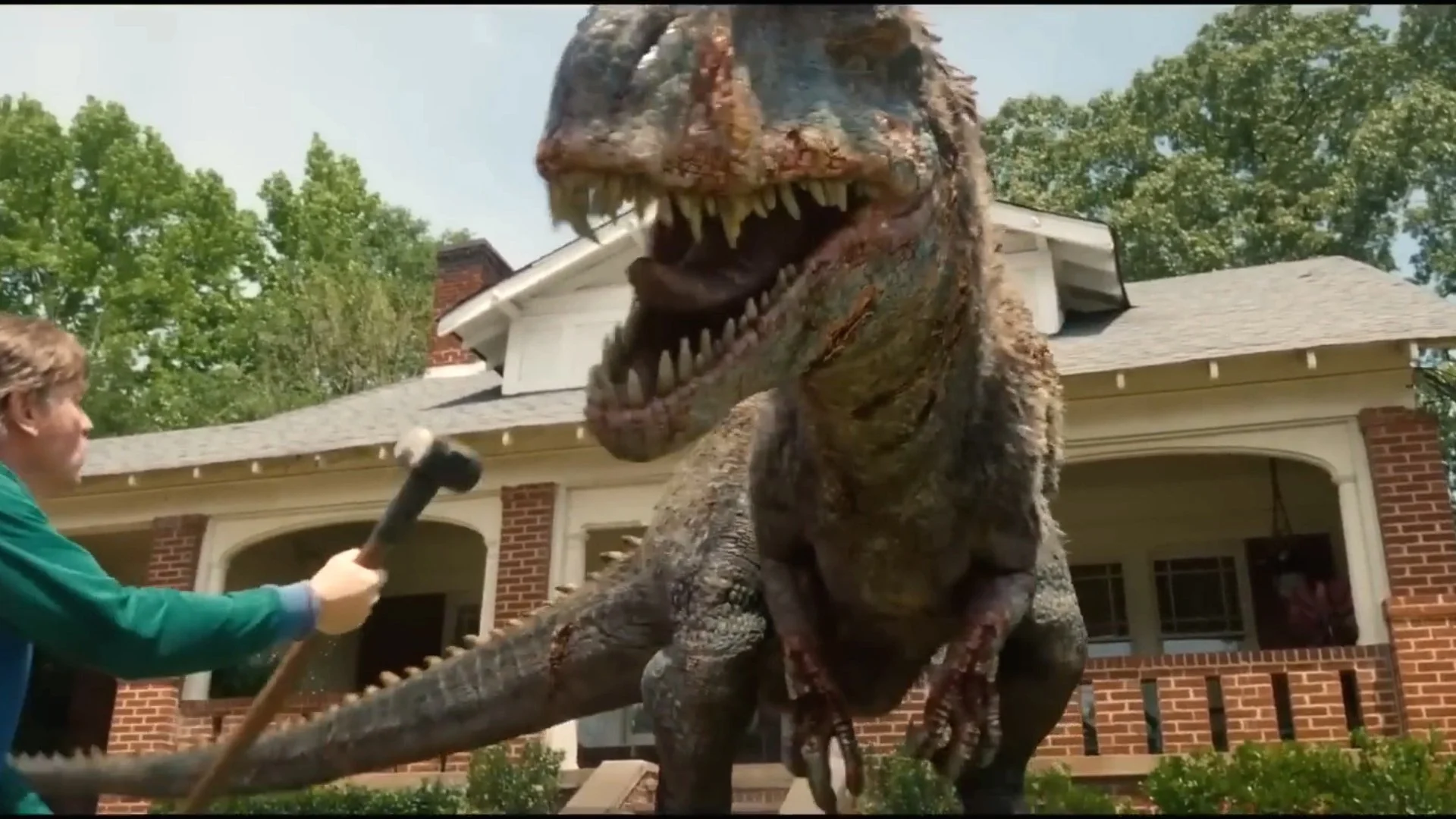
THE END OF OAK STREET - Greg’s Last Stand
THE END OF OAK STREET CAST
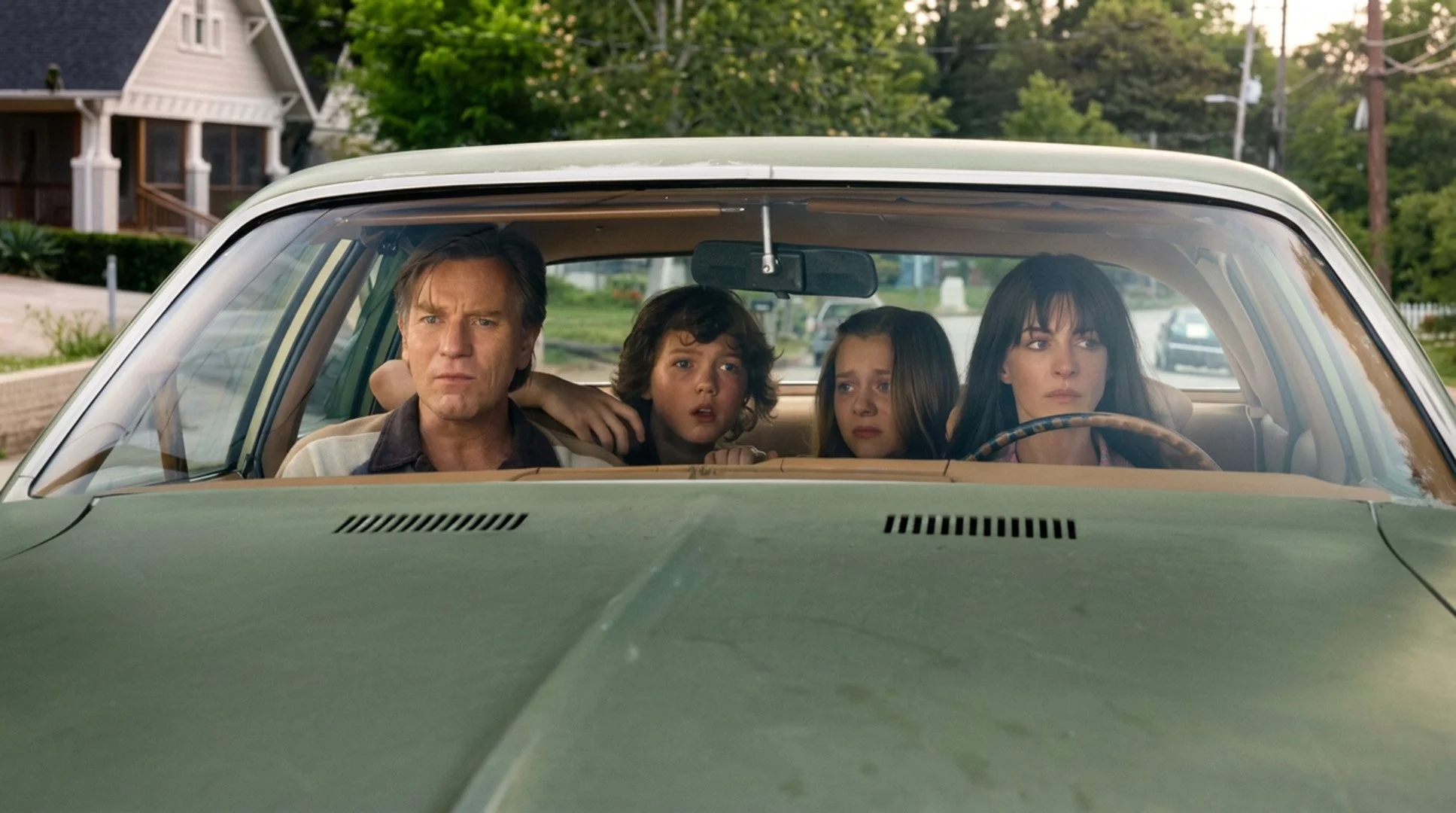
Anne Hathaway gives another strong performance in what's been an impressive year for her. After “The Odyssey," again check out my non-spoiler and spoiler reviews for that film, and, of course, she started the year with "The Devil Wears Prada 2”, she once again finds the emotional center of a very different kind of story. Denise feels believable, vulnerable, and determined without ever becoming exaggerated. Ewan McGregor brings exactly the kind of quiet humanity you'd expect. Greg isn't perfect, and that's what makes him interesting. McGregor has always been great at playing flawed men in “Trainspotting” and “Dr. Sleep” who are trying to become better versions of themselves, and that experience serves him well here.

Maisy Stella continues to impress. Audrey could've easily become a stereotypical teenager, but Stella gives her enough personality that she feels like an essential part of the family rather than simply another character reacting to events. Christian Convery rounds out the Platt family nicely. He's quickly becoming one of the industry's most dependable young actors, and once again he brings maturity to a role that asks a lot of him emotionally.
CRITICAL RECEPTION
Hey, let's talk numbers for a second, because the numbers themselves tell a story here.
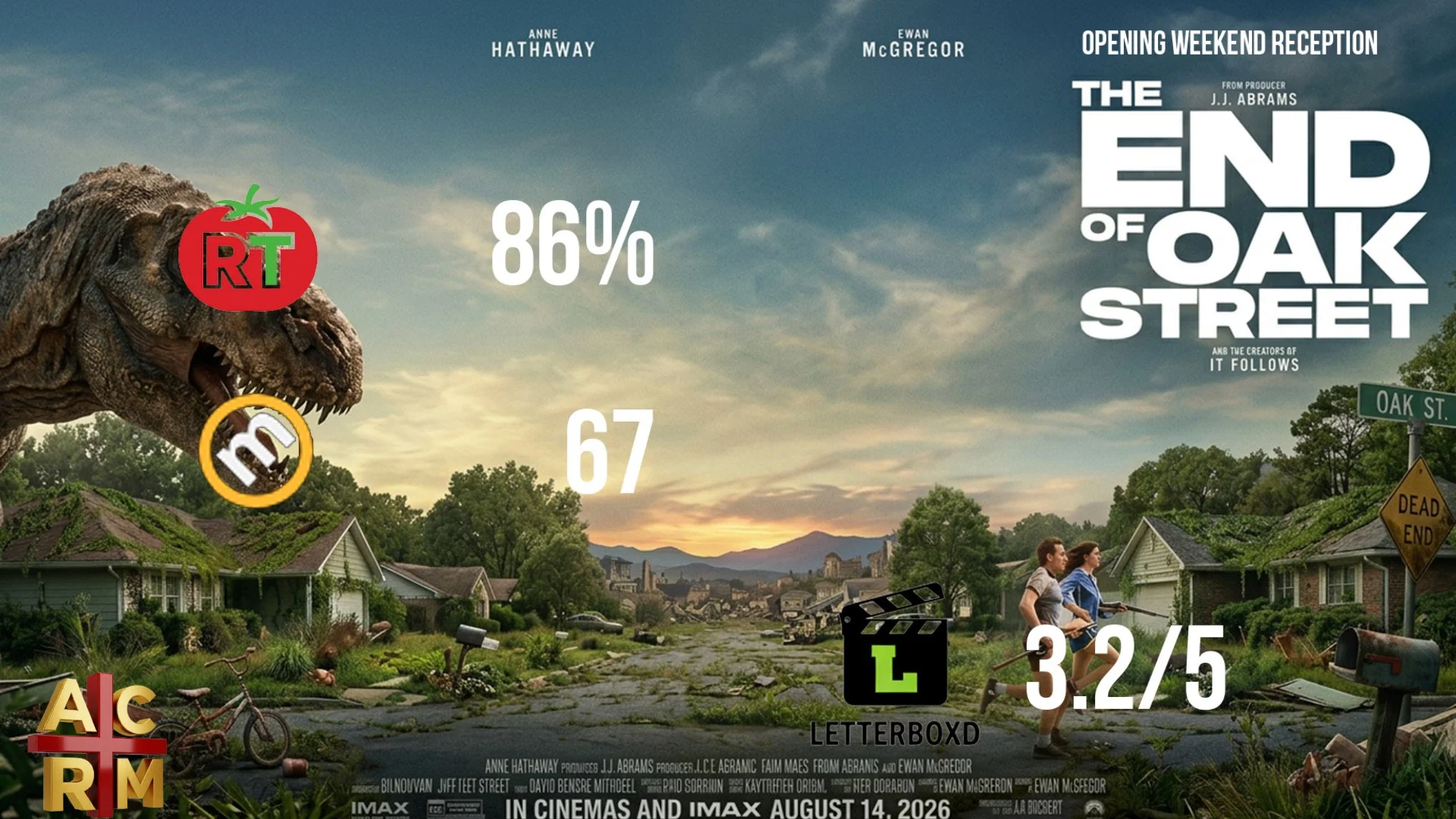
The End of Oak Street landed at 86% on Rotten Tomatoes—Certified Fresh, out of a hundred reviews. But here's the interesting part: that number's been moving. When the embargo first lifted, this thing was sitting in the high 80s. Every wave of reviews after that nudged it down a few points—not a collapse, just a correction toward consensus. After I went and saw the movie and I came back, it moved up to 86.
That's what happens when the first fifty voices skew toward the enthusiasts, and the next fifty bring the room back to center. And then, as more people see it, it brings it back up to where it should be. More will be coming soon.
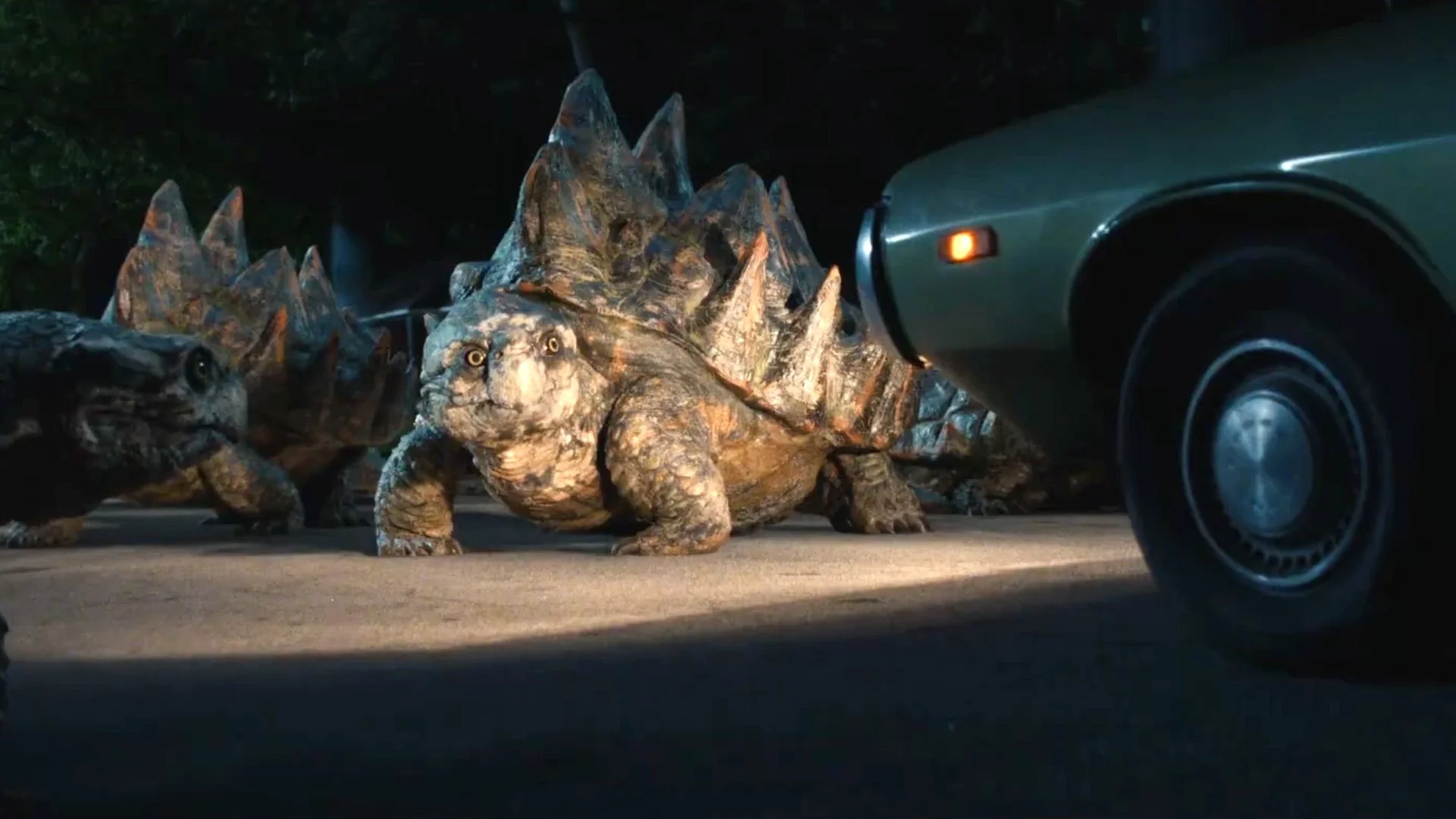
More Dinos!
Metacritic tells a slightly different story—69 out of 100. "Generally favorable," in their language, but that's a noticeably cooler read than the Tomatometer. And that gap matters. RT is a binary—did you like it or not—while Metacritic is measuring degree. So what we're really looking at is a film that a clear majority of critics recommend, but fewer of them are calling great.
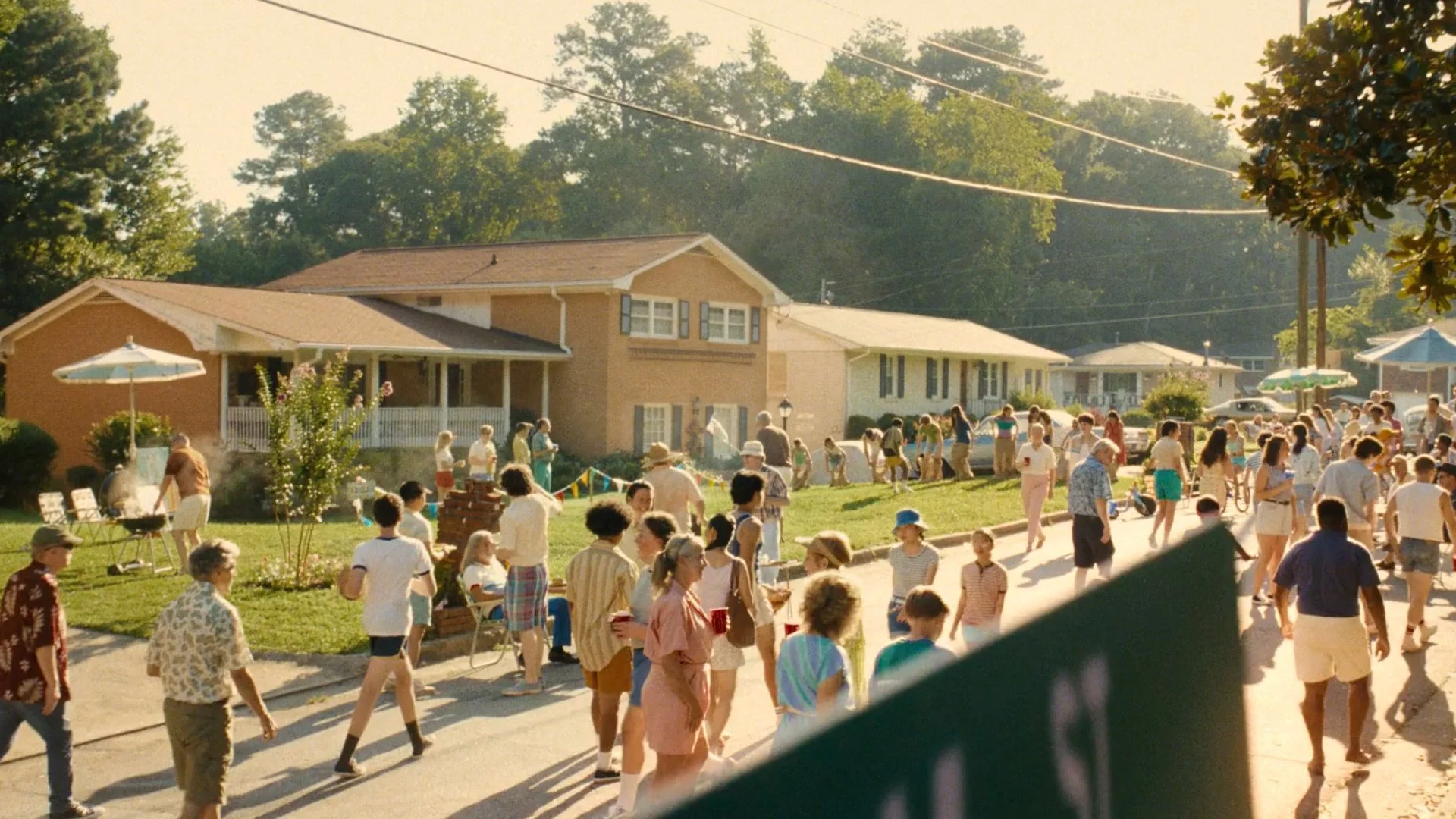
Oak Street
And you can see that split in the language itself. On one side, you've got critics reaching for Spielberg and Amblin comparisons—the "this is what original studio filmmaking should look like" camp, some going as far as calling it the best dinosaur movie since the original Jurassic Park. Now on the other hand, there's real pushback—critics calling it bleak rather than fun, some flatly saying it doesn't earn the sincerity it's reaching for, and at least one review describing long stretches of dead air between the set pieces.
That's not a movie critics are lukewarm on. That's a movie splitting critics into two genuinely different readings of the same footage—and that tension is usually more interesting than a clean consensus.
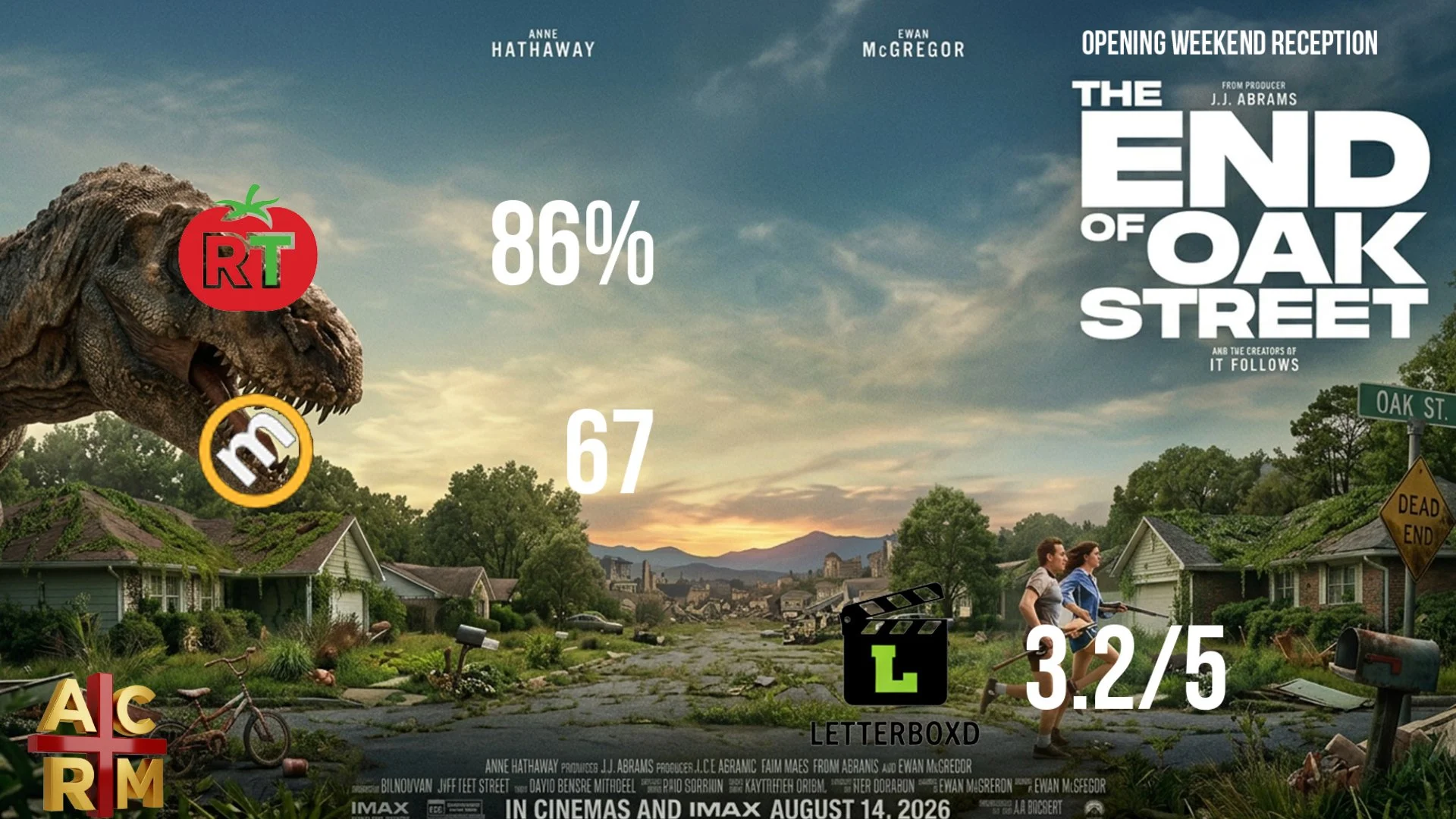
Rotton Toamatoes 86% Metacritic 67/100
From what I've seen so far, the praise has been remarkably consistent. Critics are highlighting director David Robert Mitchell, cinematographer Michael Gioulakis, composer Michael Giacchino, and the performances from Anne Hathaway and Ewan McGregor. Now, where opinions seem to diverge is in the pacing and the amount of mystery the movie leaves for the audience to interpret. Honestly, those are exactly the kinds of movies that usually generate some pretty lively conversations.
POST-CREDIT SCENE
Nothing after the credits; the only bonus scene is everyone in the parking lot debating what they just watched.
FINAL THOUGHTS
Where do I land? For me, “The End of Oak Street” is one of those movies that's easier to admire than it is to completely embrace. There's a lot here that I genuinely loved. The performances are excellent. The filmmaking is beautiful. The atmosphere is terrific. And I really appreciate that Warner Bros. backed an original Sci-Fi story instead of another sequel. Now, at the same time, I don't think every creative decision landed as well as it could have. There were moments where I wanted the pacing to pick up just a little. There were a few story choices that left me wanting more. But even with those reservations, I walked out glad I saw it. I'd much rather watch a movie that's willing to take creative risks than one that simply checks every blockbuster box. My ACRM Rating – four out of five stars.
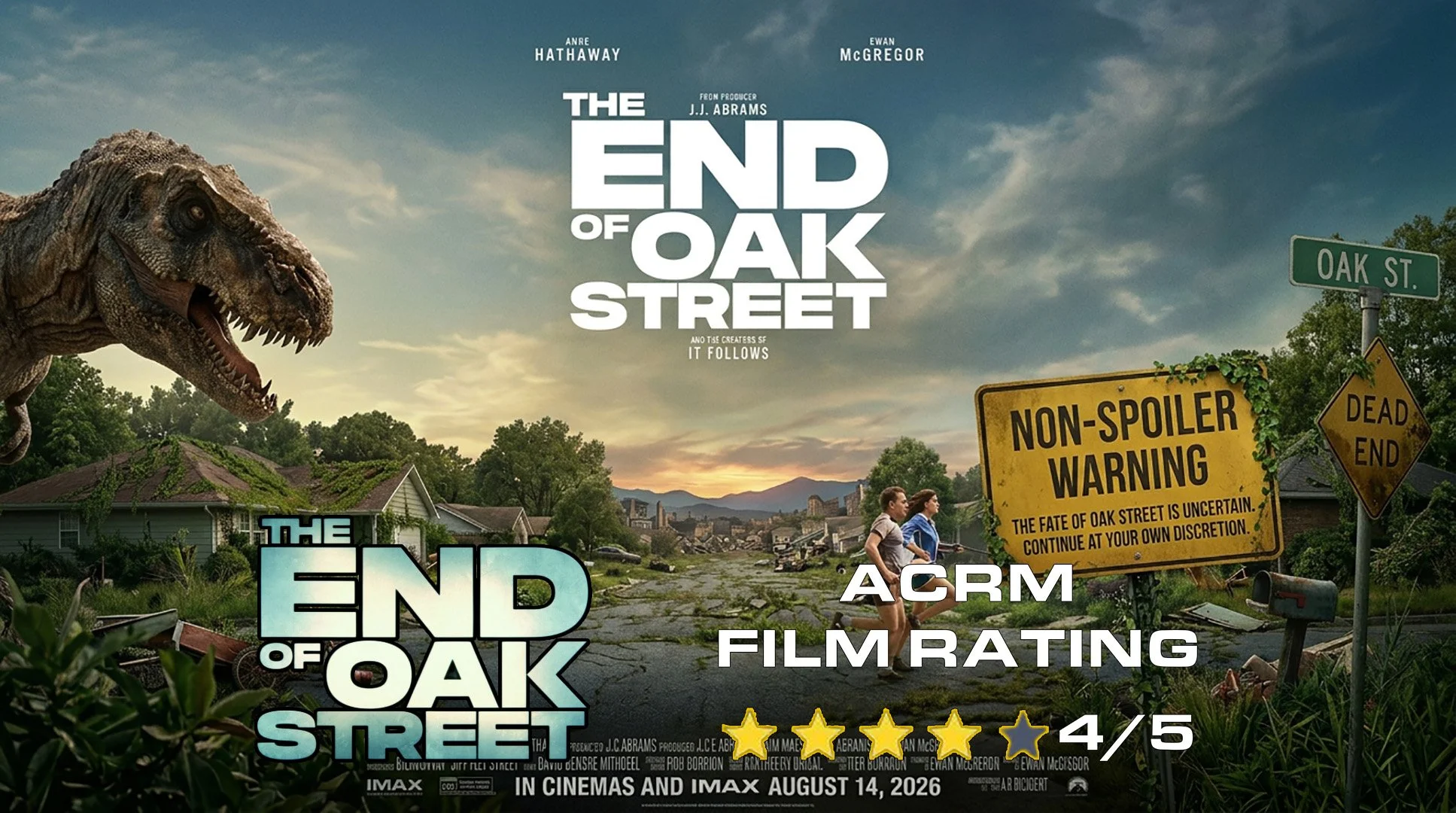
Film Information
Film: The End of Oak Street (2026)
Studio/Distributor: Warner Bros. Pictures
Genre: Science Fiction, Mystery, Survival Thriller
Director: David Robert Mitchell
Writer: David Robert Mitchell
Cinematography: Michael Gioulakis
Editing: John Axelrad
Music: Michael Giacchino
MPA Rating: PG 13
Run Time: 1h 39m
