Bud Cort: 1948–2026
In memory of Bud Cort, an actor who personified the soulful, the eccentric, and the resilient, we reflect on a life that was as deeply human as it was cinematic.
Bud Cort was born Walter Edward Cox in New Rochelle, New York. He grew up in a family that combined business with the arts. His father, Joseph Parker Cox, was a bandleader and pianist before venturing into business, and his mother, Alma Mary, worked in a department store and was a former reporter.
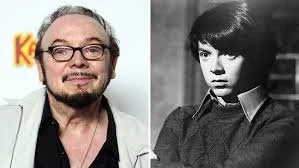
Early Life and Discovery
Born: March 29, 1948, in New Rochelle, New York.
Name Change: He adopted "Bud" from a childhood nickname and "Cort" (an adaptation of his mother’s maiden name, Court) to avoid confusion with actor Wally Cox.
Director Robert Altman discovered him while he was performing in a comedy revue in New York. This led to his film debut in MASH* (1970).
Career Highlights
Cort’s career was defined by his "unorthodox" and sensitive portrayals:
Harold and Maude (1971): His most iconic role as the death-obsessed Harold. Though it was initially a box-office flop, it became a massive cult classic, earning him Golden Globe and BAFTA nominations.
Brewster McCloud (1970): He played the title character, a young man living in the Houston Astrodome who attempts to fly with man-made wings.
Character Work: He appeared in Michael Mann's Heat (1995), Kevin Smith's Dogma (1999), and Wes Anderson's The Life Aquatic with Steve Zissou (2004).
Voice Acting: He was the definitive voice of Toyman in the DC Animated Universe (Superman: The Animated Series, Justice League Unlimited).
Personal Anecdotes and Hardships
Rooming with a Legend: For several years, Cort lived as a house guest and roommate of Groucho Marx, remaining by his side until Marx’s death in 1977.
Car Accidents: Cort’s career was significantly impacted by two major car accidents. One in 1979 caused severe injuries (fractured skull and broken limbs) that required extensive plastic surgery and took him out of the industry for over a year. A second accident in 2011 nearly cost him his arm and made finding work more difficult in his later years.
Bud Cort's legacy is that of a unique performer who championed "weirdo" characters and helped define the era of New Hollywood.
A Life Lived Off-Screen
While his film roles often depicted him as a solitary figure, Cort’s real life was rich with profound and sometimes unusual connections. Most famously, he lived for several years as a roommate and companion to comedy legend Groucho Marx. During the 1970s, as Marx’s health declined, Cort became a fixture in the Marx household, providing companionship and witnessing the end of an era in Hollywood history.
The Resilience of a Survivor
Cort's quiet, steely resilience also defined his personal life. In 1979, at the height of his post-Harold and Maude fame, a catastrophic car accident on the Hollywood Freeway nearly ended his life. He suffered a fractured skull, shattered ribs, and a broken leg. The long recovery and subsequent plastic surgeries significantly altered his appearance and stalled his career momentum, yet he navigated these hardships without bitterness, eventually returning to the screen as a seasoned character actor.
Later Years and Legacy
In his later years, Cort found a second home in the hearts of a new generation of filmmakers, most notably Wes Anderson. He lived a relatively private life in Los Angeles before retiring to Connecticut. He remained a man of deep intellect and a certain "ageless" quality, often surprised and touched by the enduring cult status of Harold and Maude.
He leaves behind a legacy of work that taught audiences it was okay—and even beautiful—not to fit in. He didn't just play outsiders; he gave them a voice, a face, and a heart.