Christopher Nolan’s The Odyssey: An Epic Journey into Anti-War Horror
Growing up, Greek mythology wasn't just a casual interest for me—it was a foundational obsession. In elementary school, I devoured stories of the Titans, the Olympians, and the demigods. By junior high, I was reading The Iliad and The Odyssey. At the exact same time, I was discovering The Lord of the Rings and Hollywood’s take on these legends, specifically Ray Harryhausen’s Jason and the Argonauts, which burned its stop-motion animation permanently into my brain.
Yet, back then, there was always a jarring dissonance between the visceral horror printed on those ancient pages and the G-rated cinematic adaptations I watched with my father.
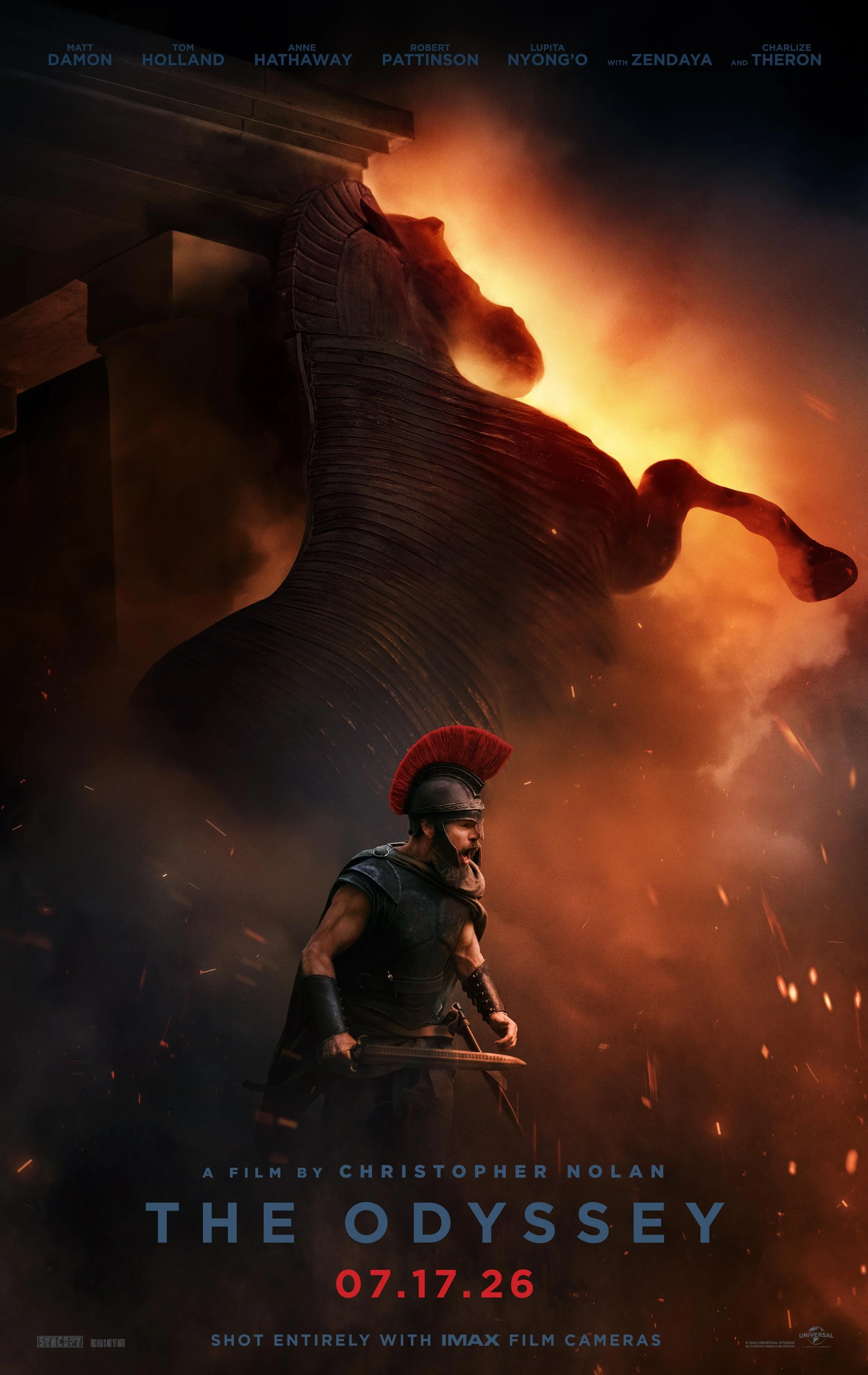
A few months ago, while watching Project Hail Mary, I found myself wondering what that film might have looked like under the direction of Christopher Nolan. I knew it would be epic, even if it sacrificed some of the intimacy that directors like Lord and Miller excel at. So, when it was announced that Nolan would be running the show for a massive, three-hour adaptation of Homer’s The Odyssey, my expectations were sky-high.
Predictably, the internet era brought an epic amount of online discourse, noise, and hand-wringing leading up to its release. From complaints about modernized dialogue to costume choices and casting controversies, the surface-level chatter was deafening. But now that I have actually sat down and experienced this massive, 172-minute film (twice, back-to-back on Thursday!), I want to strip away the noise and talk about what this movie actually is.
Underneath the overwhelming IMAX spectacle and the sprawling, star-studded cast, Christopher Nolan has delivered a profound, deeply moving anti-war statement that seamlessly doubles as his first true foray into the horror genre.
The Director and the Theme of the "Eternal Return"
Serving as both director and screenwriter, Nolan has found perhaps the most natural pairing of filmmaker and material in his entire career. Nolan has always been fascinated by time, memory, obsession, identity, and men painfully separated from the people they love.
Memento gave us a man who could no longer trust his own mind.
Inception followed a desperate father trapped away from his children.
Interstellar hurled a father across space and time just for the hope of returning to his family.
Dunkirk stripped war down to a single, primal objective: getting home.
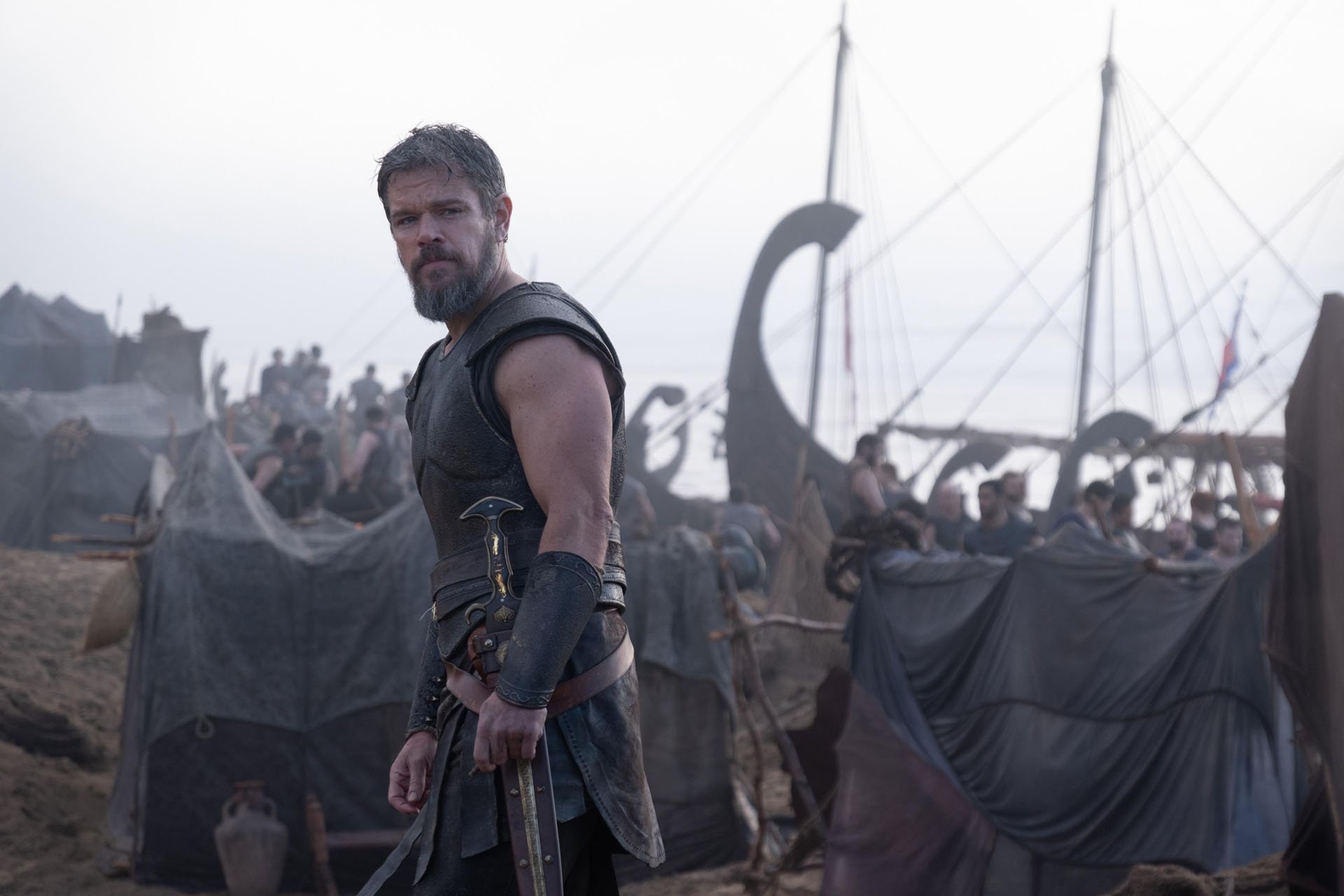
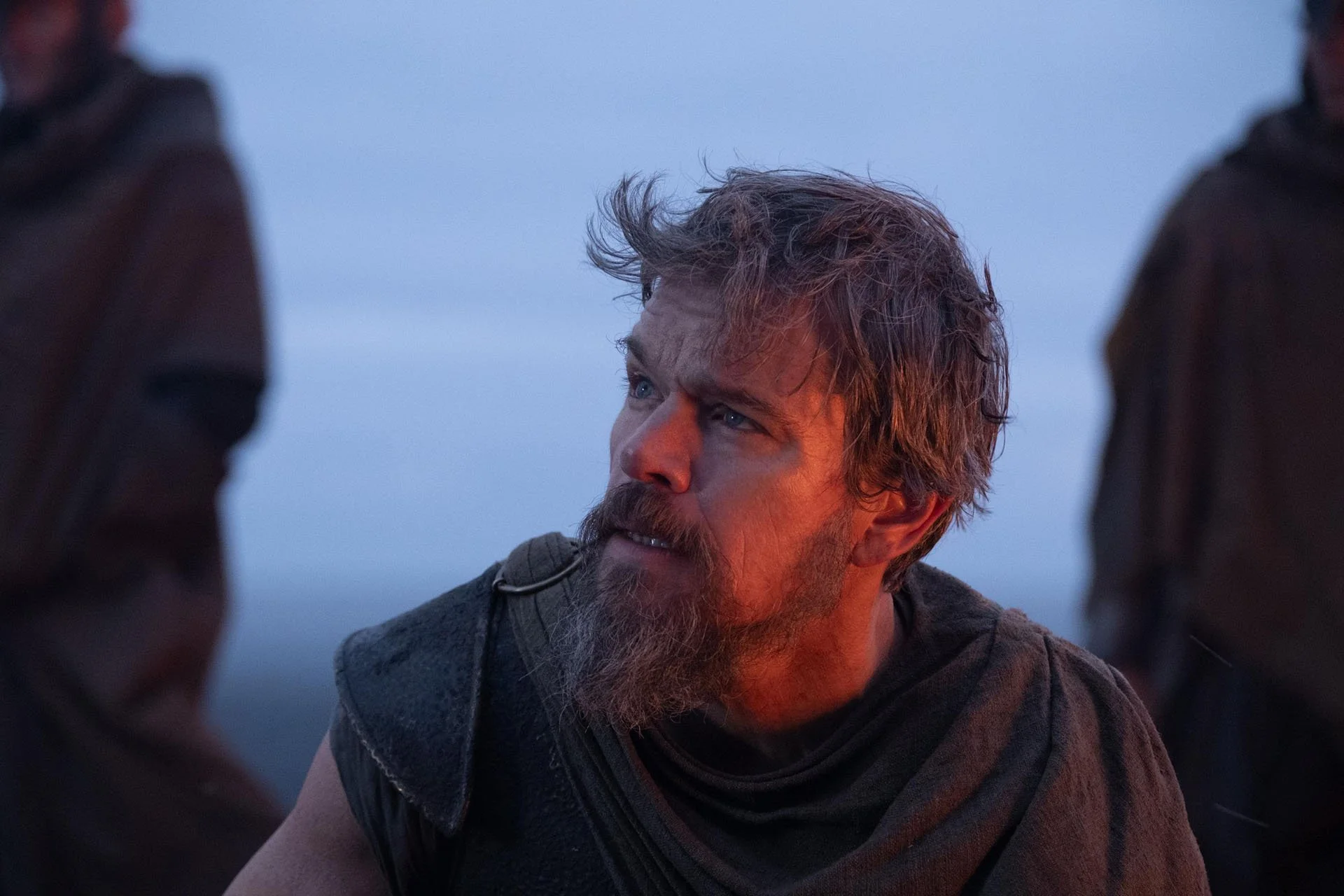
Matt Damon as Odysseus
Now, Nolan gives us Odysseus—and it is arguably the most original version of the character ever brought to screen. Having survived the brutal Trojan War, Odysseus learns that winning does not mean his struggles are over. His ten-year journey home (making twenty years total away from home) becomes a grueling test of his intelligence, loyalty, pride, and identity. He can outthink monsters and deceive his enemies, but his greatest flaws are tied directly to his heroic traits. His confidence curdles into arrogance; his curiosity becomes recklessness. His absolute need to prove he is the smartest person in the room repeatedly brings swift punishment down upon the men traveling with him.
This psychological tension fits Nolan’s filmography perfectly. His protagonists are rarely uncomplicated heroes; they are driven, haunted men whose strengths are inextricably bound to their deepest downfalls.
When a massive reimagining of a 3,000-year-old poem is announced, the internet tends to groan. But the constant retelling of these stories isn’t a bug in human culture—it’s a core feature. We remake films because new generations need to see themselves reflected in the narrative. By adapting The Odyssey, Nolan participates in the philosophical concept of the "eternal return." He acknowledges that these fundamental human struggles have happened before and will happen again, but he refuses to get trapped in the cycle of a standard, old-fashioned sword-and-sandal epic. He is actively in conversation with the lore, adding something completely fresh to its legacy.
The Spiritual Sequel to Oppenheimer
If you look closely, The Odyssey operates perfectly as a thematic and spiritual sequel to Oppenheimer. Both films are fundamentally about brilliant men forced to confront the heavy, world-altering consequences of the creations they unleashed to end a war.
Instead of playing Odysseus as a triumphant, muscle-bound action hero returning from battle, Matt Damon portrays him as a man adrift, utterly stricken by the horrific trauma of what his brilliant invention—the Trojan Horse—wrought upon the world. The horse won the war for the Greeks, but Nolan explicitly asks: to what end?
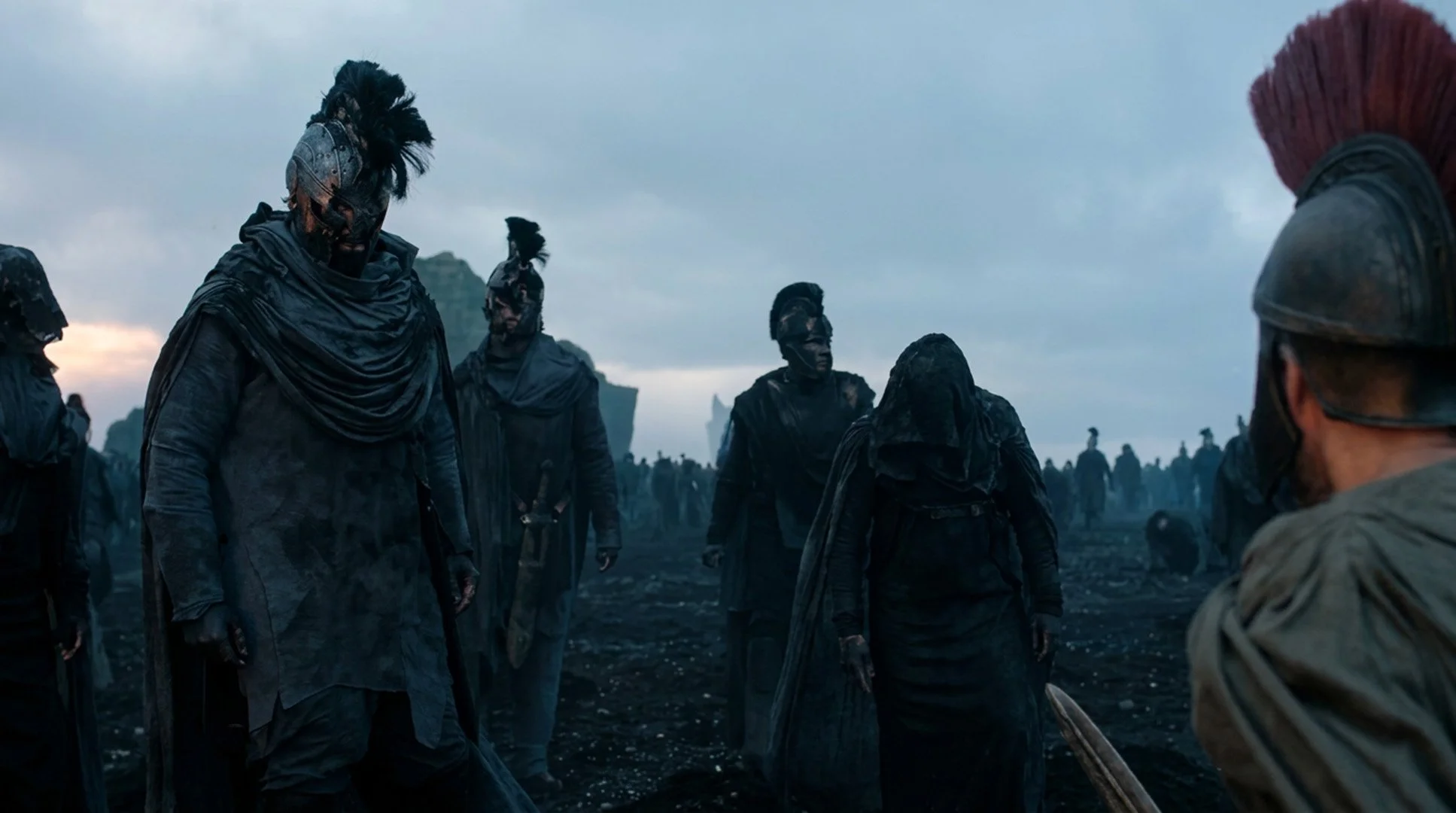
The film is a harrowing, incredibly emotional anti-war story that front-centers the grief and PTSD of its protagonist. While Nolan never shies away from the physical grandeur of battlefield glory, he firmly emphasizes the catastrophic sacrifices and the heavy toll that war takes on our shared humanity. This thematic weight reaches a brilliant peak during Odysseus’s journey into the Underworld, where he is forced to look upon the faces of the men who died under his command over the last twenty years because of his own machinations.
Sneaking a Horror Movie into a Summer Blockbuster
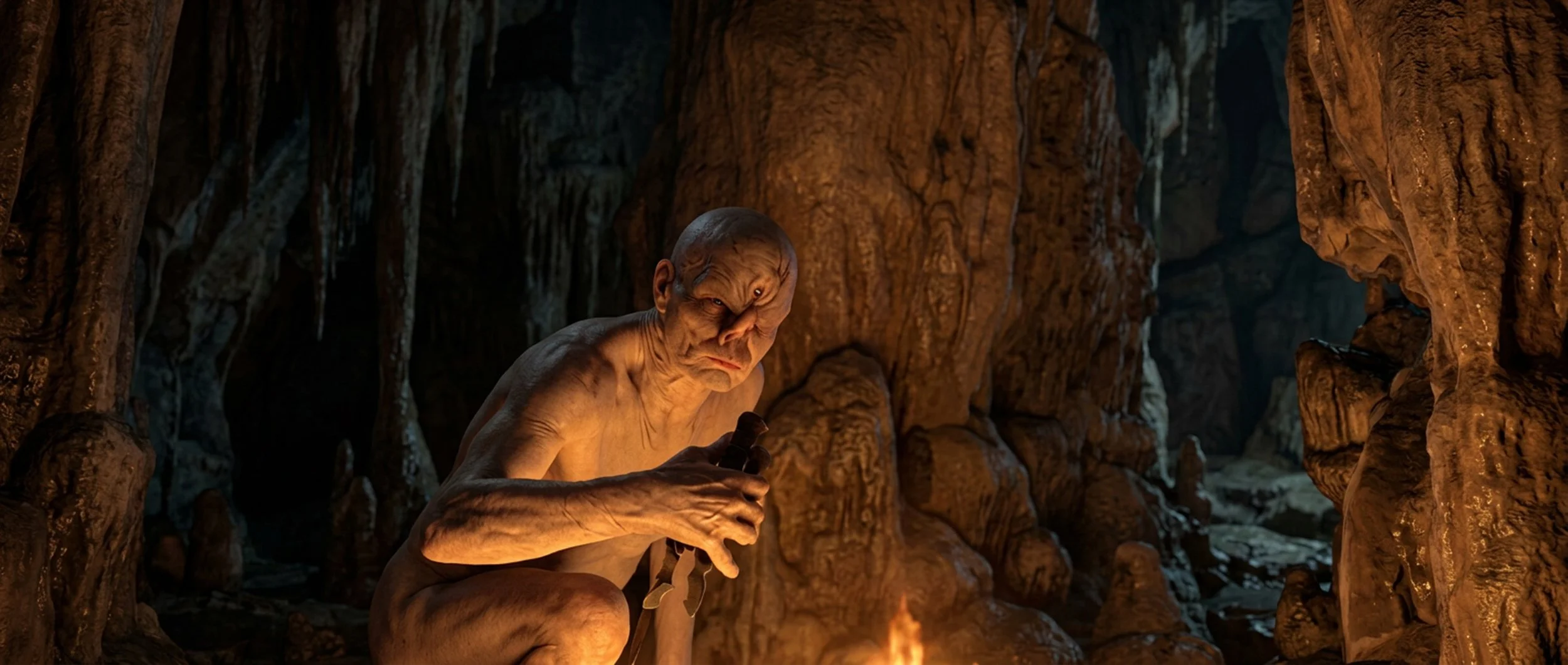
What completely caught me off guard is how Nolan essentially snuck a terrifying horror movie into the shell of a summer blockbuster. Finally, we have an adaptation that matches the stark horror of the original text rather than the sanitized Hollywood versions of my youth. Nolan grounds the mythological elements to make them feel viscerally terrifying, and two sequences in particular absolutely steal the show.
1. The Cyclops Encounter
Instead of a typical fantasy action scene where heroes trade blows with a monster, Nolan leans into pure survival horror and profound existential dread. The grotesquely designed beast goes about its mundane, day-to-day business, mindlessly crushing and eating Odysseus’s men as if they were insignificant ants. It is absolute nightmare fuel that instantly makes you feel like a kid afraid of the monster under the bed again.
2. Circe’s Island
Later in the film, the crew encounters the witch Circe, played with brilliant menace by Samantha Morton. Rather than treating her sorcery like standard, sparkly cinematic magic, Nolan turns it into a genuinely skin-crawling body horror sequence. You watch in terror as Circe physically morphs and sculpts the soldiers into pigs with her bare hands, utilizing what looks like incredible, Rick Baker-style practical effects. It is a mesmerizing, horrifying sequence that elevates the entire tone of the movie.
Technical Triumph: IMAX, Lightning, and Synthetic Scores
Behind the camera, Nolan’s recurring crew is working at the absolute pinnacle of their craft to make this ancient world feel incredibly tangible. This marks the first theatrical feature film shot entirely on IMAX film cameras. The lengths to which cinematographer Hoyte van Hoytema and the crew went to achieve this are unbelievable. Because the internal motors of IMAX cameras are notoriously loud, they actually had to build a custom, heavily insulated "blimp" housing over the cameras just to capture clean dialogue on set without drowning out the actors.
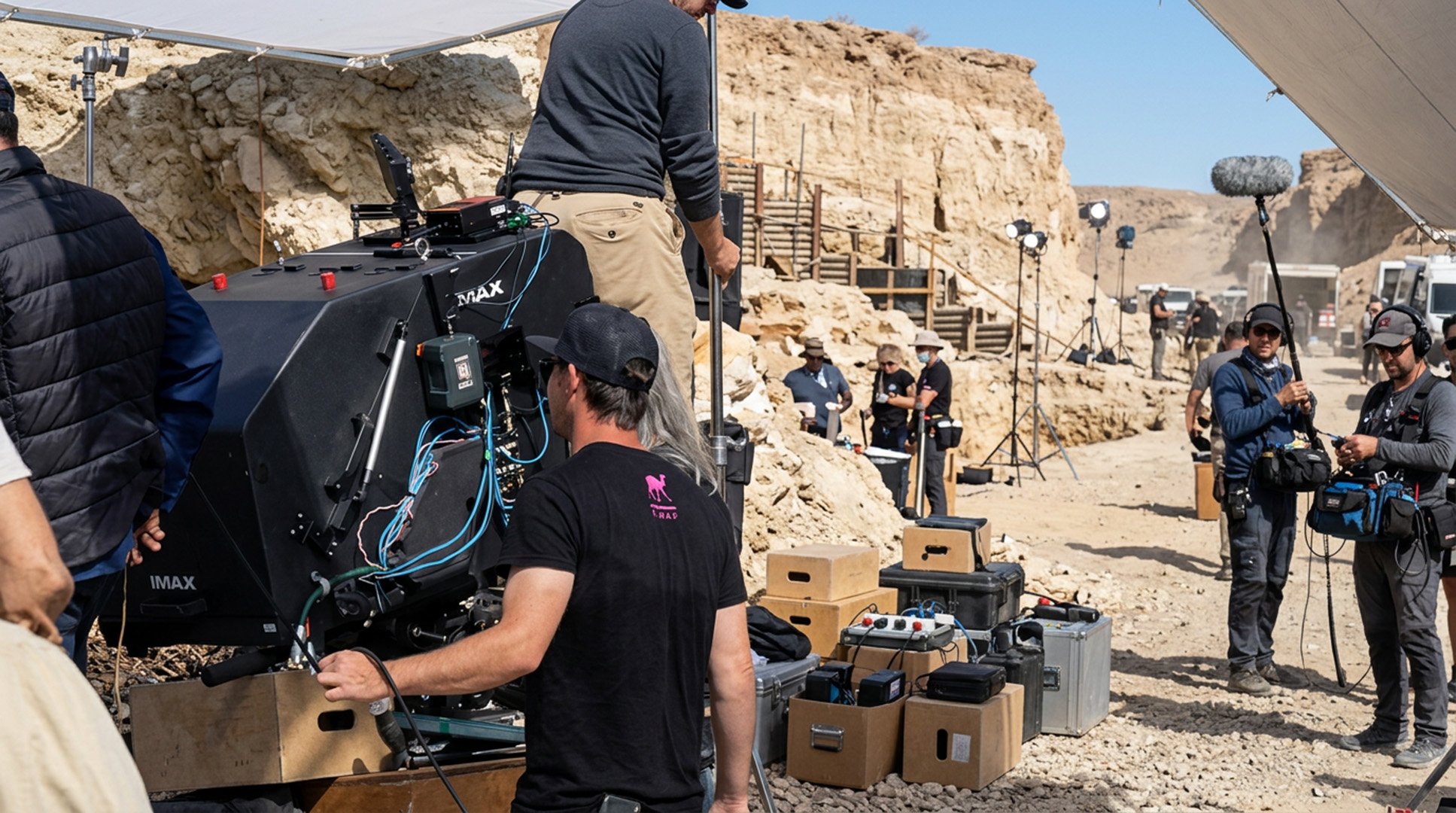
Furthermore, because they shot practically on real mountains and open oceans, there is zero blurry green-screen fuzz to kill your immersion. When Odysseus’s men are caught in a massive ocean storm at night, it looks genuinely pitch black. The sequence is illuminated almost entirely by practical lanterns and on-set strobe lightning, creating deep shadows and stark contrasts that ground the mythology in a gritty reality.
Then there is Ludwig Göransson’s phenomenal score. Fresh off his work on The Mandalorian and Grogu, Göransson completely stripped away the traditional, sweeping Hollywood orchestra. Instead, he heavily utilized ancient string instruments layered over deep, percussive synths. It is a haunting, bass-heavy musical landscape that literally shakes the theater. Backed by the incredibly efficient pacing of editor Jennifer Lame and the gorgeous, detailed sets of production designer Ruth De Jong, the film is a monumental technical achievement.
Addressing the Internet Outrage (Sound, Lighting, and Casting)
Let’s tackle the two biggest technical complaints currently floating around the internet: the sound mix and the lighting.
If you’re a Christopher Nolan fan, you already know what you’re signing up for regarding the audio. Yes, the dialogue can occasionally get buried under the massive, house-shaking sound effects and Göransson’s booming bass. The movie is unapologetically concert-loud, and I can recognize that this overwhelming volume might not work for everyone (my wife, for instance, wasn't a fan of the wall of sound). But in my opinion, it works entirely in the film's favor. When the Cyclops screams inside the cave, it is deafeningly loud, drowning out everything else and trapping you in the exact same existential panic as the characters on screen.
As for the lighting, some online critics think the film looks too dark, muted, or drab compared to a colorful epic like Gladiator. But let’s be clear: this isn't the flat, muddy, lifeless darkness we constantly see in modern, rushed CGI blockbusters. It’s a deliberate, practical choice that makes the terrifying moments feel completely tangible.
Finally, we have to talk about the "controversial" casting choices that parts of the internet have been whining about for months. If you are genuinely angry about Elliot Page, Lupita Nyong’o, or Travis Scott being in this movie, I have news for you: they have maybe five to ten minutes of combined screen time in a three-hour film. The outrage is entirely overblown.
Elliot Page is not playing Achilles, despite what the rumors claimed; he plays a young soldier named Sinon, who beautifully helps tie the emotional ending of the film together. Lupita Nyong’o brings a wonderful texture to her brief scenes as Helen of Troy. And Travis Scott plays a local bard—which is actually a brilliant, meta nod from Nolan to the historical fact that Homer’s original poem was passed down entirely through oral tradition. Every single one of them serves their role perfectly, and they aren't distracting in the slightest.
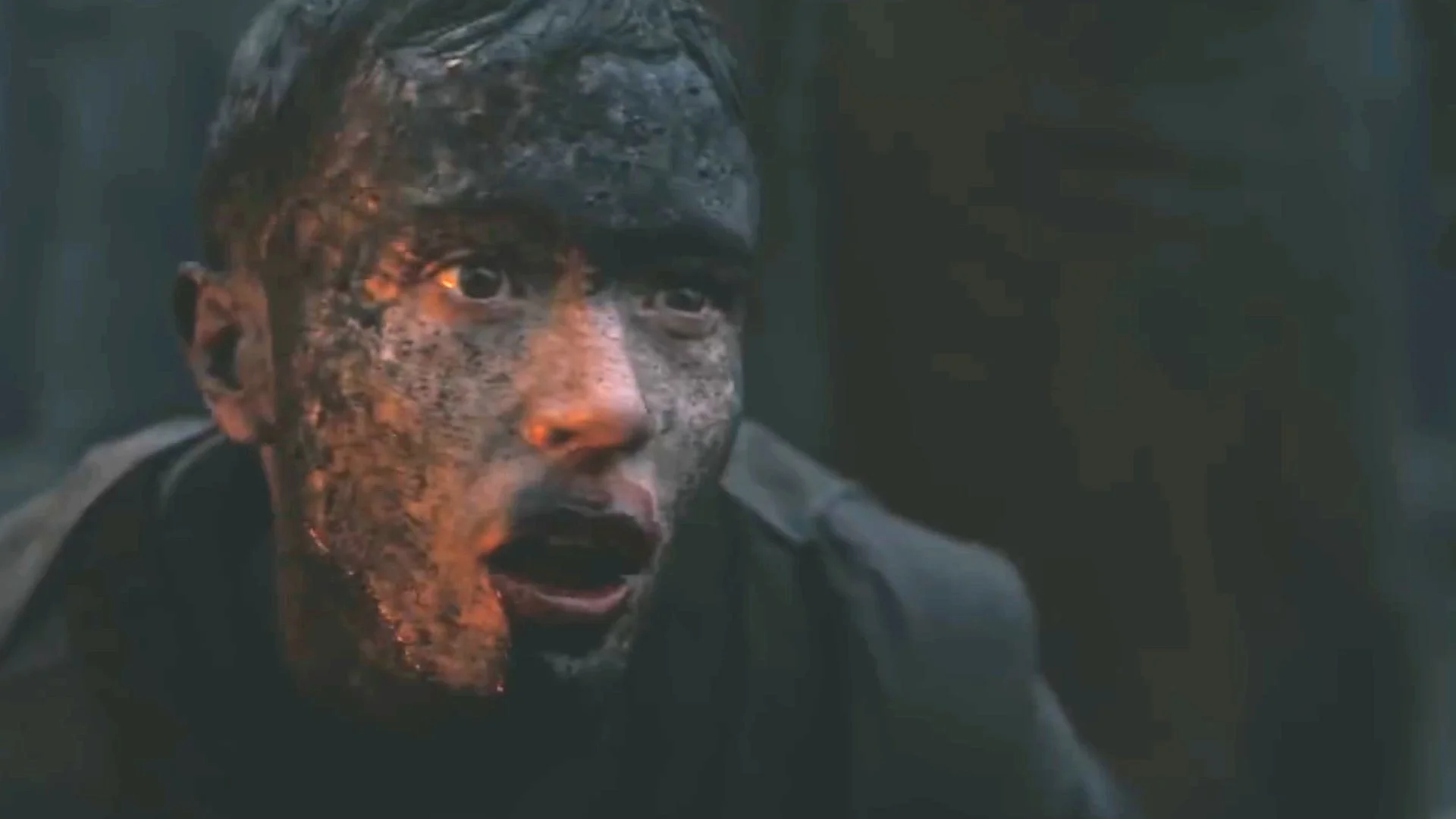
Elliot Page as Sinon
The Performances and the Verdict
The ensemble cast Nolan assembled is operating at the top of their game. Matt Damon delivers what might be the absolute best performance of his career—yes, even better than Jason Bourne. He anchors the epic by acting as its stoic, PTSD-stricken center while the chaotic events spin around him, completely transforming into the haunted warrior.
Back on Ithaca, Tom Holland and Anne Hathaway hold down the emotional fort. Holland gives his most mature, adult performance outside of the Spider-Man franchise, letting us deeply feel the agony and frustration of a son missing a father he never knew while failing to stop the suitors taking over his home. Anne Hathaway is phenomenal as Penelope, bringing a fierce, vicious intensity to the screen with standout moments that will stop a theater dead. Robert Pattinson fully leans into villainy as the lead suitor, Antinous, playing him as a sniveling, draft-dodging snake who gloriously chews the scenery. Zendaya brings a quiet, powerful wisdom and massive authority to her limited screen time as the goddess Athena.
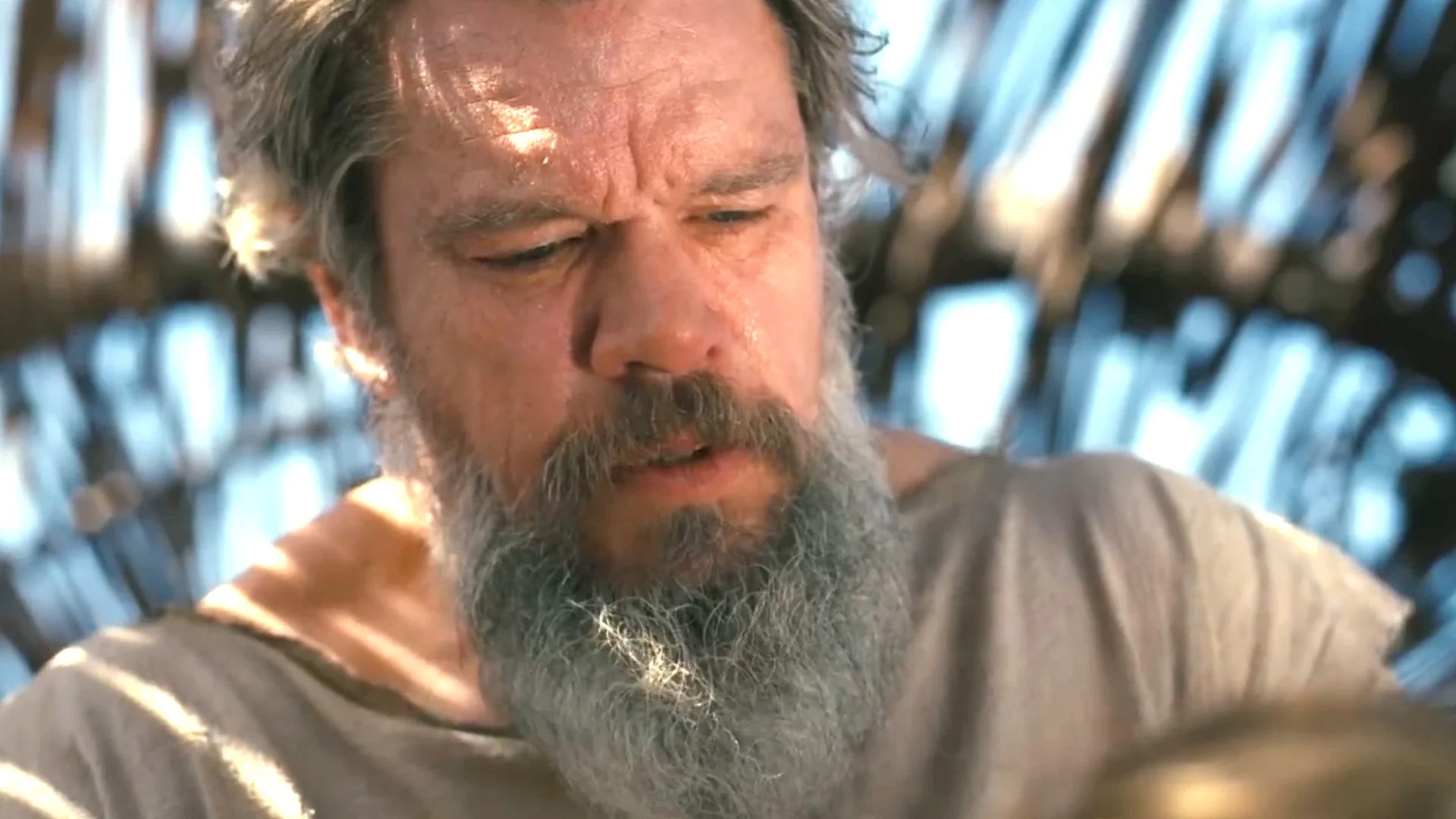
But the surprise standout who completely stole the movie for me is John Leguizamo as Odysseus’s blind, loyal servant, Eumaeus. He is the unexpected, beating emotional heart and core of this entire three-hour film, delivering some of the finest work of his career. He genuinely deserves an Oscar nomination.
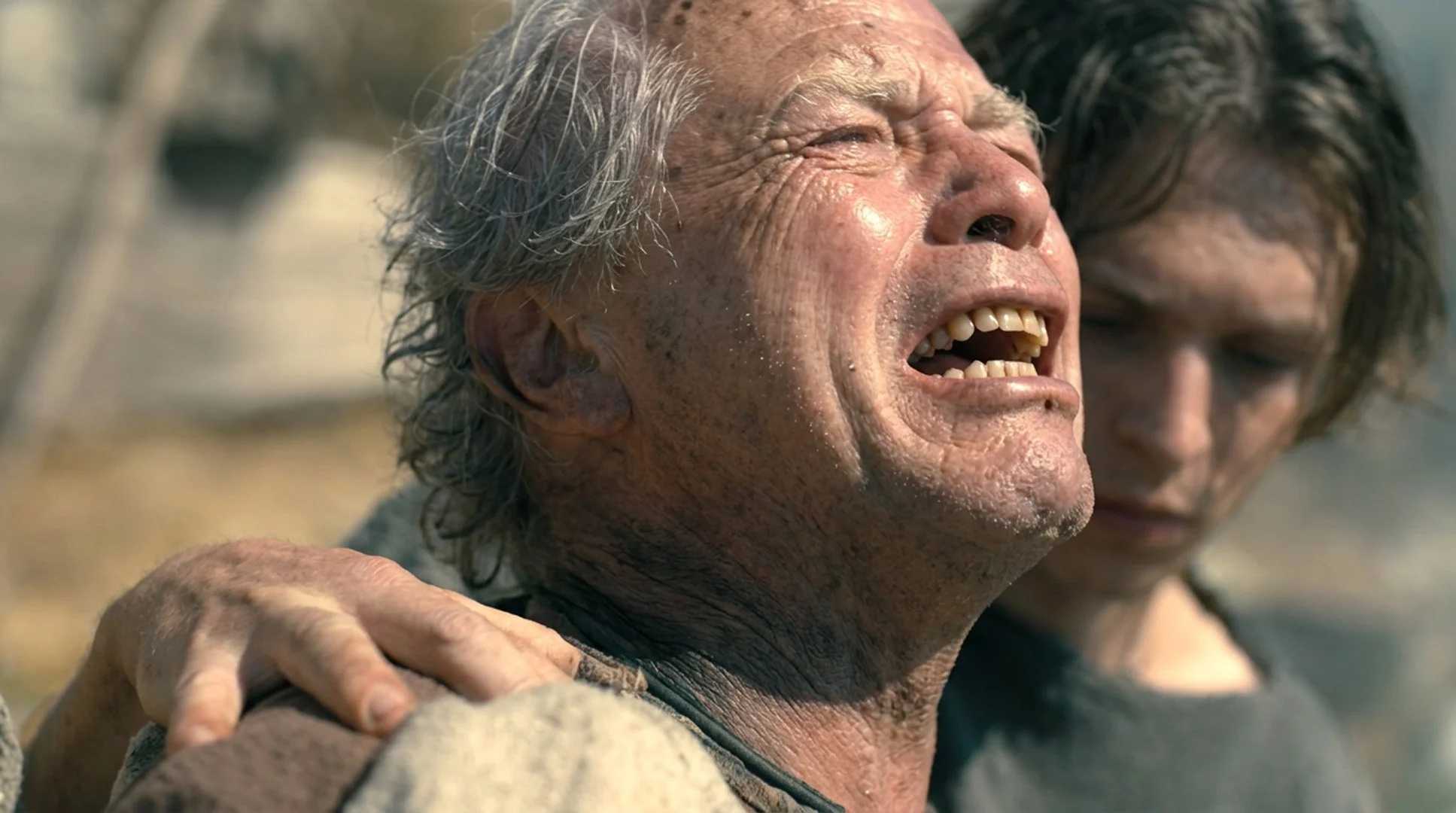
John Leguizamo as Eumaeus
My only minor caveat? When a movie has an all-star cast this massive, my brain occasionally slips into "connect the cast" mode, wondering if Tom Holland and Zendaya really had a secret wedding, which can briefly pull you out of the movie.
Currently, the critical consensus is incredibly strong, sporting a 96% on Rotten Tomatoes, a 96% Popcornmeter, and an 89 on Metacritic. Conversely, the user score is sitting at a dismal 2.6, driven by complaints about the runtime, modernized dialogue, and changes to the traditional mythology.
To that, I say: this is a mythic film, not a history textbook. If you want strict late-Bronze Age history, read a history book. If you want a mythic fantasy, horror, action, and adventure story, this is it. As Stephen King once noted, books and films are entirely different mediums trying to tell a story; sometimes changes are exactly what the new medium requires. My favorite book is Dune, and no adaptation has ever perfectly matched my personal head-canon—the ultimate adaptation always resides inside our own minds.
Nolan’s The Odyssey checked every single box for me. It’s a beautifully crafted film about pain, loss, and human survival. There is no post-credits scene, so when the curtains close, you can head straight out to dinner—just make sure you use the RunPee app during the runtime so you don't miss a single frame!
ACRM Rating: 5 out of 5 Stars ⭐⭐⭐⭐⭐
Are you into Sci-Fi, Horror, Action/Adventure, Pop Culture, and All Things Geek? You’re in the right place. This is A Constantly Racing Mind—where every frame tells a story. Until next time, take care!
