Demond Wilson (1946–2026) – The Heart of the Junkyard
It is a heavy week for television history. Demond Wilson passing away on January 31, 2026, at the age of 79, marks the end of an era for the "Golden Age" of the 1970s sitcom. As a kid in the early 1970s, we, as a family gathered around teh TV set to watch “Sanford and Son.” We got a kick out Fred’s antics, everytime he wanted something from Lamont (Wilson) and claim that he was suddenly having a heart attack and claimed he was on his way to join his dead wife in the hearafter. The camera would focus on Wilson, and he would just role his eyes.
As far as I know, Lamont Sanford was the only major role I knew him for, but he was an actor who own a role so well, that I forget to separate the two.
Demond Wilson, the actor who perfectly balanced the comedic whirlwind of Redd Foxx for a generation of viewers, passed away on January 31, 2026, at the age of 79. Best known for his iconic portrayal of Lamont Sanford on Sanford and Son (1972–1977), Wilson was the essential anchor of one of the most influential comedies in television history.
The Chemistry of a Classic
While Fred Sanford was famous for his dramatic "big ones" and schemes to get rich quick, Wilson’s Lamont provided the show's soul. Wilson was a master of the "straight man" role, using his expressive facial expressions—the legendary slow burns and sighs of exasperation—to ground the show’s high-energy antics in a relatable reality. The dynamic between Fred and Lamont wasn't just about jokes; it was a depiction of a complicated, deeply loyal bond between a father and son that resonated across cultural lines.
From the Front Lines to the Pulpit
Wilson’s life was defined by significant transitions. Before finding fame in Hollywood, he was a decorated U.S. Army veteran who served in the 4th Infantry Division during the Vietnam War. After his success on television, he experienced a profound personal calling. In the early 1980s, Wilson became an ordained minister, dedicating the last four decades of his life to his faith, his family, and his work as an author and motivational speaker.
He is survived by his wife of over 50 years, Cicely Johnston, and their six children.
Technical Specs: The Wilson Dossier
| Classification | Data Points |
|---|---|
| Military Status | U.S. Army Veteran (4th Infantry Division, Vietnam) |
| Primary Assignment | Lamont Sanford (Sanford and Son, 1972-1977) |
| Post-Screen Evolution | Ordained Minister, Author, Motivational Speaker |
| Strategic Legacy | Pioneered the "Modern Straight Man" in African American Sitcom History |
Military Spotlight: The Heroism of Demond Wilson
Before he was Lamont Sanford, Demond Wilson was a soldier on the front lines of the Vietnam War. His service wasn't just a brief stint; it was a formative and heroic chapter of his life that he carried with him long after he left the jungle.
The Unit: Wilson was drafted into the United States Army and served in the 4th Infantry Division from 1966 to 1968.
The Combat: During his 13-month tour, he was involved in heavy combat operations. He was ultimately wounded in action, an experience that led to his return home as a decorated veteran.
The Honors: For his bravery and sacrifice, Wilson was awarded the Bronze Star and the Purple Heart.
The Aftermath: Wilson was candid in his later years about the challenges of returning home, including his struggle with undiagnosed PTSD. He often credited his faith and his later work as a minister with helping him find peace and a new mission in life.
"I stayed in the house for two weeks... I didn't want to see anyone. I didn't want to talk to anyone." — Demond Wilson on returning from Vietnam.
The Origins of Sanford and Son
Sanford and Son (1972–1977) didn't just appear out of thin air; it was a groundbreaking adaptation that changed the landscape of American sitcoms forever.
The British Connection: The show was actually an American reimagining of a popular BBC sitcom called Steptoe and Son (1962–1974). While the British original followed a "rag-and-bone" father-son duo in London, legendary producer Norman Lear and his partner Bud Yorkin saw the potential to translate that dynamic into the Black American experience.
The Setting: Lear moved the action from London to the Watts neighborhood of Los Angeles. The iconic 1951 Ford F1 pickup truck and the junk-filled yard became symbols of the working-class struggle and the "hustle" of the 1970s.
Breaking Ground: When it debuted in January 1972, Sanford and Son was the first network sitcom with a predominantly Black cast in over 20 years (since Amos 'n' Andy). It was a massive ratings hit, finishing in the Nielsen Top 10 for five of its six seasons.
The Theme: Beyond the "get-rich-quick" schemes, the show explored the generational gap. Lamont was the progressive, forward-thinking son of the "New South," while Fred was the cantankerous, old-school widower clinging to his ways.
Summary: Wilson & Sanford
| Category | Data Points |
|---|---|
| Military Heroism | Served in the 4th Infantry Division; Purple Heart and Bronze Star recipient for combat in Vietnam. |
| Television Legacy | Anchored the first major Black-led sitcom of the modern era, paving the way for 1970s social realism. |
| The Blueprint | Adapted from the UK’s Steptoe and Son, shifting the setting from London to the Watts neighborhood of Los Angeles. |
| The Sonic Identity | The iconic theme "The Streetbeater" was composed by Quincy Jones specifically to capture the "hustle" of the junkyard. |
| Generational Rift | Explored the friction between Fred’s "Old South" traditionalism and Lamont’s "New Mind" progressive ambitions. |
The Final Word: A "Marriage" of Comedy
While the Sanford house was famous for its friction, Demond Wilson and Redd Foxx shared a deep, behind-the-scenes bond that Wilson often compared to a long-term partnership. Reflecting on their chemistry years later, Wilson noted:
"The relationship that Redd and I had was no different than a marriage. Sometimes the bitter outweighs the sweet... but Redd and I went to the top and we were the #1 show for the better part of five years."
Redd Foxx, ever the mentor, saw their success as something larger than just a sitcom. He believed their honest, often biting humor was a tool for real change:
"I have a lot of faith in the power of humor... it can open up people's minds enough for them to see how stupid every kind of prejudice can be. Sanford has his hangups... and while they're laughing at them, the people watching will get a message."
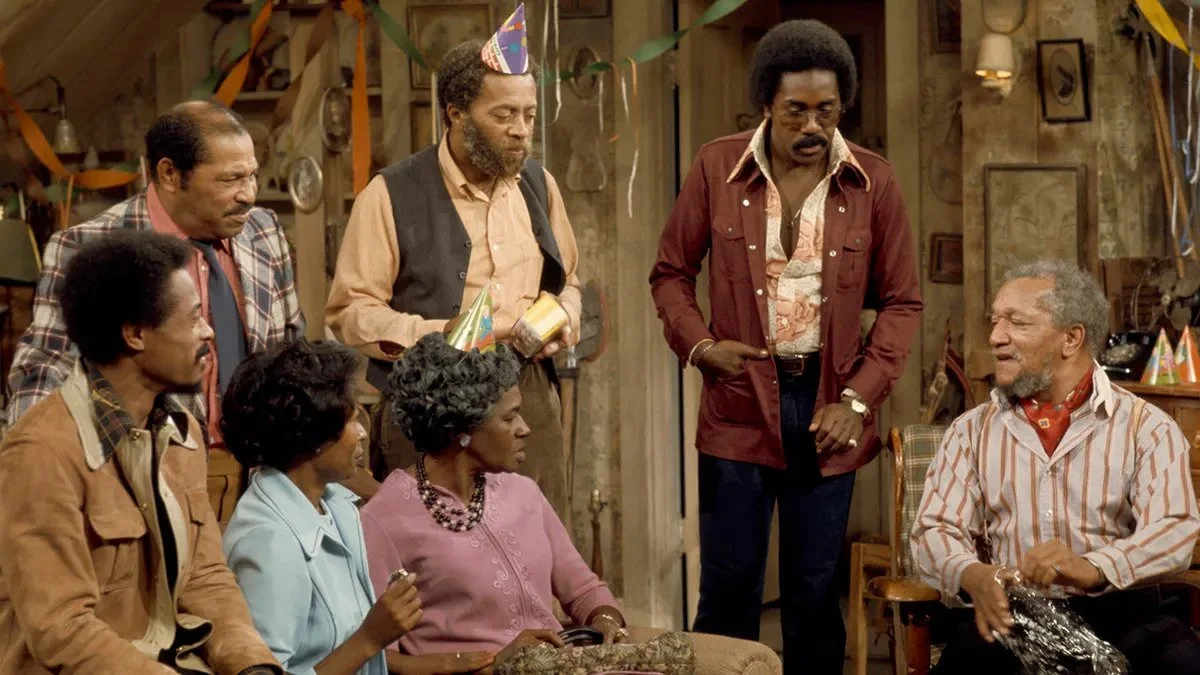
Together, they didn't just sell junk; they sold a new vision of the American family to millions of viewers every Friday night.
