Technology's Influence on Spirituality and Religion: 15 Powerful Transformations Shaping Modern Faith
A Constantly Racing Mind | Technology | Spirituality | AI | Futurism
Introduction to Technology's Influence on Spirituality and Religion
Technology's influence on spirituality and religion has become one of the most fascinating transformations of modern life. From livestreamed church services to meditation apps on smartphones, faith has entered the digital age. What once required physical presence now happens through screens, apps, and even artificial intelligence.
In today’s world, technology shapes how people pray, learn about sacred texts, and connect with religious communities. While some see these changes as empowering and inclusive, others worry about distraction and loss of tradition. Still, one thing is certain—technology and religion are no longer separate worlds.
This article explores how digital innovation is transforming spiritual practices, reshaping belief systems, and redefining religious communities across the globe.

Historical Relationship Between Religion and Technology
Technology has always influenced religion. The connection is not new—it simply looks different today.
The Printing Press and Religious Reform
In the 15th century, the invention of the printing press revolutionized faith practices. Sacred texts like the Bible became widely available. People could read scripture themselves instead of relying only on clergy. This innovation played a key role in the Protestant Reformation, empowering individuals and encouraging religious debate.
The lesson? Technology doesn’t just support religion—it can reshape it entirely.
Radio, Television, and Televangelism
In the 20th century, radio and television expanded religious outreach. Preachers could reach millions without leaving their studios. Televangelism allowed religious leaders to build global audiences.
However, it also introduced commercialization into faith communities. Donations, sponsorships, and media branding became part of religious expression. Technology opened doors—but also created new ethical questions.
Digital Worship in the 21st Century
Digital worship has grown rapidly, especially during global crises like the COVID-19 pandemic. Many congregations moved services online almost overnight.
Livestreamed Services and Virtual Congregations
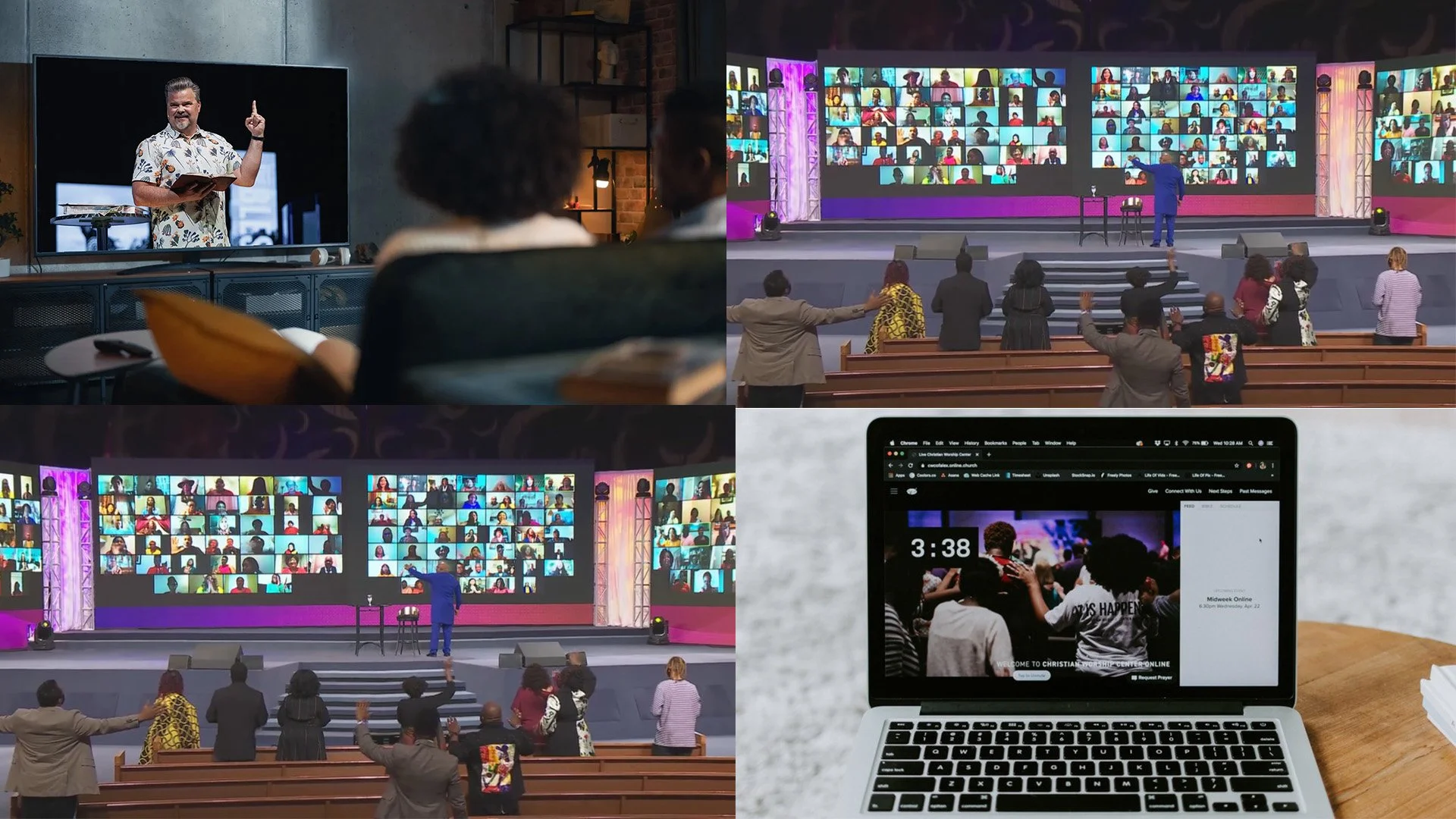
Religious influencers create daily devotionals, inspirational messages, and short sermons. Platforms like YouTube and Instagram allow spiritual leaders to build personal brands.
This visibility can inspire many—but it may also blur the line between faith and fame.
Faith-Based Communities Across Platforms
Hashtags, livestreams, and online events bring believers together globally. Social media encourages interfaith conversations and greater understanding. At the same time, it can amplify religious conflict or misinformation.
Technology magnifies both unity and division.
Artificial Intelligence and Spiritual Guidance
Artificial intelligence is now entering spiritual spaces. AI-generated sermons, religious chatbots, and automated study guides are emerging tools.
AI Sermons and Religious Chatbots
Some faith communities experiment with AI tools to write sermons or answer theological questions. These tools provide quick access to religious information.
However, spirituality involves human emotion, compassion, and lived experience. Many argue that machines cannot replace spiritual leadership.
Ethical Concerns Around AI in Religion
Ethical questions arise:
Can AI interpret sacred texts accurately?
Who is responsible for doctrinal errors?
Does automation reduce authenticity?
Technology's influence on spirituality and religion becomes complex when machines begin guiding belief systems.
Mobile Apps for Meditation and Prayer

Smartphones have become portable spiritual tools. Meditation apps, prayer reminders, and scripture-reading apps are downloaded millions of times.
Popular Prayer and Scripture Apps
Apps offer:
Daily devotionals
Guided meditation sessions
Scripture-of-the-day notifications
Prayer tracking journals
These features encourage consistent spiritual practice.
Gamification of Spiritual Growth
Some apps use streaks, badges, and reminders to motivate users. While helpful, critics wonder if faith should be gamified. Does tracking prayer streaks strengthen discipline—or turn spirituality into a checklist?
Virtual Reality and Immersive Religious Experiences
Virtual reality (VR) introduces immersive spiritual journeys.
Virtual Pilgrimages and Sacred Spaces

https://www.vrchurch.org/ VR MMO Church
VR Church is a 501c3 non-profit church that exists to provide spiritual communities for people all around the world through virtual reality technologies. Everyone is invited to VR Church. It doesn't matter if you believe in God or not.

https://hajjivr.com/ Hajji VR
Hajji VR is a virtual reality application for learning and visiting the rites of the sacred pilgrimage and of the small pilgrimage also called ‘Omra. Visit the Mecca and Medina in Virtual Reality freely in every nook as if you were there!
VR technology allows users to explore sacred sites digitally. Virtual pilgrimages provide access to holy places for those who cannot travel.
VR in Religious Education
Religious schools use VR to teach history, rituals, and cultural practices. Students can “visit” ancient temples or biblical locations in immersive detail.
This enhances understanding while preserving tradition in innovative ways.
Online Religious Education and E-Learning
E-learning platforms offer courses in theology, scripture studies, and religious history. Institutions now provide certifications entirely online. This accessibility increases religious literacy worldwide.
Technology and Interfaith Dialogue
Technology connects diverse faith communities. Online forums promote dialogue and understanding across religions. Global conversations foster tolerance and shared humanitarian goals.
Organizations such as the World Council of Churches (https://www.oikoumene.org/) use digital platforms to encourage unity and peace.
Challenges: Digital Distraction vs. Spiritual Discipline
Technology can distract from contemplation. Notifications interrupt prayer. Social media competes with meditation time.
Spiritual leaders often encourage “digital fasting” to restore focus and mindfulness.
Data Privacy and Religious Freedom
Religious apps collect user data. This raises concerns about privacy, surveillance, and freedom of belief. Faith communities must balance convenience with security.
Let’s take a deeper look.
What Kind of Data Do Religious Apps Collect?
Many religious apps collect more than users realize. This may include:
Basic personal information (name, email address, phone number)
Location data (to suggest nearby places of worship)
Usage patterns (how often you pray or read scripture)
Donation history
Personal journal entries or prayer requests
Search history within the app
Some apps also use cookies and third-party trackers. These tools gather behavioral data, which may be shared with advertisers or analytics companies.
Now here’s the important part: spiritual data is deeply personal. It reveals beliefs, values, fears, and private struggles. Unlike shopping preferences, religious information can expose someone’s identity in ways that could be sensitive or even dangerous in certain regions.
Privacy Risks and Surveillance Concerns
Religious belief is protected as a fundamental human right in many countries. But when apps collect detailed user data, that protection can weaken.
1. Government Surveillance
In some parts of the world, religious minorities face discrimination. If digital data is accessed by authorities, individuals could be monitored or targeted based on their faith practices.
2. Data Breaches
No digital system is completely secure. If a religious app experiences a data breach, private confessions, prayer journals, or donation records could become public. This could cause embarrassment, social harm, or even physical danger.
3. Commercial Exploitation
Some religious apps may sell user data to advertisers. Imagine receiving targeted ads based on your prayer topics or emotional struggles. That can feel invasive and unethical.
When faith becomes data, it risks becoming a commodity.
Freedom of Belief in the Digital Age
Freedom of belief includes the right to practice religion privately. If users fear that their activity is being tracked or stored permanently, they may limit their participation.
For example:
Someone may avoid asking difficult spiritual questions.
A person exploring a new religion might hesitate to download an app.
Individuals in restrictive environments may fear digital footprints.
This creates a chilling effect. Even if no one is actively monitoring them, the possibility can reduce spiritual freedom.
Balancing Convenience with Security
Despite these concerns, religious apps offer undeniable benefits:
Easy access to sacred texts
Global connection with faith communities
Guided meditation and structured devotion
Secure online giving
The solution is not to reject technology—but to use it wisely.
What Faith Communities Can Do
Choose Transparent Platforms
Apps should clearly explain what data they collect and how it is used.Prioritize End-to-End Encryption
Private prayer journals and messages should be protected with strong encryption.Minimize Data Collection
Only essential data should be gathered. More data does not equal better service.Educate Members About Digital Safety
Religious leaders can teach basic cybersecurity practices, such as using strong passwords and enabling two-factor authentication.Advocate for Ethical Tech Standards
Faith communities can partner with tech developers to promote privacy-centered design.
The Ethical Responsibility of Developers
Developers of religious apps hold significant responsibility. They are not simply creating productivity tools—they are managing sacred trust.
Ethical design should include:
Clear consent forms
Easy data deletion options
No hidden tracking
Independent security audits
When trust is broken in a spiritual context, it can damage both the app and the faith community it serves.
A Thoughtful Path Forward
Technology and spirituality can work together beautifully. Religious apps have helped millions deepen their faith, particularly those who cannot attend in-person services. But spiritual data deserves special protection because it reflects a person’s deepest identity.
The future of digital faith depends on trust. Faith communities must ask hard questions about data privacy, and developers must build systems that respect freedom of belief.
Convenience is valuable—but security, dignity, and religious freedom are priceless.
The Role of Technology in Religious Activism
Social media mobilizes religious activism. Campaigns for social justice, charity drives, and humanitarian relief efforts spread quickly online.
Digital tools amplify moral voices across the globe.
Technology has transformed religious activism from a local effort into a global movement. In the past, faith-based activism depended on in-person gatherings, printed newsletters, and word-of-mouth communication. Today, digital tools allow religious communities to organize, advocate, and mobilize support across continents in real time.
At its core, religious activism is about living out moral and spiritual values in the public sphere. Technology amplifies that mission.
Social Media as a Mobilization Tool

Social media platforms have become powerful engines for religious activism. Faith leaders and organizations use platforms like Facebook, Instagram, YouTube, and X (formerly Twitter) to:
Raise awareness about social justice issues
Organize peaceful protests and prayer gatherings
Share petitions and fundraising campaigns
Provide live updates during humanitarian crises
With a single post, a local issue can gain international attention. Hashtags help movements spread quickly, connecting believers who share common values even if they live in different countries.
This speed allows faith communities to respond immediately to injustice, disaster, or conflict.
Digital Fundraising and Humanitarian Relief
Technology has made charitable giving easier than ever. Online donation platforms allow religious organizations to raise funds within hours during emergencies.
For example, when natural disasters strike, faith-based groups can:
Launch emergency fundraising campaigns
Share real-time updates from affected areas
Coordinate volunteers through messaging apps
Track financial transparency online
Digital payment systems also increase accountability. Donors can see how funds are used, which builds trust and encourages continued support.
In many ways, technology strengthens the traditional religious call to charity and service.
Amplifying Marginalized Voices
Technology gives a voice to communities that may not be heard in mainstream media. Religious minorities, grassroots leaders, and young activists can share their stories directly with the world.
Livestreams, blogs, and podcasts allow individuals to speak about:
Religious freedom concerns
Discrimination or persecution
Environmental stewardship rooted in faith
Ethical concerns in politics and society
This democratization of communication reduces reliance on large institutions. Now, anyone with a smartphone can advocate for change based on spiritual convictions.
Interfaith Collaboration Through Digital Platforms
Religious activism is no longer confined to single-faith movements. Online platforms encourage collaboration between different religious traditions working toward shared goals, such as:
Climate action
Poverty reduction
Racial justice
Peacebuilding efforts
Video conferencing tools make it possible for leaders from different countries and faith backgrounds to meet regularly. Joint statements, webinars, and virtual conferences strengthen unity across religious lines.
Technology builds bridges where geography once created barriers.
Challenges and Ethical Risks
While technology empowers activism, it also introduces risks.
Misinformation – False narratives can spread quickly, damaging trust.
Online Harassment – Religious activists may face digital threats or abuse.
Government Monitoring – In restrictive regions, online activism may be tracked.
Performative Activism – Public posts can sometimes replace meaningful action.
Faith communities must navigate these risks carefully. Responsible digital activism requires fact-checking, respectful dialogue, and strong cybersecurity practices.
The Balance Between Faith and Digital Strategy
Religious activism is rooted in moral conviction, not algorithms. While data analytics and engagement metrics can help expand reach, the heart of activism remains spiritual purpose.
Technology should serve the mission—not define it.
When used wisely, digital tools can:
Strengthen moral leadership
Increase transparency
Build global solidarity
Accelerate compassionate action
However, faith communities must continually reflect on whether their digital strategies align with their spiritual values.
A New Era of Faith-Driven Change
Technology has not changed the core principles of religious activism—compassion, justice, service, and truth. What it has changed is the scale and speed of impact.
Today, a prayer vigil can be livestreamed worldwide. A humanitarian appeal can raise thousands of dollars in minutes. A message of hope can reach millions with a single click.
In this digital age, technology acts as a megaphone for moral conviction. When guided by wisdom and integrity, it allows religious activism to flourish in ways previous generations could never have imagined.
Would you like me to expand another section as well?
Generational Differences in Digital Faith
Younger generations embrace digital worship. Older members may prefer traditional gatherings. Bridging this gap requires thoughtful leadership and adaptation.
Future Trends in Technology and Religion
Looking ahead, we may see:
AI-assisted spiritual counseling
Holographic worship leaders
Blockchain-based donation systems
Metaverse-based religious communities
The future promises innovation—but also demands wisdom.
FAQs About Technology's Influence on Spirituality and Religion
1. Is technology replacing traditional religion?
No. Technology is transforming how religion is practiced, not eliminating it.
2. Are online worship services as meaningful as in-person gatherings?
For some people, yes. For others, physical community remains essential.
3. Can AI provide spiritual guidance?
AI can offer information, but human compassion and lived experience remain irreplaceable.
4. Do religious apps improve spiritual discipline?
They can help build habits, but intention and sincerity matter most.
5. Is virtual reality changing pilgrimage traditions?
It offers access but does not fully replace the emotional and physical journey.
6. How can faith communities use technology responsibly?
By prioritizing ethics, privacy, inclusivity, and authenticity.
Conclusion: Balancing Innovation and Tradition
Technology's influence on spirituality and religion is undeniable. It expands access, fosters global connection, and introduces powerful tools for growth. Yet it also challenges traditions, raises ethical concerns, and tests spiritual discipline.
The key lies in balance. When used wisely, technology can deepen faith rather than weaken it. By blending innovation with timeless values, spiritual communities can thrive in the digital age.
Faith has always adapted. And as history shows, when technology and spirituality meet, transformation follows.
