35th Anniversary Breakdown: The Bureaucracy of Evil
The Professionalism of Clarice Starling: Unlike typical "Final Girls," Clarice survives because of her training. She represents the "Racing Mind" that remains analytical under extreme pressure.
The Institution as a Monster: Dr. Chilton and the Baltimore State Hospital represent the "Institutional" failure—where the person meant to contain the monster is arguably just as predatory, albeit in a bureaucratic way.
The Quid Pro Quo: The film’s philosophy is built on the exchange of information. It treats the human psyche like a cold case file that needs to be "Administrative"ly organized.

Silence of the Lambs 1991
1. The Administrative Origin: Dr. Salazar
Thomas Harris didn't dream up Lecter in a vacuum. In 1963, while working as a journalist, Harris visited a prison in Monterrey, Mexico. He went to interview an American inmate but ended up speaking with the prison doctor, Alfredo Ballí Treviño (whom Harris initially referred to as "Dr. Salazar").
The Reveal: Treviño was a surgeon who had meticulously dismembered his victim to fit them into a small box.
The Impact: Harris was struck by the doctor’s Administrative Elegance. Treviño wasn't a raving lunatic; he was a refined, lithe man with "a certain elegance" who treated fellow inmates with clinical precision. This "Killer Surgeon" archetype—a man who understands the body as a set of parts to be managed—became the foundation for Lecter.
2. The "Administrative" Spelling: Lecktor vs. Lecter
Many fans forget that The Silence of the Lambs (1991) was actually a "soft sequel" to Michael Mann’s Manhunter (1986).
Brian Cox as "Lecktor": In the first film adaptation of Red Dragon, the name was spelled "Lecktor". Brian Cox played him not as a gothic monster, but as a bored, high-functioning sociopath who looked like a middle-manager.
The Institutional Shift: While Anthony Hopkins gave us the "Grand Guignol" theatricality, Brian Cox gave us the Administrative Predator. His Lecktor was terrifying because he looked like someone who could be your dentist or your accountant.
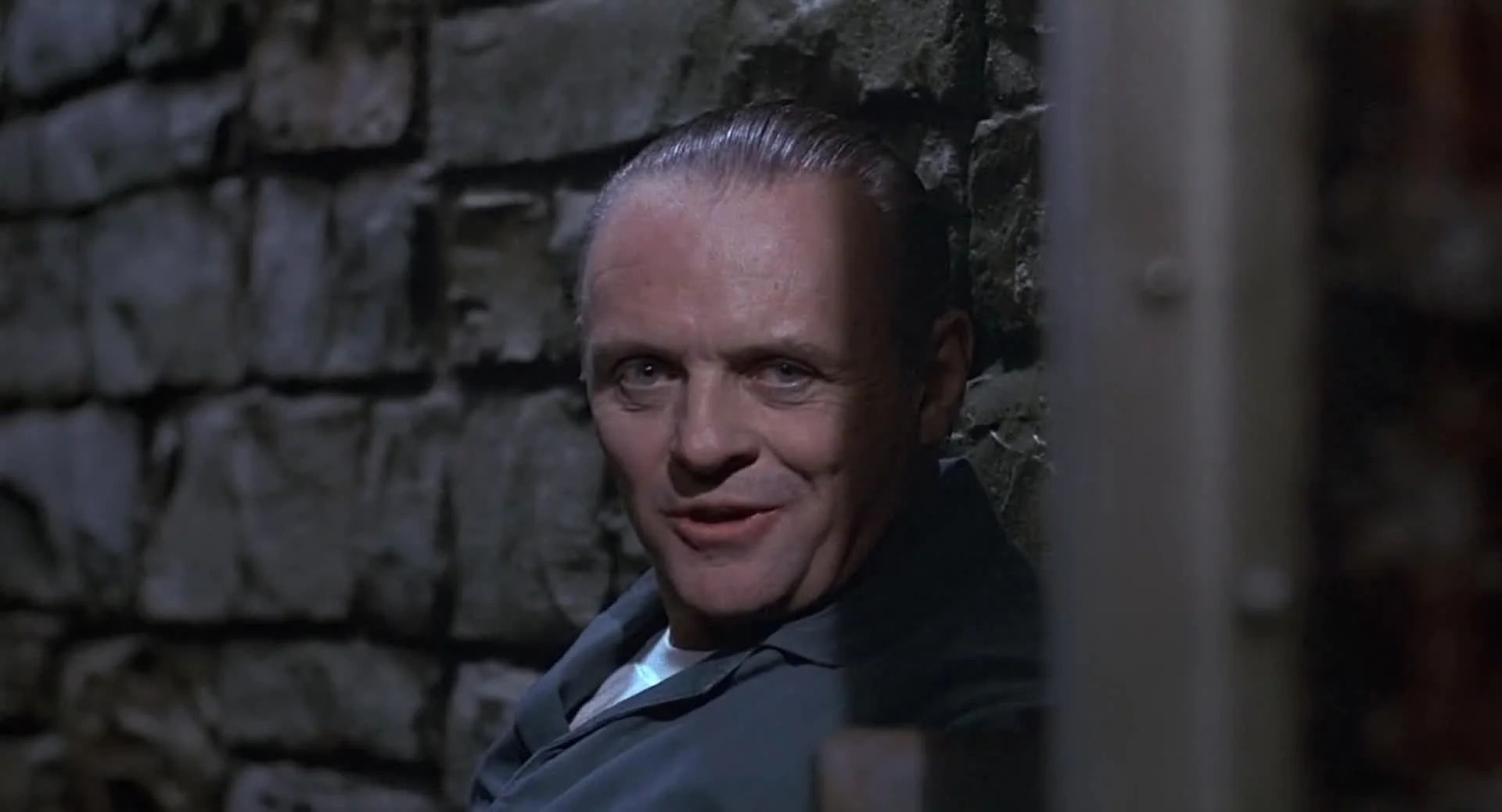
Anthony Hopkins as Lecter
The Evolution of the Doctor
| Feature | Brian Cox (1986) | Anthony Hopkins (1991) |
|---|---|---|
| Spelling | Dr. Hannibal Lecktor | Dr. Hannibal Lecter |
| Aesthetic | Bored "Corporate" Psychopath | Gothic "Vampiric" Mastermind |
| Cell Design | White, sterile, "Institutional" | Dark, stone, "Dungeon" style |
3. The Administrative Horror of the "Mind Palace"
Lecter’s greatest weapon is his Mind Palace—a perfect, internal filing system where he stores every memory, scent, and piece of music.
The Filing of Fear: Lecter doesn't just remember things; he Administrates his own consciousness. This is the ultimate "Racing Mind" under control. While Clarice is struggling with the messy, unorganized chaos of the Buffalo Bill files, Lecter is sitting in a cell, mentally walking through a curated gallery of his own design.
The Starling File: Technical Specs
| Directed by | Jonathan Demme |
| Screenplay by | Ted Tally |
| Based on | Novel by Thomas Harris |
| Cinematography | Tak Fujimoto |
| Edited by | Craig McKay |
| Music by | Howard Shore |
| Release Date | January 30, 1991 |
| Budget | $19 Million |
| Box Office | $272.7 Million |
