A Critical Analysis: Travis Bickle’s Subjective Reality
Travis Bickle isn't just a driver; he is a man whose internal monologue has become a closed loop, fueled by the grime of a 1970s New York that feels like a living, breathing machine.
The Neon Lens: Cinematographer Michael Chapman shot the city through rainy windshields and distorted mirrors to mirror Travis’s deteriorating psyche. The city isn't shown as it is, but as Travis perceives it—a blur of "scum" and neon.
The Existential Insomniac: Travis takes the night shift not for the money, but because his mind won't shut off. He uses the taxi as a "mobile isolation chamber," a steel-and-glass barrier between himself and a society he no longer understands.
The "Avenging Angel" System: When Travis can't find a place in the social order, he creates his own "mission." He shifts from a passive observer to a violent participant, attempting to "clean" the streets through a self-styled, heroic narrative that the film's ending leaves hauntingly ambiguous.
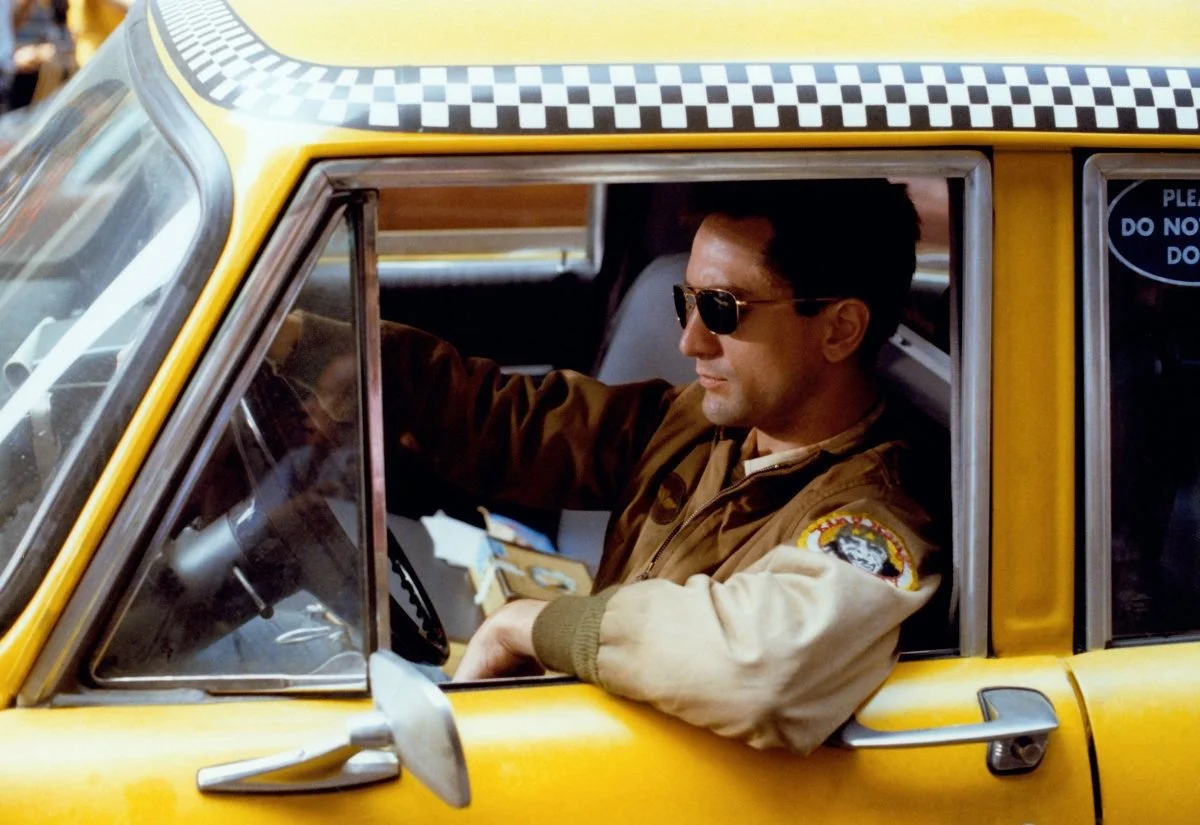
Subject Dossier: Taxi Driver (1976)
| Category | Data Points |
|---|---|
| Creative Core | Martin Scorsese (Director), Paul Schrader (Writer), Robert De Niro (Lead). |
| Technical Archetype | The "Man in a Room" / Urban Western. Travis as a modern Ethan Edwards (*The Searchers*). |
| Sonic Blueprint | The final score by Bernard Herrmann; completed just hours before his death. |
| Cultural Impact | Winner of the 1976 Palme d'Or; established the archetype for the "anti-hero" in modern cinema. |
The Root of the Rot: Where Did Travis Come From?
The film suggests Travis’s mental state is the result of a toxic cocktail of PTSD, sensory deprivation, and radicalization through isolation.
The Combat Echo: Travis is a veteran of the Vietnam War (Marine Corps). He represents the "discarded soldier." He returned from a high-stakes, black-and-white moral landscape only to find a grey, decaying New York. His insomnia is a classic hallmark of PTSD; he cannot rest because his mind is still "on watch."
The Sensory Loop: By working 12-hour night shifts in the most "open" city in the world, he actually achieves total isolation. He experiences the city through a glass windshield—he is in the world but not of it. This creates a "subjective reality" where his internal monologue becomes his only source of truth.
The Failed Reformer: Travis initially tries to engage with "polite" society (his pursuit of Betsy, the campaign worker). When he is rejected because he doesn't understand the social "code," he retreats into a more extreme identity. If he can't be a lover, he will be a soldier.
The Iris Catalyst: The Delusion of the "Great Emancipator"
Jodie Foster’s character, Iris, is the mirror Travis uses to justify his descent into violence. He doesn't see a complex 12-year-old girl; he sees a mission objective.
The Savior Complex: Travis’s mental health deteriorates into a specific type of delusion called Messianic Complex. He needs a reason for his "training" (the pushups, the target practice). Iris becomes the "damsel" that validates his need to be a hero.
The Projection of Purity: Travis views the world as "filth." By "saving" Iris, he believes he can scrub a small part of that filth away. He ignores the fact that Iris is skeptical of him and that she has a complicated relationship with her pimp, Sport. Travis reduces her humanity to a "stat" that needs to be corrected.
The Professionalization of Violence: The moment Travis cuts his hair into a Mohawk, he is "reactivating" his Marine identity. He treats the assassination attempt and the final shootout not as a crime, but as a military operation. Iris is the "high-value asset" he is extracting from "enemy territory."

Mental Status Examination: Travis B.
- Diagnosis: Chronic Insomnia, Post-Traumatic Stress, and Social Alienation leading to Hyper-vigilance.
- The "Racing" Element: An obsessive internal monologue that catalogs "filth" as a defense mechanism against his own loneliness.
- The Iris Variable: She serves as the External Justification. Without her, Travis is just a man with a gun; with her, he convinces himself he is a liberator.
- The Paradox: The final "hero" status granted to Travis by the media at the end of the film is the ultimate irony—the system rewards the very madness it created.
In the psychological system of Taxi Driver, Iris (Jodie Foster) is the final piece of the puzzle that turns Travis’s PTSD fantasy from a silent engine into an explosive device.
It’s crucial to analyze Iris not just as a character, but as the catalyst for Travis's radicalization.
The "Object" of the Mission
To Travis, Iris isn't a human being with her own agency; she is a technical objective.
The "Purity" Delusion: In Travis’s mind, the world is a landscape of "filth." He fixates on Iris because her youth represents a "pure" element that has been "corrupted" by the system (embodied by Harvey Keitel’s character, Sport).
The Moral Justification: Travis needs a "why" for the violence he is preparing to commit. By casting himself as Iris’s "Great Emancipator," he transforms his own mental breakdown into a "rescue mission." It allows him to professionalize his rage.
The Reality vs. The Fantasy
The tragedy of their interaction is the total lack of communication:
Travis sees: A prisoner of war who needs to be extracted.
Iris sees: Just another "john" or a weird, rambling man who doesn't understand the "business" of the streets.
The Breakfast Scene: When Travis takes her to breakfast to "save" her, he lectures her like a military commander. Iris, meanwhile, is just trying to eat her jam-covered toast. She is a child trying to survive a gritty reality, while he is an adult lost in a cinematic fantasy.
Character File: Iris (Subject 12-B)
| Function in Plot | The Moral Pivot. She provides the external "reason" for Travis's internal descent into violence. |
| Travis’s Perception | An "Innocent" that must be scrubbed clean of the city's "filth." |
| The Tragic Irony | Travis "saves" her through a bloodbath, yet the film suggests his "heroism" is merely a side effect of his psychosis. |
| Cultural Impact | Jodie Foster was 12 during filming; her performance highlighted the "Social Realism" of the 1970s "New Hollywood" era. |
Wrapping up our Taxi Driver 50th Anniversary coverage, we have to look at its "Technical DNA." Paul Schrader didn’t just write a screenplay; he wrote a Western.
I see this as a fascinating look at how a filmmaker "skins" an old system (the Western) and stretches it over a new one (1970s Urban Noir).
The Shadow of the Searchers: Travis as Ethan Edwards
Taxi Driver is essentially a modern-day remake of John Ford’s 1956 masterpiece, The Searchers. When you look at the technical parallels, the delusion of Travis Bickle starts to look a lot like the "obsessiveness" of Ethan Edwards (John Wayne).
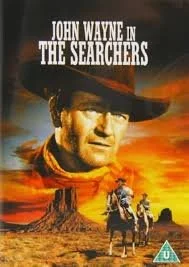
The Searchers 1956
The Return of the Soldier: Both men are war veterans (Confederate Army vs. US Marines) who return to a society they no longer recognize. They are both highly trained, technically proficient men with no "administrative" outlet for their skills.
The Mission of Extraction: Ethan Edwards spends years hunting for his niece, Debbie, who was captured by Comanches. Travis Bickle spends his nights hunting for Iris, who he believes has been "captured" by the streets.
The "Othering" of the Enemy: Ethan’s rage is directed at the Comanche; Travis’s rage is directed at the "filth" of New York (specifically Sport and his crew). Both men use a rigid, racialized, and moralistic lens to justify their violence.
The Tragic Exclusion: In the famous final shot of The Searchers, Ethan stands in a doorway, framed by the family he saved, but he cannot enter. He is a man of war, unfit for a house of peace. Travis, similarly, is hailed as a hero at the end of Taxi Driver, but we see him back in his cab, eyes darting in the mirror—he is still a "man in a room" on wheels.
Technical Blueprint: The Urban Western
| Element | The Searchers (1956) | Taxi Driver (1976) |
|---|---|---|
| The Horse | The literal mount; transport across the frontier. | The Yellow Checker Cab; transport across the urban "wasteland." |
| The Frontier | The American Southwest (Monument Valley). | The 42nd Street "war zone" of 1970s NYC. |
| The Weapon | The Winchester Rifle / Peacemaker. | The Smith & Wesson Model 29 / The "Sleeve Gun." |
| The Resolution | The "Extraction" of the girl; the isolation of the hero. | The "Extraction" of Iris; the continued isolation of Travis. |
