RESIDENT EVIL (2026) REVIEW: DON'T EXPECT TRADITIONAL ZOMBIES
Resident Evil 2026 changes a lot. It moves the Raccoon City outbreak into the present day, leaves Leon, Claire, Jill, and Chris behind, and traditional zombies barely appear. So here's the question I'm discussing with this movie: how much can you change before Resident Evil stops feeling like Resident Evil? That's going to be one of the bigger things I'm looking at throughout this review.
SPOILER RULES
The first part (top section) is completely non-spoiler. I'll set up the movie and talk about what worked, what didn't, the craft, and the cast without giving anything away. Then later, I'll give you a clear spoiler warning, and that's where we can really dig into the timeline, the changes director Zach Cregger makes, and whether this version actually earns them.
THE NON-SPOILER SETUP
Bryan is an ordinary medical courier who gets offered a high-priority emergency delivery to Raccoon City General Hospital. He needs the money, the job pays double, and with financial pressure already building at home after learning that his girlfriend Michelle is pregnant, he takes it.
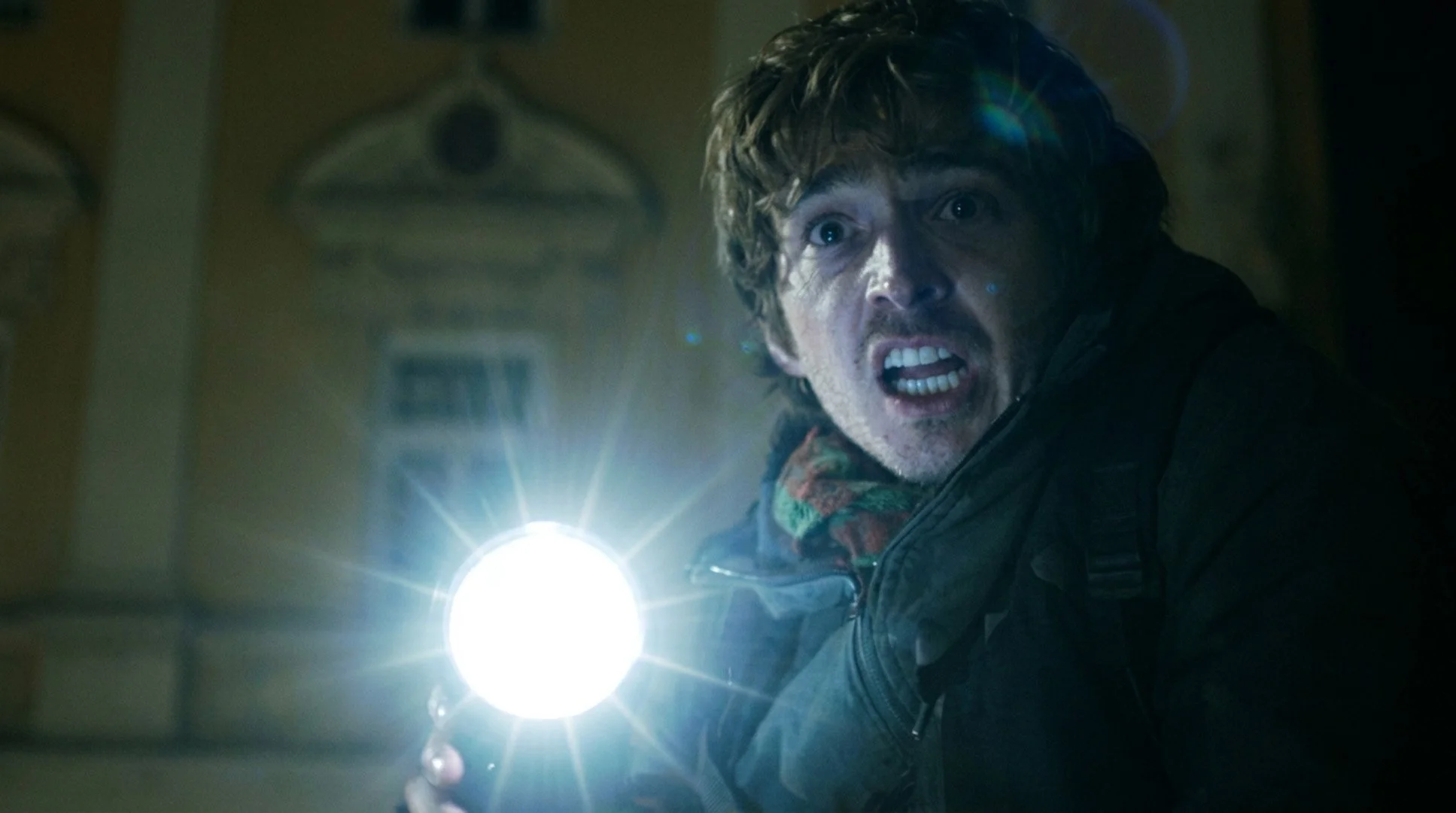
Things go wrong before he ever reaches the city. Driving through a heavy nighttime blizzard while arguing with Michelle on the phone, Bryan hits a woman who suddenly appears in the road. He follows her bloody footprints into the woods, finds her badly injured and clearly not acting normally, and tries to get her help.
A local deputy eventually arrives and takes the woman toward the hospital, but that does not last long. Bryan soon finds the police cruiser wrecked, the deputy dead, the woman missing, and an emergency warning coming over the radio about an outbreak spreading across Raccoon City.
After another encounter leaves Bryan stranded with no working car and no phone service, he takes shelter in a nearby farmhouse. And this is where the movie really starts leaning into the survival-horror side of Resident Evil.
Bryan is isolated, poorly equipped, searching for anything he can use, and still carrying the package he was supposed to deliver. From there, the story becomes a race through Raccoon City as Bryan moves through streets, buildings, sewers, and other increasingly dangerous locations while trying to survive whatever this outbreak is turning people into.
And I believe that setup is important because Bryan is not Leon Kennedy, Chris Redfield, or a trained member of S.T.A.R.S. He is just the guy who took the wrong delivery job on the worst possible night.
NON-SPOILER WHAT DID AND DIDN’T WORK FOR ME
So if you're new here, this first part of the review was completely non-spoiler. Now I'm going to get into what worked, what didn't, the craft, and the cast without giving away the major story beats. Later, I'll give you a clear spoiler warning before we get into the timeline changes, the bigger Resident Evil connections, and whether those choices actually work.
BEHIND THE SCENES: DIRECTOR, WRITERS, PRODUCTION TEAM, AND THE SCORE
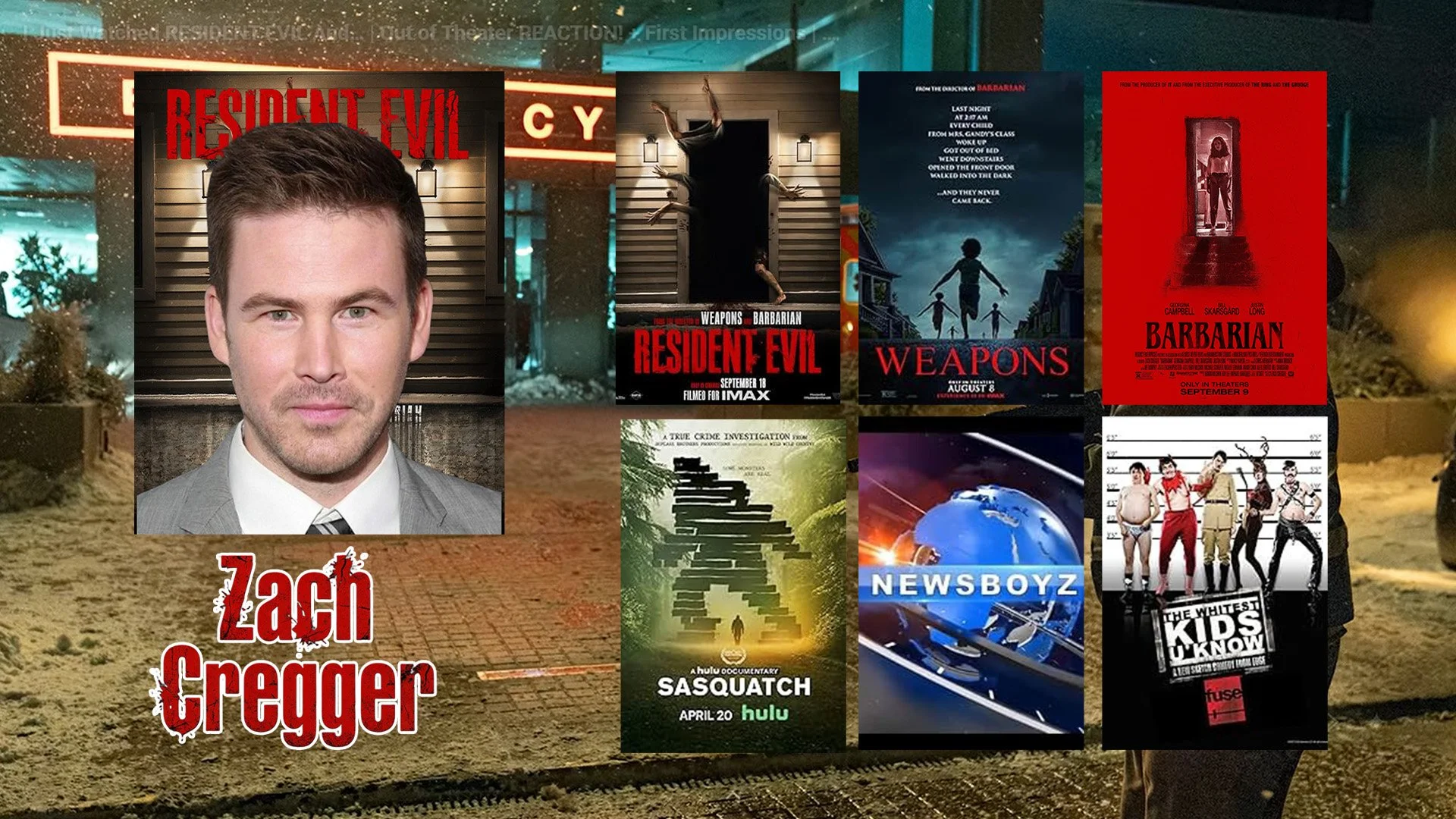
So, behind all of this is director Zach Cregger, who is back behind the camera after Barbarian and Weapons, and this is easily the biggest established franchise he has taken on so far. Cregger also co-wrote the screenplay with Shay Hatten, who brings experience from films like John Wick: Chapter 4 and Ballerina. That pairing seems to make a lot of sense for Resident Evil because Cregger brings the horror instincts, while Hatten has experience with large-scale action and characters constantly being pushed forward.
Sony is describing this as an all-new story rather than another direct adaptation of one of the games. So Cregger has the freedom to use the Resident Evil world without simply recreating something fans have already played.
The cinematography comes from Dariusz Wolski, and that is a major name to have behind the camera. Wolski has worked on films including Dark City, Prometheus, Alien: Covenant, The Martian, and several of the Pirates of the Caribbean movies, along with a long working relationship with Ridley Scott.
He has a lot of experience photographing dark environments, creatures, large practical sets, and action while still keeping the geography of a scene clear. That's a very good fit for Resident Evil because so much of this story takes place over one increasingly chaotic night. Wolski gets the atmosphere right. That's all there is to be said.
Production design is handled by Tom Hammock, who also worked with Cregger on Weapons. Hammock's other genre credits include The Guest, Blair Witch, X, Pearl, Godzilla vs. Kong, Godzilla x Kong: The New Empire, and Onslaught.
And that is important because Resident Evil has always depended on its locations. The games make places like mansions, police stations, laboratories, hospitals, and underground facilities feel like characters themselves. Hammock makes these environments feel like real spaces Bryan has to navigate and survive, rather than just sets that exist to move him into the next action scene.
Joe Murphy, ACE, handled the editing. With Bryan moving through what becomes a nonstop race for survival, the editing plays a big part in keeping that momentum from becoming exhausting. The movie still needs room for tension, exploration, and dread between the attacks, and Murphy gives those quieter moments enough space to breathe before everything starts moving again.
The music score comes from Hays and Ryan Holladay, who previously worked with Zach Cregger on Weapons. Here, the music blends two very different sides of Resident Evil: the industrial edge of the 2002 film and the eerie, ambient sound of the original 1996 game. And I think that combination fits this version well because the movie is constantly moving between aggressive action and quieter survival-horror tension.
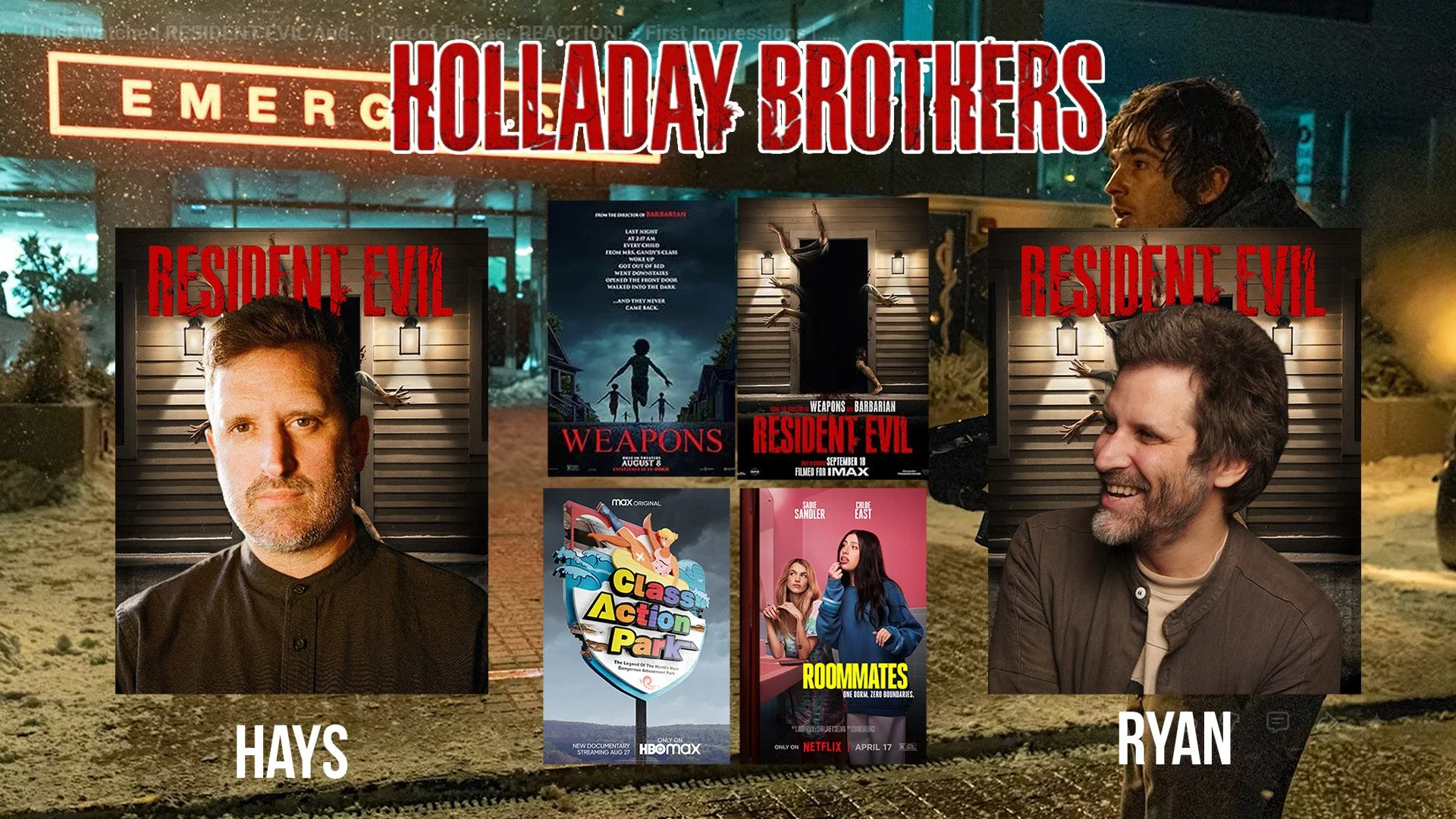
Hollady Brothers Compsers
THE CAST
Now starring is Austin Abrams, who plays Bryan Hodukavich, the medical courier at the center of the story. Abrams has appeared in Euphoria, The Walking Dead, Scary Stories to Tell in the Dark, Paper Towns, and Chemical Hearts, but this gives him a very different kind of role.
Bryan is not being introduced as a soldier, police officer, or heavily trained operative. He's a medical courier who gets sent toward Raccoon City and suddenly finds himself trapped in a biological outbreak.
This immediately gives Abrams a different job from most Resident Evil leads because Bryan feels more like an ordinary person trying to survive something completely outside his normal experiences.
Abrams really does sell that vulnerability. Bryan feels overwhelmed, underprepared, and genuinely in over his head, which helps bring the survival-horror side of Resident Evil back to the center of the movie.
Abrams will be swallowed by a whale, Jonah-style, in about a month from now. Not sure about that one. Seems too claustrophobic for me.
Resident Evil has some vert recognizable names in the supporting cast, but make no mistake, this is Austin Abrams' movie. Bryan is on screen for almost the entire runtime, and most of the supporting characters are people he encounters briefly as he races through Raccoon City.
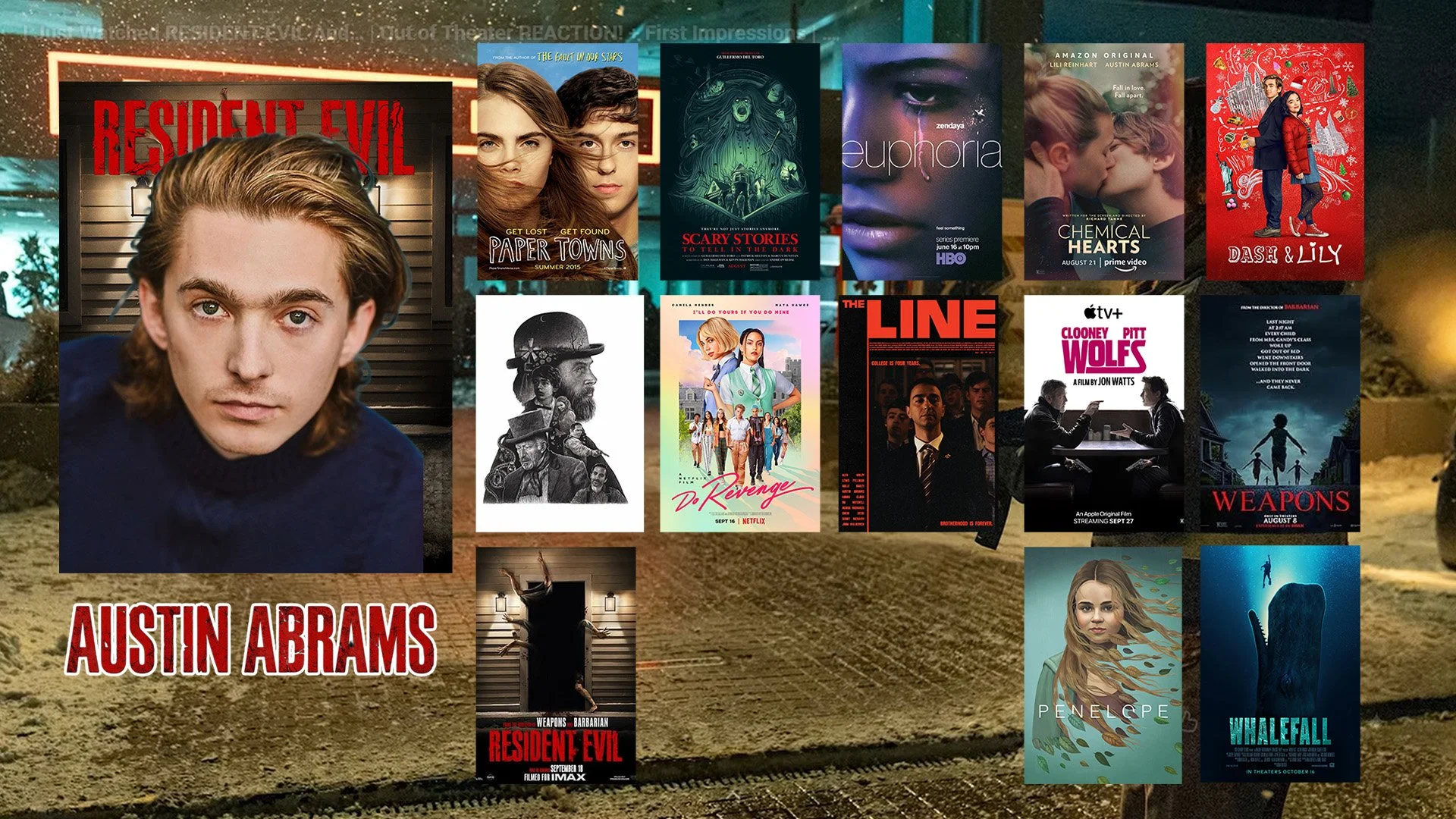
Austin Abrams
Paul Walter Hauser plays Carl, an Umbrella Corporation employee who gives us a quick glimpse at the corporate side of what is happening. His role is brief, but he brings exactly the kind of dark humor you would expect from Hauser while reinforcing Umbrella's familiar combination of greed and complete indifference to the people caught in the middle.
Zach Cherry appears as a scientist at Raccoon City General Hospital. Again, it is a small role, but Cherry brings some comedic personality to the hospital sequence without pulling the movie away from Bryan for very long.
And, Kali Reis plays an ex-military character Bryan encounters during the outbreak. Reis came to acting after a successful professional boxing career and broke through to a much wider audience opposite Jodie Foster in True Detective: Night Country. She also starred in Catch the Fair One and appeared in Mercy. She was the main actually turned out to be
the main protagonist, oops, spoiler warning. So that physical presence already feels natural when she steps into this world. Her part is short, but she brings a grounded military presence without suddenly turning the movie into somebody else's story.
And then there is Michelle, Bryan's pregnant girlfriend. We don't actually see her. We experience that relationship through phone calls and voicemails, but she becomes the emotional connection Bryan carries with him throughout the movie. The package may be what gets him into Raccoon City, but getting back to Michelle gives him a reason to survive it.
And that really tells you how this movie is structured. These characters aren't separate storylines competing for screen time. Bryan encounters them, they add something to the world, and then the movie keeps moving along. This is fundamentally one guy trying to survive one very bad night.
MUSIC: THE HOLLADAY BROTHERS
The music score comes from Hays and Ryan Holladay, who previously worked with Zahk Cregger on Weapons. Here, the music blends two different sides of Resident Evil, the industrial edge of the two 2002 film, and the eerie ambient sound of the original 1996 game.
And I think that combination fits this version well because the film is constantly moving between aggressive action and quieter survival, horror, and tension. Cregger also made an interesting choice with the jump scares Instead of using the usual rising music to warn you that something is coming. He often strips that buildup away. The scares can hit without the score announcing them first, which makes them feel much more abrupt.
And the sound design is just as important as the music. Footsteps crunch heavily through the snow. Gunshots hit hard, and the physical sound of the environment has a very sharp, tactile quality in a movie built around isolation, limited resources. And not knowing what is around the next corner. That soundscape does a lot of the work.
WHAT I LIKED ABOUT RESIDENT EVIL 2026
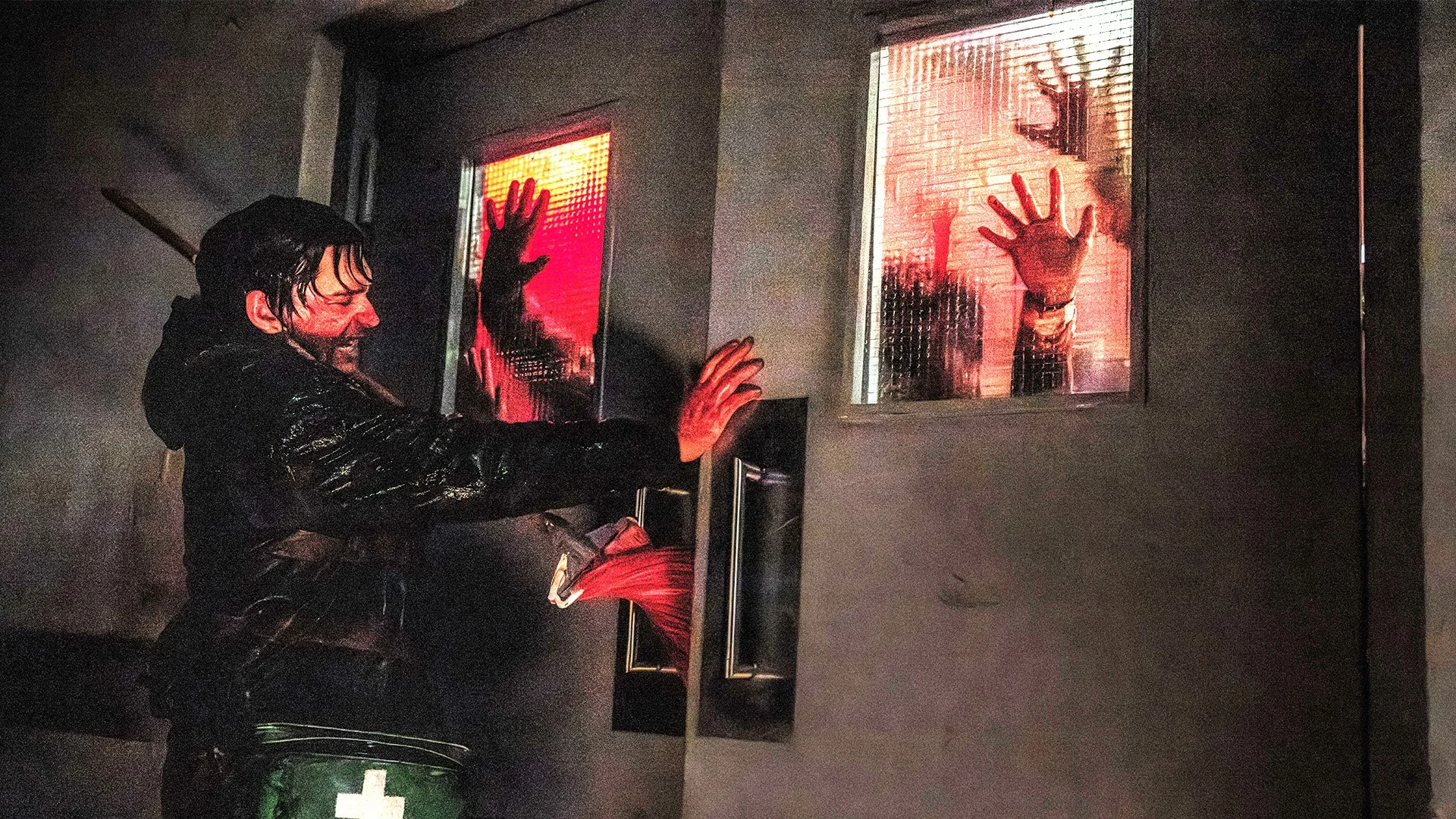
I think, for me, the biggest thing Resident Evil gets right is that it actually feels like survival horror. And I have been seeing quite of bit this lately with Ready or Not 2, They Will Kill You, Send Help, Scream 7 Evil Dead: Burn, End of Oak Street, Insidious: Out of the Further, and Onslaught.
This movie understands that Resident Evil isn't just zombies, Umbrella logos, and familiar characters. It's being somewhere you don't want to be, with limited resources, trying to figure out what's behind the next door and whether you have enough ammo to deal with it. Bryan is constantly searching, scavenging, upgrading what he has, and trying to stay alive while everything around him keeps getting worse. Those game mechanics aren't just Easter eggs sitting in the background. They're actually built into how the movie moves.
And Austin Abrams is a big reason that works. Bryan isn't Leon Kennedy walking into the room ready to clean house. He's nervous, overwhelmed, and usually one bad decision away from making his situation worse. Abrams sells that vulnerability, and because Bryan feels genuinely underprepared, the danger has weight. You believe this guy is trying to survive instead of waiting for the next opportunity to look cool.
The atmosphere also worked extremely well for me. Dariusz Wolski's cinematography makes the darkness, the snow, and the environments feel oppressive without making the action impossible to follow. The movie has a very tactile quality to it, especially once Bryan starts moving through some of these locations. Tom Hammock's production design helps because these places feel like spaces Bryan has to actually navigate rather than backgrounds built around an action sequence.
The creature work is another major positive. This movie does not depend heavily on traditional zombies, and I know that's going to bother some people. But the mutations lean hard into the biological horror side of Resident Evil. They're gross, unpredictable, and frequently disturbing. The practical effects give them a physical presence that makes a huge difference.
I also liked the sound design and the score. The Holladays lean into that combination of industrial energy and creepy ambient horror. But the movie also knows when to pick it. Quiet, be quiet, get quiet. It knows that sometimes you just want to hear sound. Cregger doesn't constantly use music to tell you when you're supposed to be scared. Sometimes something just happens. And because the movie hasn't spent thirty seconds warning you about it with the score, those moments hit much harder.
And then there is the pacing. This thing moves. Joe Murphy's editing keeps pushing Bryan from one problem into another, but for most of the movie I never felt like it was simply rushing through material. There are enough pauses to let you feel the isolation and dread before everything starts moving again.
THE STUFF I’M NOT A FAN OFthere’s
Where the movie may lose some people is when that survival-horror tension starts giving way to something much bigger and crazier.
The further Resident Evil goes, the more Cregger starts leaning into horror-comedy and increasingly outrageous action. I had fun with it, but there were moments where I missed the simplicity of Bryan being alone, scared, and desperately trying to find his way through the next room.
Now, this is something that Evil Dead Burn probably could have taken a lesson from. Add a little bit back of the humor that was missing. Now, the short runtime also cuts both ways. I like that the movie doesn't waste much time, but at around ninety minutes, there are characters and ideas I would have liked to spend more time with.
But Bryan gets the attention he needs because the entire movie revolves around him, while some of the people around him feel more functional than fully developed.
And while I liked most of the humor, a few moments come dangerously close to releasing too much tension. Abrams' panic can be genuinely funny because it feels like a normal person reacting to something completely insane. That's different from the movie stopping to make a joke, and there are a couple of times where I think it crosses that line.
But those issues never outweighed what worked for me. This movie understands the fear, resource management, exploration, body horror, and vulnerability at the heart of Resident Evil.
Whether that is enough to justify everything it changes to the established timeline is a different question.
CURRENTLY, THE CRITICS ARE SAYING…
Where the movie may lose some people is when that survival-horror tension starts giving way to something much bigger and crazier.
The further Resident Evil goes, the more Cregger starts leaning into horror-comedy and increasingly outrageous action. I had fun with it, but there were moments where I missed the simplicity of Bryan being alone, scared, and desperately trying to find his way through the next room.
Now, this aspect is something that Evil Dead Burn probably could have taken a lesson from. Add back a little of the humor that was missing. Now, the short runtime has both advantages and disadvantages. I like that the movie doesn't waste much time, but at around ninety minutes, there are characters and ideas I would have liked to spend more time with.
But Bryan gets the attention he needs because the entire movie revolves around him, while some of the people around him feel more functional than fully developed.
And while I liked most of the humor, there are a few moments where it comes dangerously close to releasing too much tension. Abrams' panic can be genuinely funny because it feels like a normal person reacting to something completely insane. That's different from the movie stopping to make a joke, and there are a couple of times where I think it crosses that line.
But those issues never outweighed what worked for me. This movie understands the fear, resource management, exploration, body horror, and vulnerability at the heart of Resident Evil.
Whether that is enough to justify everything it changes about the established timeline is a different question.
Critically, Resident Evil is landing very well. Currently, the film sits at 96 percent on Rotten Tomatoes from 116 reviews, with a Popcorn Meter score of 91%. Metacritic currently rates it at 81 out of 100. IMDb users currently rate it 7.8 out of 10; Letterboxd shows a strong 3.9 out of 5, though that audience is still very early and will shift as more people see the film this weekend. Metacritic currently rates
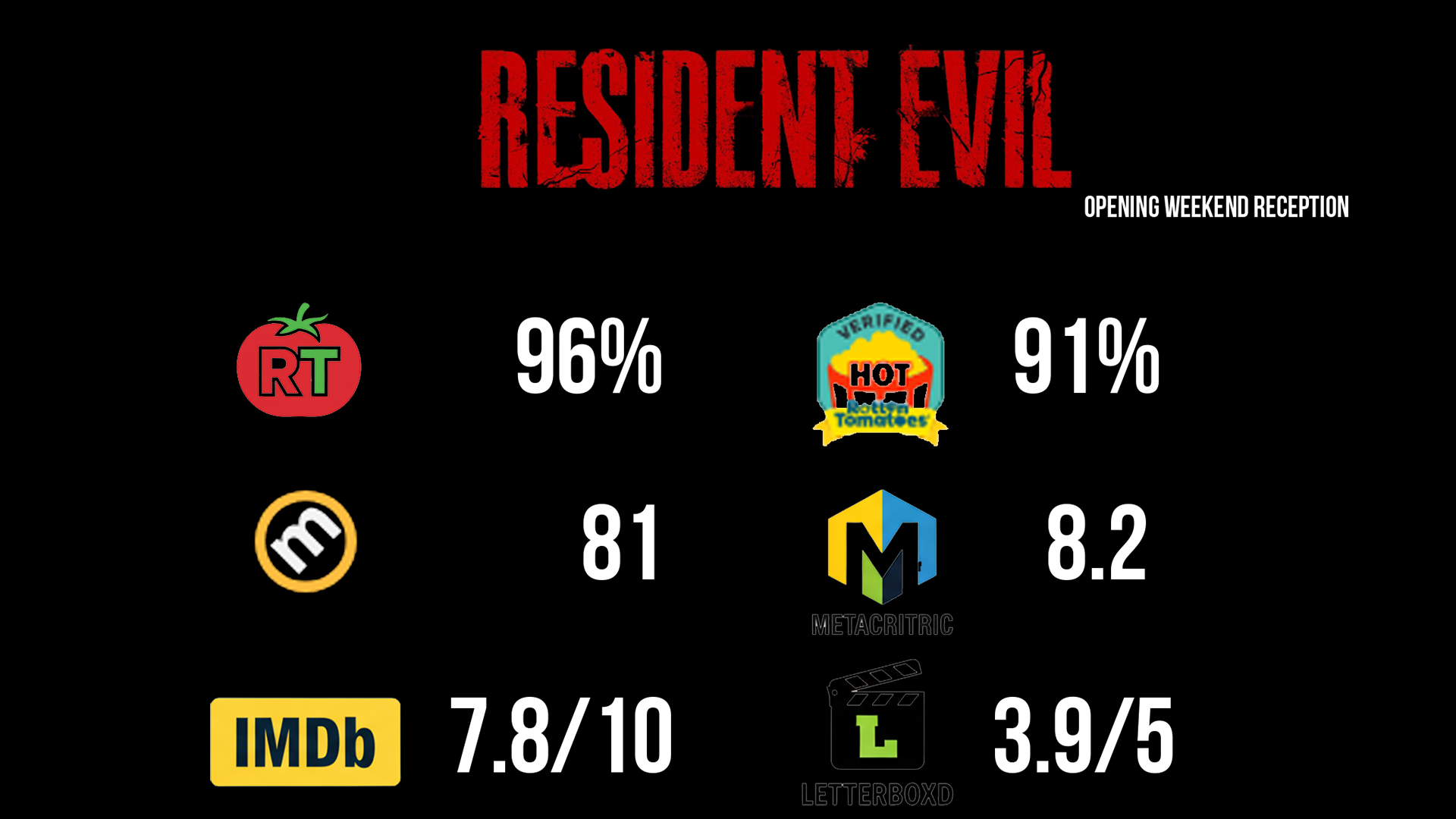
Rotten Tomatoes 96%
So, at least out of the gate, critics are responding very strongly to Zach Cregger's version of Resident Evil.
Critics are largely agreeing on the same strengths. The biggest praise is that Cregger captures the Resident Evil experience without directly adapting one game, using resource scarcity, weapon progression, locked environments, first-person and over-the-shoulder camera work, and a constantly underprepared Bryan. Austin Abrams is another major positive, with critics praising his vulnerability, nonstop commentary, swearing, and panicked humor instead of turning him into a traditional action hero.
The horror-comedy balance, creature work, body horror, atmosphere, gore, and practical effects are also getting strong notices. The main criticisms are the third act and ending, which some feel lose the tension of the first hour, along with the short runtime, limited supporting-character development, and moments where the comedy may undercut the darker horror. Overall, the response is very positive, with Abrams and the survival-horror approach getting the most consistent praise.
NON-SPOILER INITIAL THOUGHTS
One thing I didn't expect was how much personality this movie gets from Bryan constantly talking his way through the nightmare. He is always reacting, swearing, complaining, trying to process whatever crazy-ass monster person just came at him, and somehow that never completely destroys the horror. A lot of the humor comes from how a normal person might react when every new room somehow contains something worse than the last. The reaction in my theater was very positive, with lots of the folks laughing at Bryan's muttering. There is also a running gag with padlocks.
And that balance between horror and humor ended up being a much bigger part of the movie than I expected. The movie can hit you with something genuinely disturbing, then let Bryan mutter or swear his way through the aftermath without turning it into a comedy. That constant nervous energy fits the pulse of the movie itself. Everything keeps moving, the tension keeps building, and Bryan sounds like a guy who is about five minutes away from being completely done with Raccoon City.
If you are a big fan of the games, I hope you don't let your headcanon get in the way of enjoying this very horror-ridden humor of a good time.
So if you like your horror with a healthy dose of humor, I think Resident Evil is for you. It was for me.

From this point forward, we're getting into full spoilers for Resident Evil, including Bryan's infection, what happens at Raccoon City General, and the ending. If you haven't seen the movie yet and want to go in clean, stop here. Go watch the movie. This review will still be here.
THE DELIVERY RUN AND INITIAL CRASH
Bryan is a low-wage medical courier transporting organ packages. After finishing a job at a local hospital, he is offered a high-priority emergency run to Raccoon City General Hospital. He initially refuses, but the delivery pays double because it is outside the normal zone, and Bryan needs the money. His girlfriend Michelle is unexpectedly pregnant, they are already under financial pressure, And who isn't nowadays? and that is ultimately what pushes him into taking the job.
While driving through the Arklay Mountains in a heavy nighttime blizzard, Bryan is on the phone with Michelle. The argument makes it clear that the pregnancy is only part of what is going wrong between them. Michelle is frustrated with his work habits, his emotional distance, and the fact that they have not really talked about their future face-to-face. Bryan is trying to keep her from leaving to stay with her friend Katie while also trying to finish this delivery.
Distracted by the argument and speeding through the storm, Bryan hits a woman who suddenly wanders into the road. He gets out, sees bloody footprints leading away from the crash, and follows them into the woods using the flashlight on his phone. The camera shifts into a first-person perspective as Bryan searches through the darkness.
This first-person section is one of the clearest examples of the movie translating the games visually rather than simply referencing them. The phone becomes Bryan's flashlight, the camera puts us directly into his point of view, and the whole sequence feels much closer to Resident Evil 7 or Village than to the previous movies.
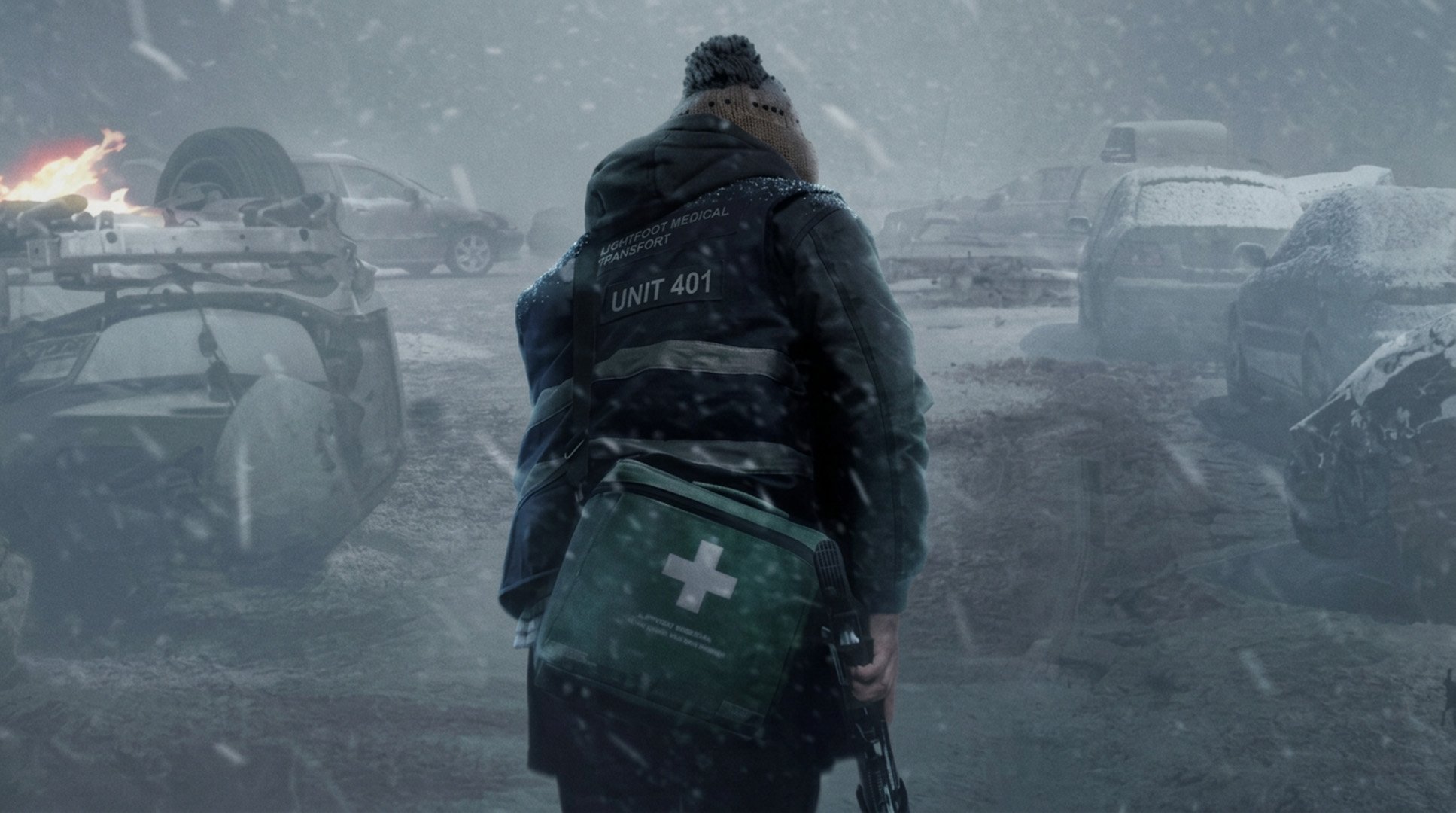
Bryan eventually finds the badly injured woman lying in the snow. He picks her up and tries to carry her back toward the road, except she keeps trying to bite him while he awkwardly swats her away. A deputy finally stops, warns Bryan about driving in the blizzard, and agrees to take the woman to the hospital.
That entire exchange with the woman is also where Cregger's horror-comedy becomes obvious. The situation is disturbing, but Bryan's completely unprepared reaction to someone repeatedly trying to bite him creates this strange gallows humor without turning him into a comedian. It is fear, confusion, and absurdity happening at the same time.
Only moments later, Bryan finds the deputy's cruiser flipped off the road. The deputy is dead, the woman has disappeared, and the police radio is broadcasting warnings about an emergency spreading across Raccoon City. When Bryan investigates the wreck, the woman suddenly attacks him.
The police-car sequence runs opposite the usual horror warning. There's no long musical buildup telling you exactly when the scare is coming. The moment hits suddenly, and that makes the wreck sequence one of the sharper jump scares in the movie.
Bryan grabs the deputy's handgun and fires wildly until he kills the infected woman. In the process, he also damages his own car. Now he has no transportation, no phone service, and a citywide emergency unfolding around him. His only option is to walk toward a nearby farmhouse.
THE FARMHOUSE AND THE SURVIVAL GAUNTLET
The farmhouse is where the movie really starts behaving like a Resident Evil game. Bryan enters an eerily quiet house and immediately starts searching for anything useful. He finds a typewriter sitting in one of the rooms, uses a landline to leave a voicemail for Michelle, and eventually pulls a two-shot hunting rifle off the wall.
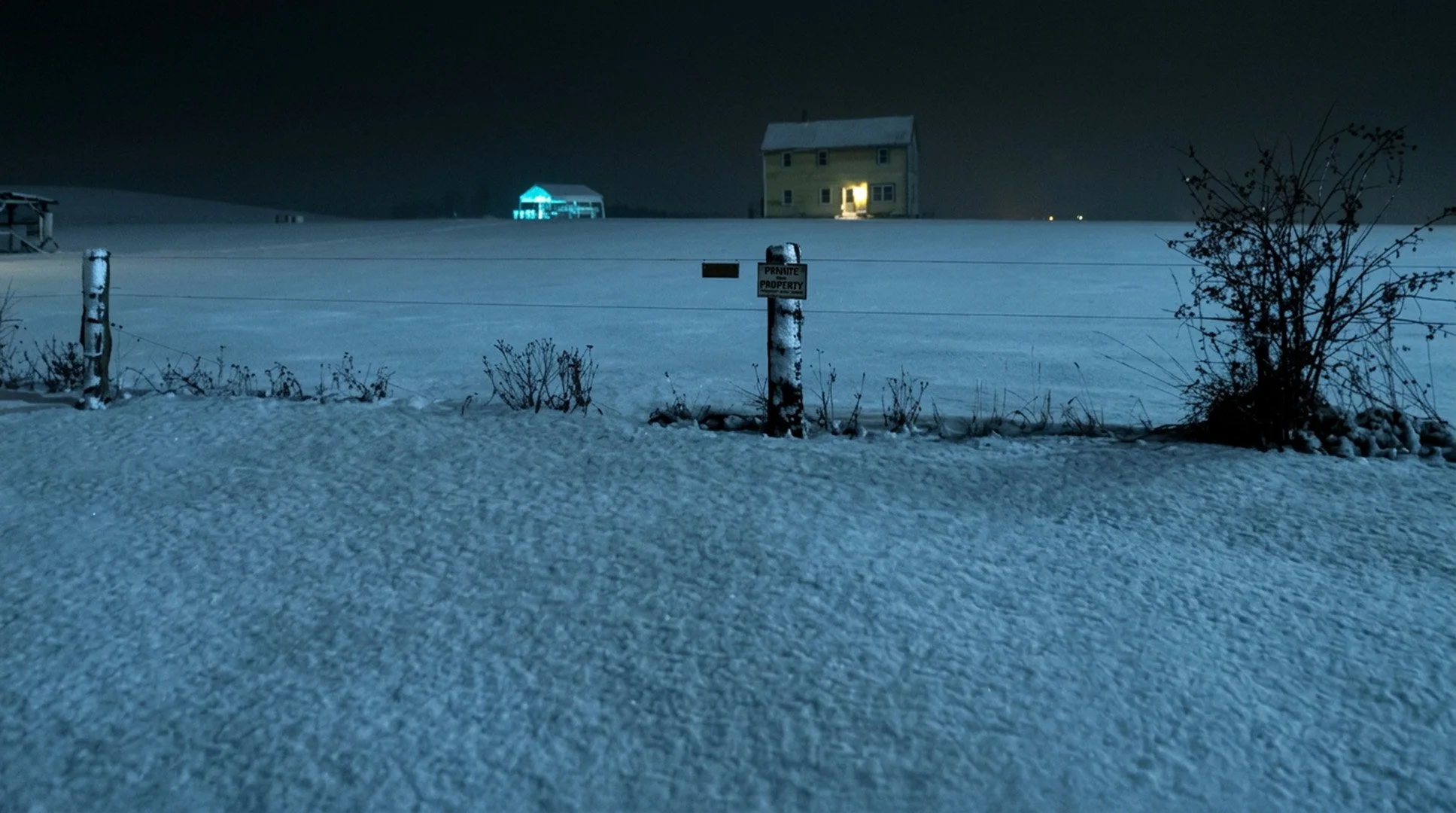
The problem is that the rifle is empty.
Bryan starts tearing through drawers and cabinets looking for buckshot while the threat outside gets closer.
This is probably the purest example of the movie translating gameplay into film. The typewriter is an obvious visual reference to the games, but the more important part is the empty rifle. Bryan has a weapon that can save him, but it is useless until he finds ammunition. Watching him search drawers while something dangerous approaches recreates that familiar Resident Evil feeling: a weapon, almost no resources, and not enough time.
From there, Bryan continues toward Raccoon City while gradually building up his arsenal. The handgun leads to the hunting rifle, then a shotgun, and eventually an MP5. He moves through ruined streets, locked areas, sewer tunnels, and other sections of the city while managing ammunition and supplies.
During this stretch, Bryan searches an abandoned camper and is bitten by a mutated child hiding inside. From that moment forward, the delivery is no longer his only deadline. The T-Virus is now spreading through his body.
That changes the entire structure of the journey. Bryan is still trying to reach Raccoon City General and complete the delivery, but now he is also racing against his own infection. Everything he does after this point has a ticking clock attached to it.
The environments continue using recognizable game logic. Bryan encounters locked barriers requiring specific keys, including diamond keys, and the movie keeps forcing him to search his surroundings instead of simply moving in a straight line from one action sequence to another.
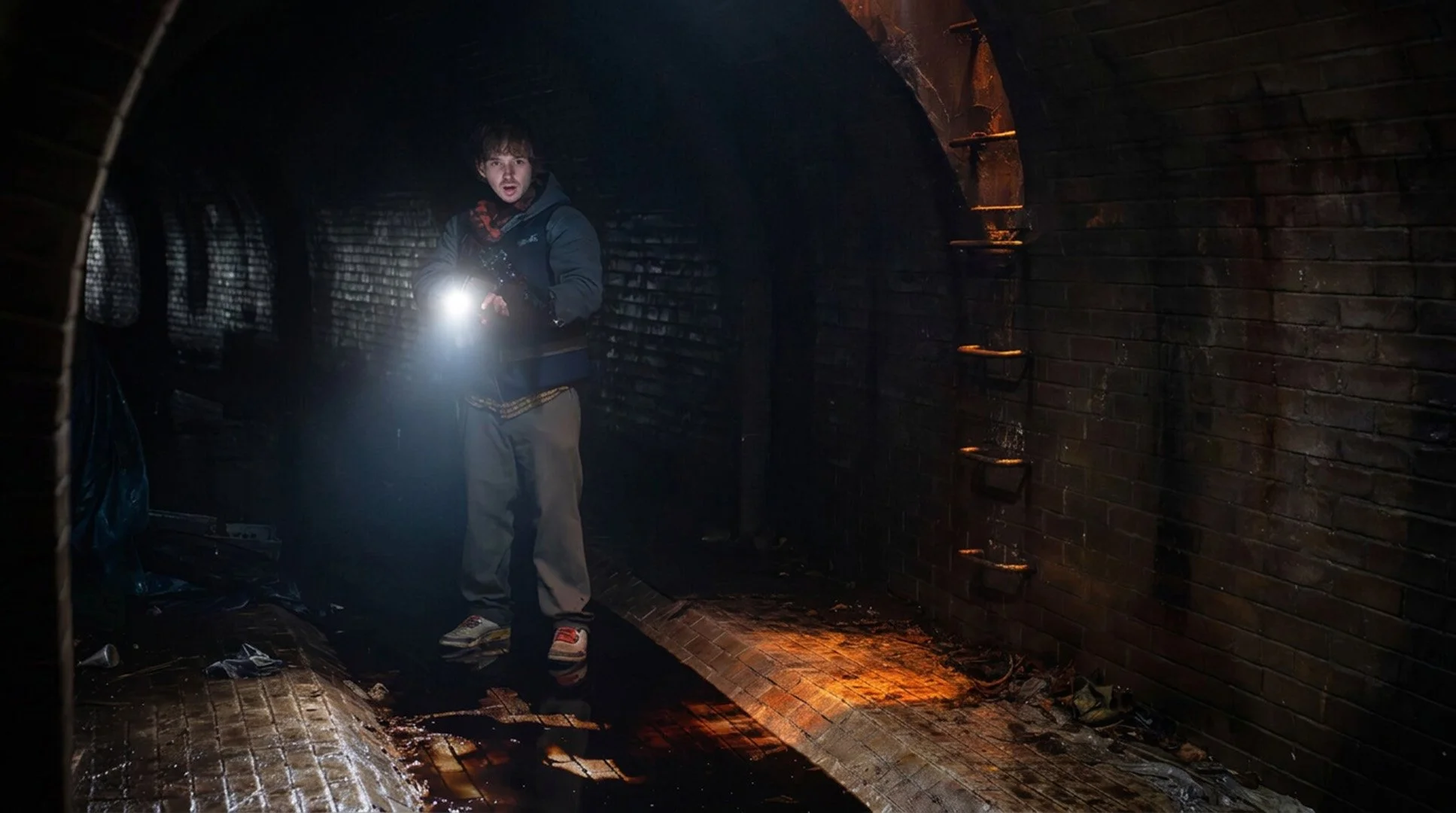
The sewer sequence also introduces one of the movie's major original creatures, a seven-foot-tall, hairless albino mutant. The design draws on both Nemesis and the Judge from Cormac McCarthy's Blood Meridian. It is recognizable as Resident Evil body horror without simply copying one of the game's existing monsters.
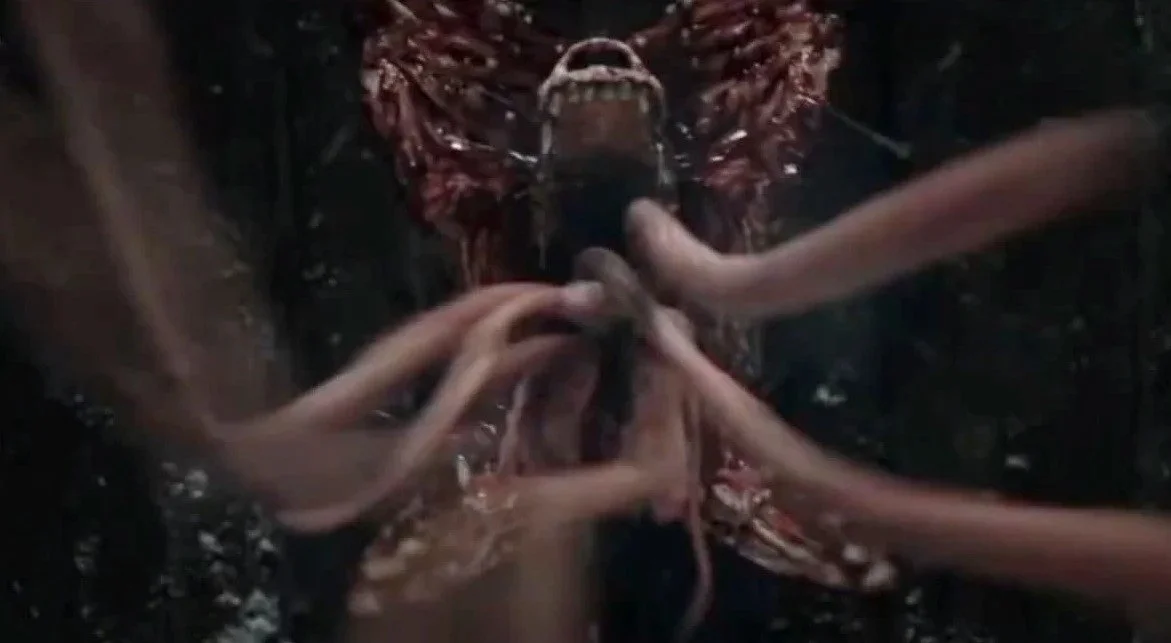
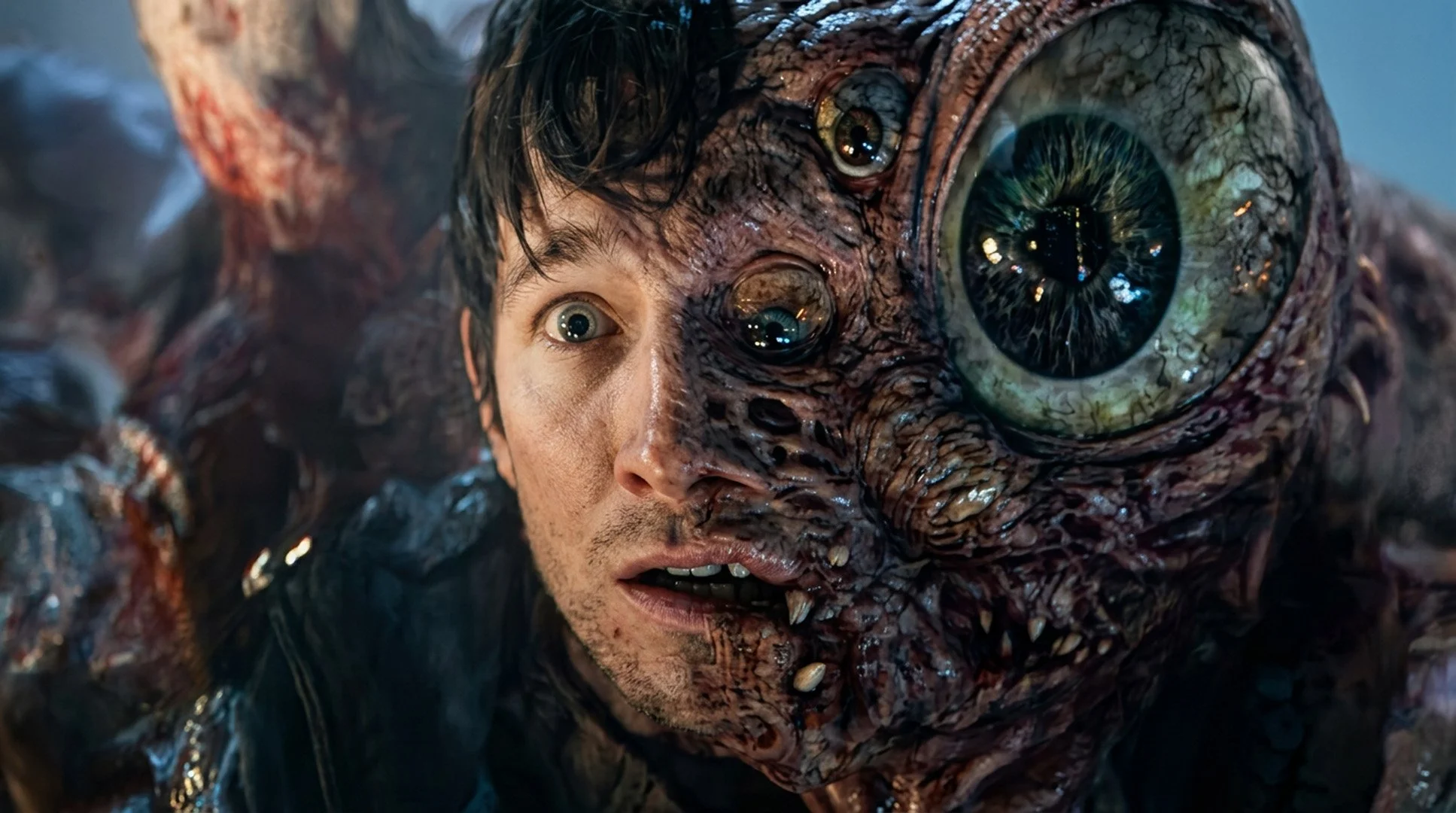
The other creature that really stands out is the mass of limbs and torsos forcing itself through a doorway. Instead of giving us another conventional zombie, the virus has produced something closer to a biological nightmare, with bodies combining and reshaping themselves into something barely recognizable as human.
That doorway creature is probably the movie's clearest move into the realm of biological horror. It also shows what Cregger is doing with the limited number of traditional zombies. He is using the virus less as a way to create an army of walking corpses and more as an excuse for increasingly grotesque biological mutations.
RACCOON CITY GENERAL HOSPITAL
Bryan eventually reaches Raccoon City General Hospital still carrying the package he was sent to deliver.
By this point, however, the infection has progressed too far.
Before he can get medical help or receive the treatment that might save him, the virus completely overtakes his nervous system.
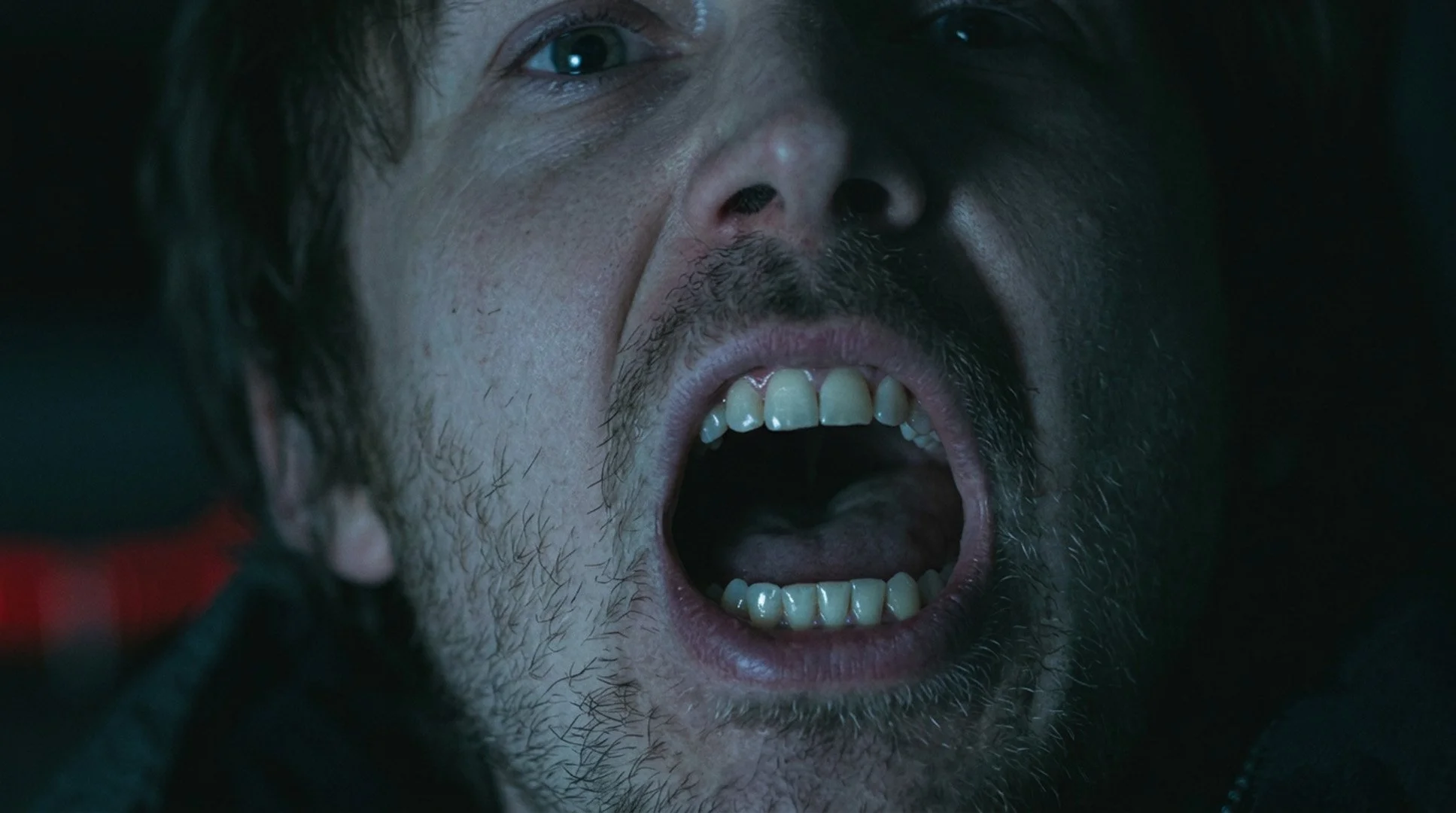
Bryan transforms into a massive bio-organic weapon. His body warps into something almost unrecognizable, including a huge eye protruding from his shoulder that immediately recalls William Birkin's G-Virus transformation in Resident Evil 2.
This is where the movie turns the survival-horror structure against Bryan. He has done almost everything the player is supposed to do. He found weapons, managed ammunition, solved environmental obstacles, navigated the city, and actually reached his destination. But none of that stops what is already happening inside his body.
UMBRELLA AND THE ANTIDOTE
Once transformed, Bryan is no longer functioning as the scared medical courier we have followed through the movie. The mutation takes control, and he tears through the Umbrella personnel inside the hospital.
The fight eventually moves out onto an exposed skybridge high above the city, with the blizzard still raging around them.
There is an antidote that could potentially reverse what has happened to Bryan. But during the chaos on the skybridge, the syringe falls. It hits the concrete. And it shatters.
That moment is especially cruel because the movie actually gives Bryan, and the audience, a visible way out. The cure exists. It is physically right there. Then the movie destroys it in seconds.
It also turns the usual video-game objective on its head. Bryan reached the hospital. He survived the journey. He got where he was supposed to go. And none of it guarantees that he gets to walk away.
[THE ENDING]
The final image leaves Bryan completely transformed. He is standing alone on the skybridge surrounded by bodies and blood against the snow. Then an Umbrella gunship appears overhead. The spotlight locks onto him. And that is where the movie leaves him.
There is no helicopter rescue. There is no sunrise escape. There is no last-minute antidote. Bryan spends the entire movie completing what almost feels like a perfect Resident Evil survival run, but Umbrella is still there at the end, treating everything that happened as another containment problem.
And that is probably where the timeline and identity discussion becomes most important. Cregger changes the year, changes the protagonist, and replaces many of the familiar creatures. But by the end, Bryan's story still arrives at something very recognizable to Resident Evil: an ordinary person trapped inside a disaster created by a corporation that sees human lives as expendable, surviving almost everything only to discover that surviving the monsters was never the whole problem.
For me, Resident Evil works because it understands the difference between copying the games and actually adapting what makes them effective. The timeline is different, the characters are different, and Cregger is clearly not interested in giving us another direct recreation of Resident Evil 2. But the vulnerability, the resource management, the atmosphere, the body horror, and that constant feeling of being one bad decision away from disaster are all here.
Austin Abrams carries almost the entire movie, and that was the right choice. Keeping the story locked onto Bryan makes the whole thing feel more immediate and gives the survival-horror side room to breathe. The cinematography, production design, sound, creature work, and editing all support that approach instead of competing with it.
I still think some of the later tonal shifts and the short runtime may keep it from being a perfect Resident Evil movie. At times, the movie gets bigger, louder, and more chaotic than I wanted after such a strong survival-horror setup. But those issues never erased what the movie was doing right.
And that brings me back to the question I started with. How much can you change before Resident Evil stops feeling like Resident Evil?
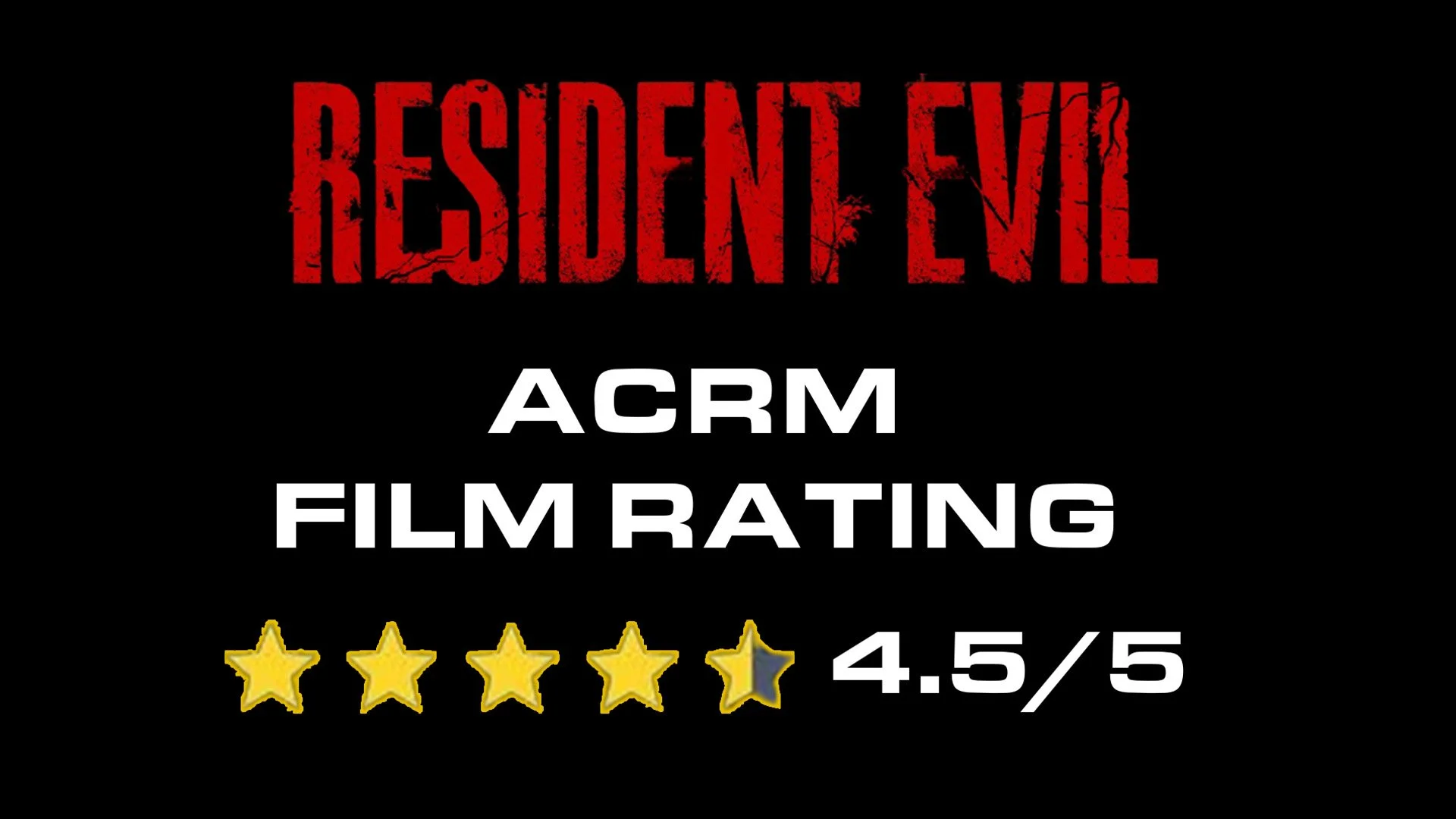
4..5/5
For me, this movie changes a lot, but it keeps enough of the franchise's identity where it actually matters. It may not be the most faithful Resident Evil story, but it is one of the better attempts to capture the Resident Evil experience on film.
And that puts me at a solid 4.5 for this film. Resident Evil has been reinventing itself for decades, and this movie is another version of that gamble. It changes the timeline, changes the characters, changes the monsters, and asks you to accept a very different version of Raccoon City. The only thing that really matters is whether it still feels like Resident Evil when all those familiar pieces are missing. That is the standard I went in with, and it is the standard I am judging it against, even with those familiar pieces missing.
So, if you enjoyed this review, subscribe to A Constantly Racing Mind for more Sci-Fi, Horror, Action-Adventure, Prop Culture, and All Things Geek. Because every frame tells a story.with and
