The Raven’s Shadow: Examining the "Grief-Horror" of Edgar Allan Poe
To start our deep dive into Edgar Allan Poe (born January 19, 1809), we have to look at him as the "Original Architect." He didn't just write stories; he designed the blueprints for Gothic Horror, inventing Detective Fiction, and pioneering Science Fiction,
Before we had the "Procedural Grind" of Hill Street Blues or the "External Dread" of John Carpenter, we had Poe’s Ratiocination—the process of using logic to deconstruct horror.
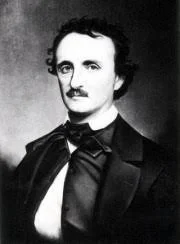
Edgar Allan Poe
The Poe Blueprint: Head, Heart, and the Macabre
1. The "Head": The First Detective
A. C. Auguste Dupin: The Blueprint for the "Head"
Poe’s creation, C. Auguste Dupin (The Murders in the Rue Morgue), isn't a man of action; he is a man of observation.
The Concept: While the police are baffled by the "inhuman" violence of a locked-room murder, Dupin sits in a darkened room and thinks. He uses "creative analysis" to work backward from the evidence.
The ACRM Angle: Dupin represents the Strategic Head. He views a crime scene not as a tragedy, but as a logic puzzle. He proved that even the most "Horror-forward" events (like an orangutan murdering women in a locked room) have a rational, "procedural" explanation.
B. The Failure of the "Hands" (The Police)
In Poe’s detective stories, the Prefect of Police represents the "Hands" without the "Head."
The Concept: The police in Poe's stories are hardworking and thorough—they search every inch of a room—but they lack the imagination to see what is right in front of them (like in The Purloined Letter).
The ACRM Angle: This is the birth of the Institutional Critique. Poe suggests that a system (the police) can follow every rule and still fail if it doesn't have a visionary "Head" to guide it. This is the same tension you see in the "Administrative Apocalypse"—where the system keeps moving, but it has lost its direction.
C. The "Head" vs. The "Heart" (The Narrator)
Poe often pairs his hyper-logical detective with a nameless, more emotional narrator.
The Concept: The narrator (the "Heart") is amazed and often terrified by what Dupin discovers.
The ACRM Angle: This duo created the template for Holmes and Watson. It’s the "Mediator" in action—the narrator translates the cold, sterile logic of the "Head" into something the audience's "Heart" can actually feel.

The Poe "Head": Ratiocination & Order
- 🔍 Analysis vs. Calculation: The "Head" doesn't just count clues; it interprets the intent behind them.
- 📜 The Locked Room: A metaphor for a problem that requires "Strategic" thinking to unlock.
- 🧠 The Armchair Detective: Logic is so powerful that the "Hands" (physical action) are barely necessary.
"Dupin taught us that the mind is the only light capable of piercing the Gothic dark."
2. The "Heart": The Anatomy of Grief
In works like The Raven or Annabel Lee, Poe explores the "Grief-Horror" that you’ve noted in We Bury the Dead.
The Connection: For Poe, the "Heart" is often broken, and that brokenness manifests as a haunting. He proves that the most terrifying ghosts aren't in the walls; they are in our memories.
Poe’s "Heart" isn't about romance; it's about the physical and mental weight of loss.
A. "The Raven" (The Externalization of Grief)
The Concept: A man trying to distract himself with "forgotten lore" (The Head) is interrupted by a bird that only speaks one word: "Nevermore."
I believe the Raven isn't a monster; it’s a memory. It is the absolute refusal of grief to leave the room. Like the "recovery units" in We Bury the Dead, the protagonist is trapped in a loop of administrative memory from which he cannot escape.
B. "Ligeia" (The Will to Return)
The Concept: A man loses his brilliant first wife, Ligeia, and remarries. His grief is so potent that he literally "sees" his first wife manifest in the dying body of his second.
This is the ultimate "Grief-Horror" story. It’s about how trauma can overwrite our current reality, making the past more "real" than the present.
C. "The Tell-Tale Heart" (The Sound of Guilt)
The Concept: A murderer claims sanity while being driven mad by the persistent, rhythmic beating of his victim's heart under the floorboards.
This is Auditory Trauma. Much like John Carpenter uses a synth beat to create anxiety, Poe uses the "Heart" as a metronome for the protagonist’s psychological collapse. It’s the "process" by which guilt becomes unbearable.
D. "Annabel Lee" (The Ritual of the Grave)
The Concept: The narrator spends his nights lying down by the side of his dead bride in her "sepulchre by the sea."
We can view this as the "Administrative" aspect of grief. It’s the routine of staying close to the dead because moving on feels like a betrayal. It bridges the gap to the "Survival of Acceptance" you see in modern desaturated horror.
3. The "Hands": The Gothic Environment
Poe’s environments—like the House of Usher—are "Hands" that actively reach out to pull the characters down.
The Connection: He was the first to use Atmospheric Realism. He didn't just say a house was scary; he described the "vacant eye-like windows" and the "rank sedges," making the setting a physical antagonist.
A. The Architecture of Decay: The Fall of the House of Usher
This is the ultimate example of the "Hands" at work.
The Concept: The narrator observes a "barely perceptible fissure" (a crack) extending from the mansion's roof to the tarn (lake).
My angle is that the house is literally holding itself together by a thread. When the "Heart" of the family (Madeline and Roderick) fails, the "Hands" of the house let go. The building doesn't just fall; it collapses into the earth.
Modern Parallel: Think of the "Administrative Apocalypse" in We Bury the Dead. The environment isn't scary because of a monster; it’s scary because the physical world—the houses, the roads, the silent wilderness—has stopped functioning for the living.
B. The Labyrinthine Trap: The Pit and the Pendulum
Here, the environment is a mechanical executioner.
The Concept: The narrator is trapped in a dungeon that literally changes shape. The walls glow with heat and move inward, forcing him toward a central pit.
I interpret this as the "Institutional Realism" of the Spanish Inquisition. The horror isn't a person; it's a designed system of stone and iron. The "Hands" here are the pulleys and levers of a torture machine that functions with cold, clockwork precision.
C. The Entombment Motif: The Cask of Amontillado
In this story, the "Hands" are used for construction.
The Concept: Montresor murders Fortunato not with a weapon, but by building a wall.
My take is that this is the most literal use of "Hands." The act of killing is transformed into a masonry project. The horror is found in the rhythmic, "procedural" clicking of the trowel and the stacking of the bricks—the "Administrative" act of burying someone alive.
The Gothic "Hands": Environment as Actor
- 🏢 The House of Usher: A building that mirrors the psychological collapse of its owners.
- ⚙️ The Pit: Architecture as a mechanical "Institutional" executioner.
- 🧱 The Catacombs: The "Procedural" horror of burial and entombment.
"In Poe's world, the bricks and mortar have as much agency as the men who laid them."
The Poe Blueprint vs. The Modern Master
| Element | Poe’s Ratiocination | Modern Context |
|---|---|---|
| Logic Style | Solving the unsolvable via observation. | Institutional Realism: The procedural grind. |
| Horror Type | Gothic Dread: Decaying environments. | Survival Horror: Desaturated stillness. |
| The Monster | The Raven / The Tell-Tale Heart. | The Immortal Killer: Primal evil. |
