
The Big Blue Milestone: February 10, 1996
The Deep Blue victory isn't about a game; it's about the moment calculated logic finally caught up to human intuition.
The Technical Shift: This was a "Brute Force" system. Deep Blue didn't "think" like a human; it processed 200 million positions per second. It was a victory of sheer engineering scale over biological genius.

PROFESSIONAL MOVIE GOER!
PROFESSIONAL MOVIEGOER T-SHIRT From A Constantly Racing Mind After analyzing hundreds of films from philosophical perspectives. From the existential dread of sci-fi to the moral complexities of horror, I've earned my credentials as a “Professional Moviegoer.”
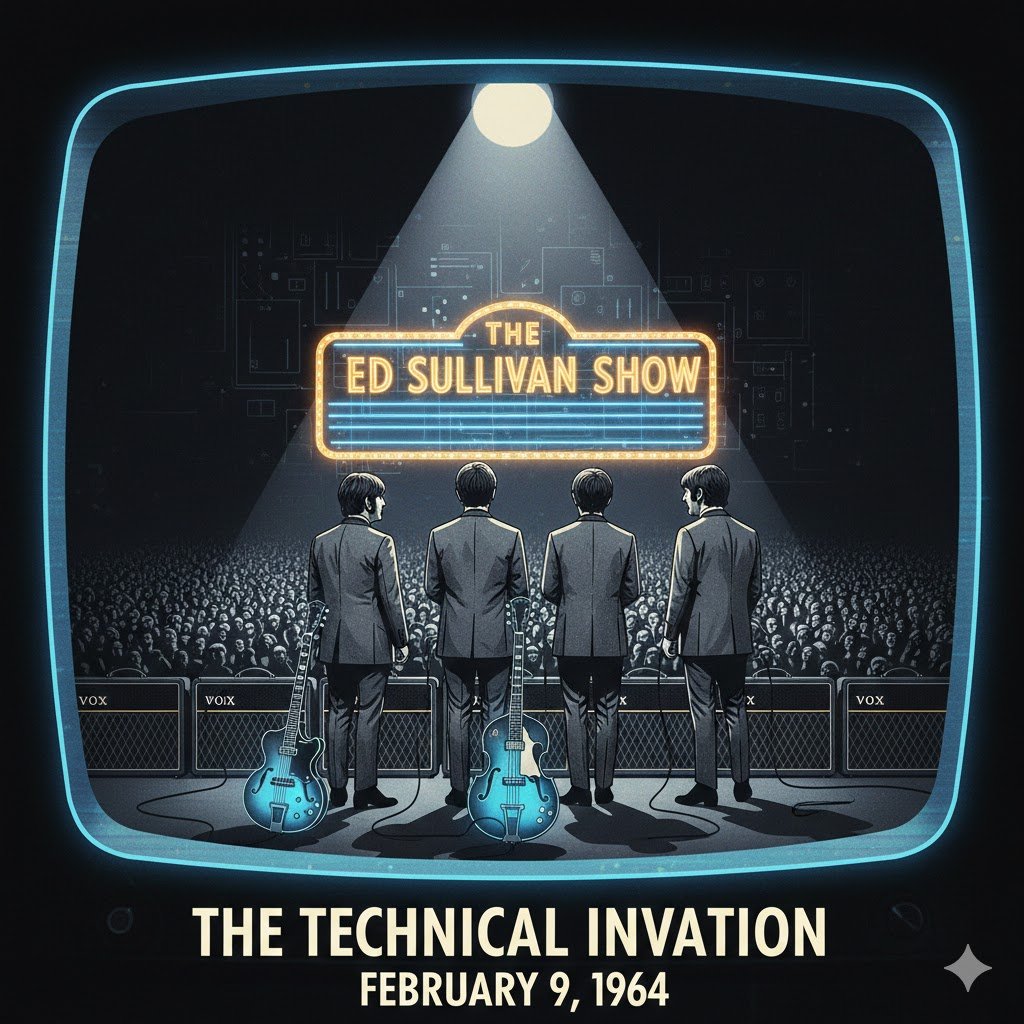
The Beatles -The Technical Invasion: February 9, 1964
The Beatles' appearance on The Ed Sullivan Show on February 9, 1964, was the ultimate cultural event. It wasn't just a musical performance; it was a massive shock to the technical and sociological systems that successfully overwrote the cultural software of the United States in exactly 14 minutes of airtime.
Obviously, I wasn’t old enough to remember this phenomenal cultural event. However, the Beatles have left an imprint on my generation and everyone after.
We can look past the screaming fans and focus on the systemic impact of that night.
![Dracula: A Love Tale (2025) – Why We Keep Rewriting the Monster [SPOILERS]](https://images.squarespace-cdn.com/content/v1/6954bfa9181c4d46137a4f5e/1770392215540-N0MSO5BB0VUDHSCFELNG/dracula-2025-youtube-thumbnail-luc-besson.jpg)
Dracula: A Love Tale (2025) – Why We Keep Rewriting the Monster [SPOILERS]
WARNING: This review contains FULL SPOILERS for Dracula: A Love Tale (2025).
The Dracula most people picture today is not the Dracula that existed originally in Bram Stoker’s novel. In the book, there is no reincarnated lover, no tragic romance, no redemption, and no moral ambiguity. Stoker's Dracula is not misunderstood. He is not grieving. He isn't broken by love. He is a force—invasion, disease, corruption, decay. He represents fear of the unknown, fear of contamination, and fear of the outsider.
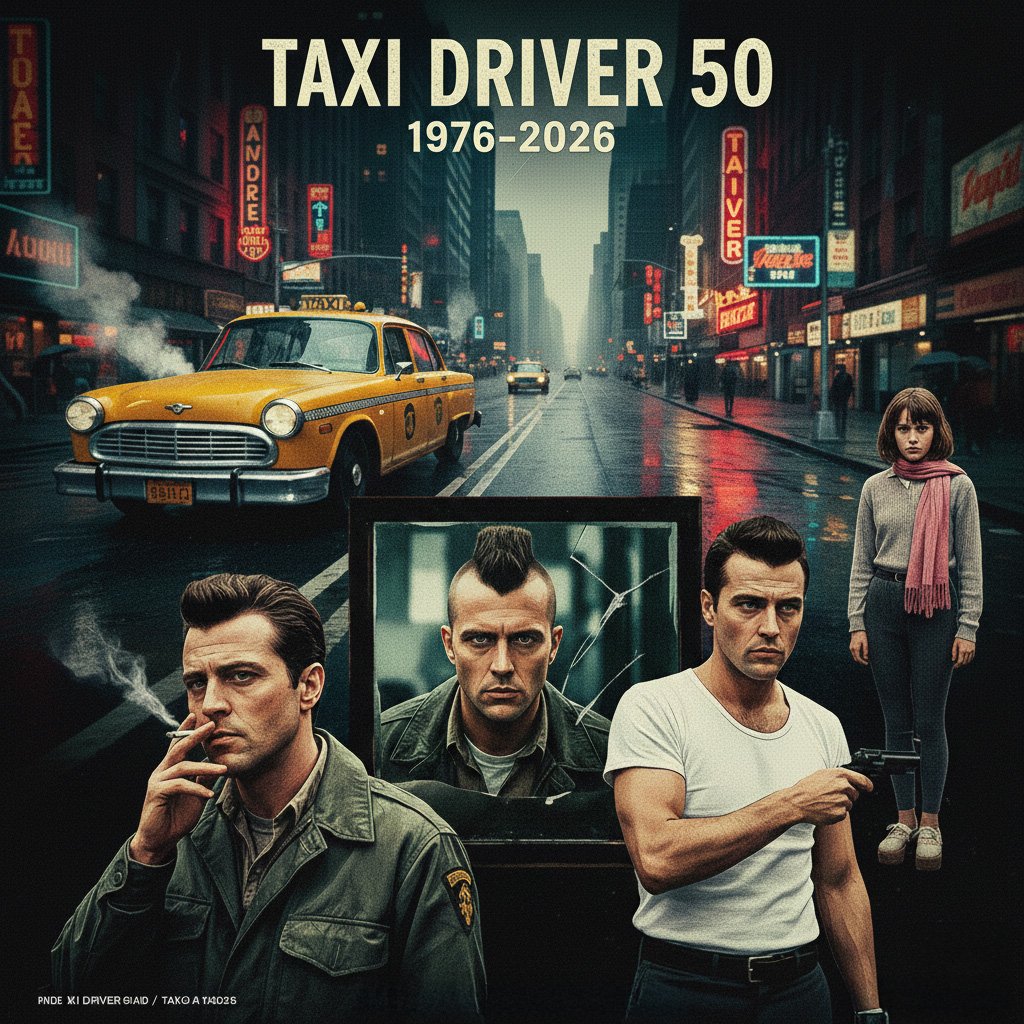
A Critical Analysis: Travis Bickle’s Subjective Reality
Travis Bickle isn't just a driver; he is a man whose internal monologue has become a closed loop, fueled by the grime of a 1970s New York that feels like a living, breathing machine.
The Neon Lens: Cinematographer Michael Chapman shot the city through rainy windshields and distorted mirrors to mirror Travis’s deteriorating psyche. The city isn't shown as it is, but as Travis perceives it—a blur of "scum" and neon.

The "Day the Music Died" A Technical & Cultural Pivot
The crash on February 3, 1959, often called "The Day the Music Died," is a pivotal moment because it represents a "shattering of the glass" for an earlier generation.
It was a moment where the vibrant, high-energy optimism of the 1950s met a cold, technical failure in a snowy cornfield in Clear Lake, Iowa.
This day isn't just a music history post; it's about the vulnerability of icons and the sudden end of a creative era.
I wasn’t around when this happened. I would arrive years later. When Don McLean’s American Pie came out in 1971, I just thought it was just a long song. It was melodic and had some weight to it, but I didn’t know what. Sort of like Gordon Lightfoot’s The Wreck of the Edmund Fitzgerald. My dad explained what happened and who each of the musicians were. As I got older and more musically aware and developed my own tastes, I realized that Holly and Valens also influenced by their style.

The Challenger Disaster: When Science Fiction Met Hard Reality
I grew up during the "Space Age" optimism of the 60s and 70s, the Challenger disaster on January 28, 1986, wasn't just a national tragedy—it was a profound "shattering of the glass."
When you are raised on a diet of NASA's successes and the futuristic promises of sci-fi, spaceflight feels like an inevitable upward climb. To see it fail so publicly, and so tragically, changed our collective "Racing Mind" from wondering when we would be living on Mars to realizing just how hostile the vacuum of space truly is.
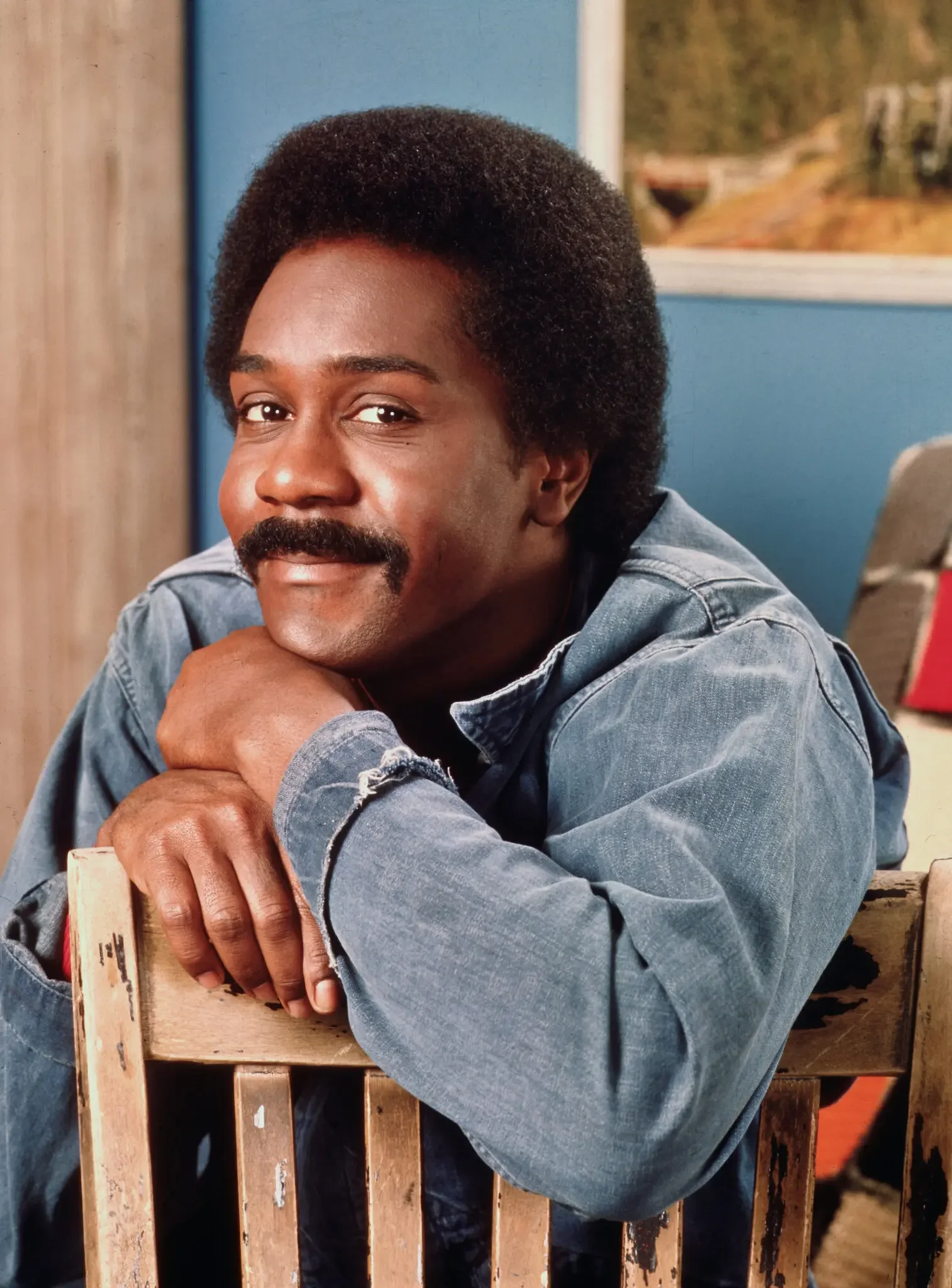
Demond Wilson (1946–2026) – The Heart of the Junkyard
t is a heavy week for television history. Demond Wilson passing away on January 31, 2026, at the age of 79, marks the end of an era for the "Golden Age" of the 1970s sitcom. As a kid in the early 1970s, we, as a family gathered around teh TV set to watch “Sanford and Son.” We got a kick out Fred’s antics, everytime he wanted something from Lamont (Wilson) and claim that he was suddenly having a heart attack and claimed he was on his way to join his dead wife in the hearafter. The camera would focus on Wilson, and he would just role his eyes.
As far as I know, Lamont Sanford was the only major role I knew him for, but he was an actor who own a role so well, that I forget to separate the two.
![Send Help (2026): When Survival becomes a Power Trip [SPOILERS]](https://images.squarespace-cdn.com/content/v1/6954bfa9181c4d46137a4f5e/1769841806889-LBLY0W2AWVYZZE2DIRWG/Send+Help+2026+Thumb+02.jpg)
Send Help (2026): When Survival becomes a Power Trip [SPOILERS]
WARNING: This review contains FULL SPOILERS for the ending of Send Help.
Send Help is one of those films where the title tells you less than the name above it. This isn’t just a survival thriller about a plane crash; it’s a Sam Raimi film. Made late in his career, it carries the confidence of a director who knows exactly how to make an audience uncomfortable.
On the surface, it presents a familiar setup: Linda (Rachel McAdams), a competent but erased employee, and Bradley (Dylan O’Brien), the entitled boss who inherited his power, are stranded on an island. We expect a simple reversal story—the capable woman takes charge, the useless man learns a lesson.
But Send Help isn't interested in reversal. It’s interested in escalation.

The Unrivaled Artistry of Catherine O'Hara (1954–2026)
It is incredibly sad news to start the day. Catherine O'Hara passed away earlier today, January 30, 2026, at the age of 71, at her home in Los Angeles. Her agency confirmed she died following a "brief illness. " O’Hara didn't just play characters; she built entire behavioral systems for them. Whether it was playing the mania of Delia Deetz or the operatic, delusional grandeur of Moira Rose, she was a master of playing people who were utterly certain of their own reality.
![Mercy (2026): The "Founding Lie" of Automated Justice [SPOILERS]](https://images.squarespace-cdn.com/content/v1/6954bfa9181c4d46137a4f5e/1769561792462-278CSNKWMGIL5HJU5SA8/Mercy+-2026+The+Founding+Lie+of+Automated+Justice.jpg)
Mercy (2026): The "Founding Lie" of Automated Justice [SPOILERS]
WARNING: This review contains FULL SPOILERS for the ending of Mercy (2026).
Justice doesn’t need to hate you to destroy you. It just needs to stop caring whether it’s wrong.
Mercy sets up a terrifying premise: a near-future justice system where trials are conducted by an AI judge ("Judge Maddox") in just 90 minutes. It promises objectivity. It promises speed. But by the end of the film, we learn that the system isn't broken because the AI malfunctioned. It's broken because it was designed to launder human corruption behind a digital face.
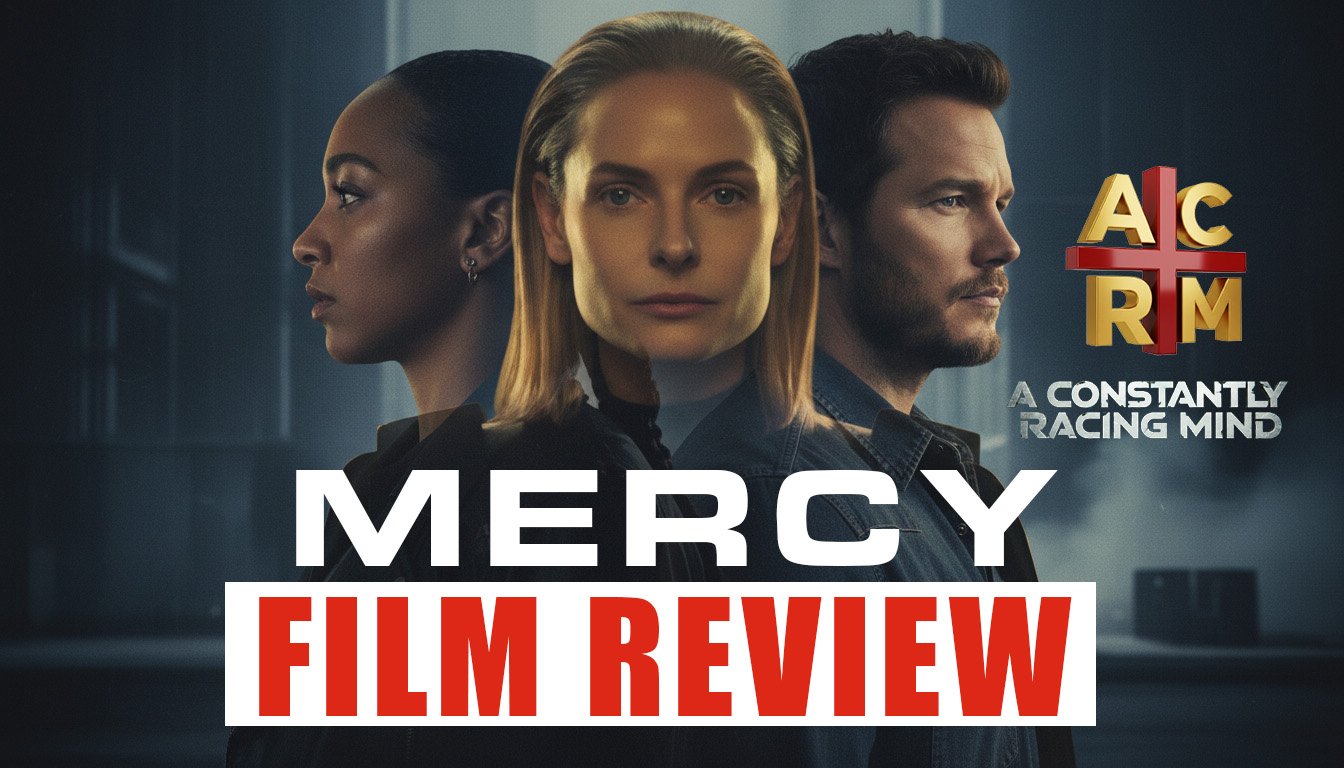
Mercy (2026): When Justice Stops Caring if It’s Wrong
Justice doesn’t need to hate you to destroy you. It just needs to stop caring whether it’s wrong.
Mercy is not a movie about an evil artificial intelligence. It’s a movie about what happens when we confuse procedure with truth. Set in a near-future Los Angeles that feels uncomfortably close to our own, it explores a justice system where sentences aren't delivered by people in a room, but by an automated process designed to be faster, cleaner, and "objective."
The irony is in the name. Because this system doesn’t show mercy. It shows certainty.
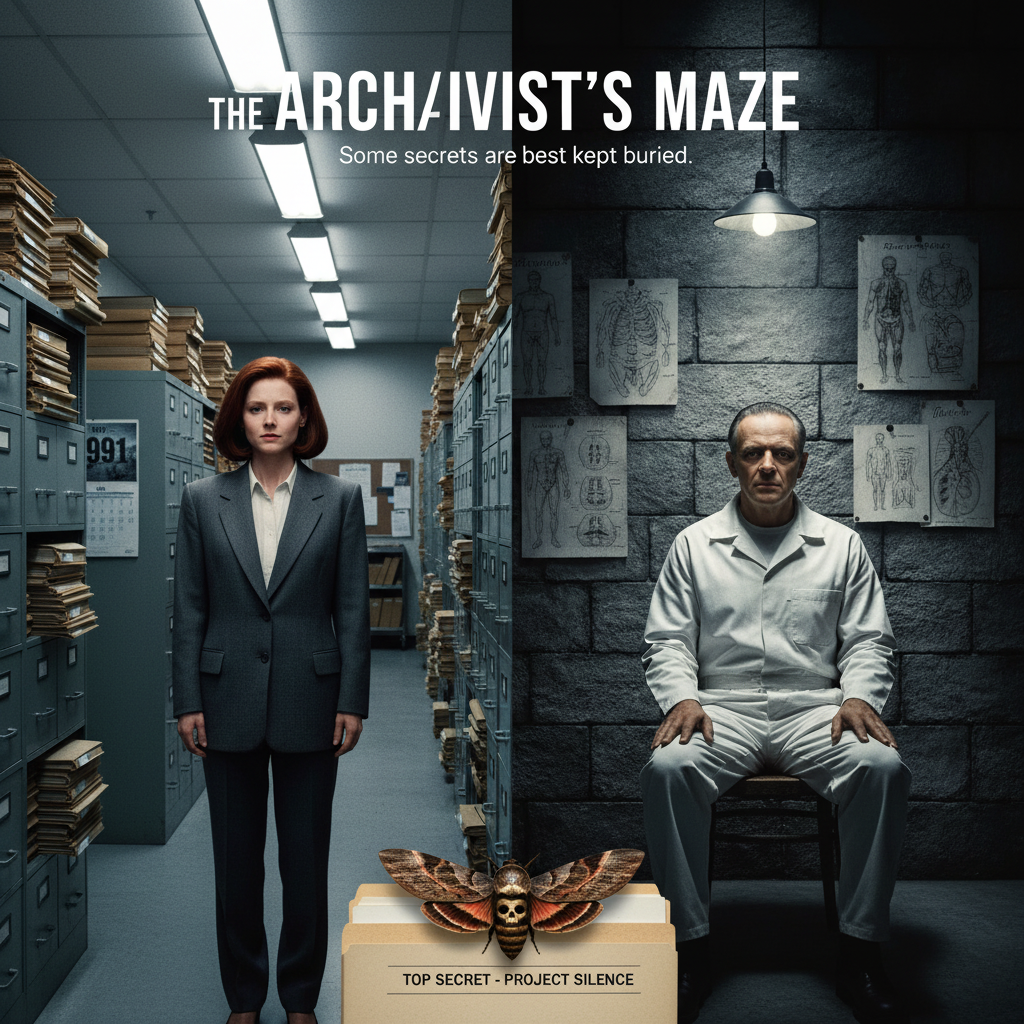
35th Anniversary Breakdown: The Bureaucracy of Evil
The Professionalism of Clarice Starling: Unlike typical "Final Girls," Clarice survives because of her training. She represents the "Racing Mind" that remains analytical under extreme pressure.
The Institution as a Monster: Dr. Chilton and the Baltimore State Hospital represent the "Institutional" failure—where the person meant to contain the monster is arguably just as predatory, albeit in a bureaucratic way.
The Quid Pro Quo: The film’s philosophy is built on the exchange of information. It treats the human psyche like a cold case file that needs to be "Administrative"ly organized.
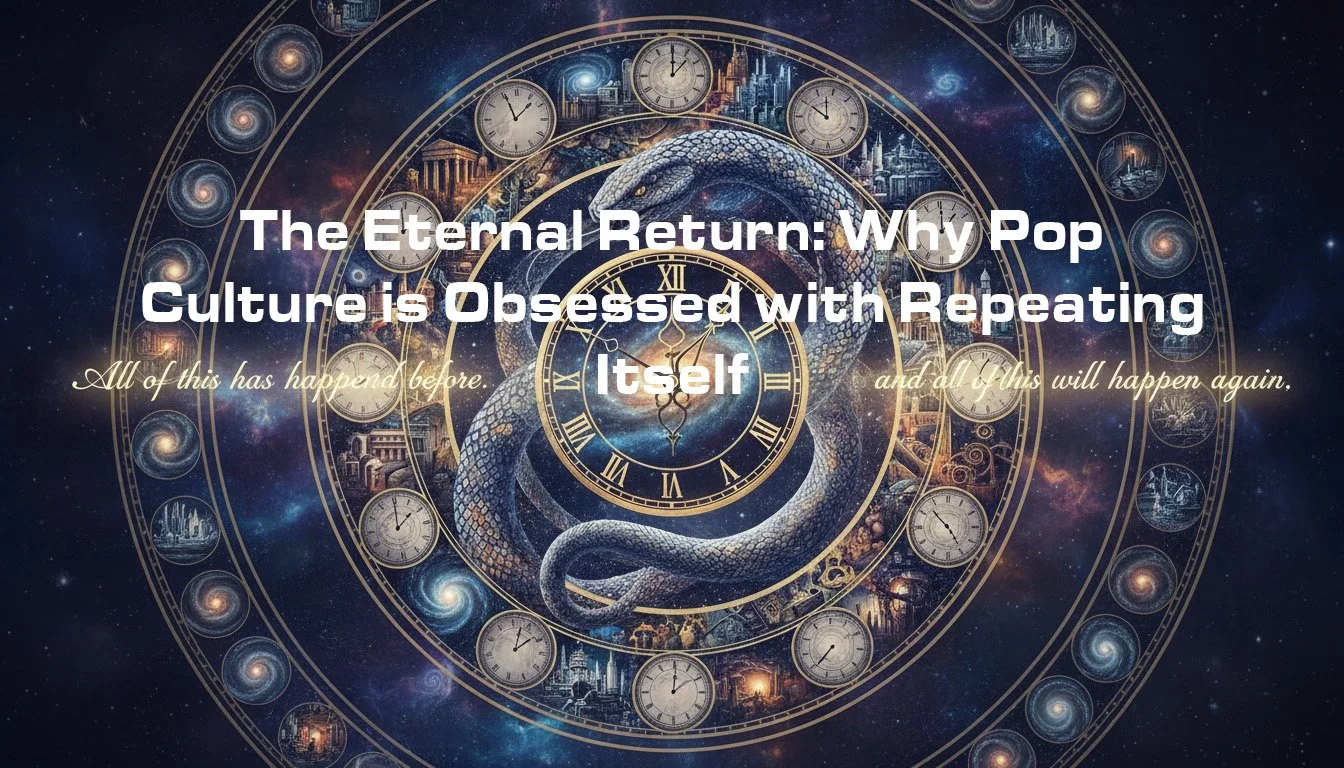
The Eternal Return: Why Pop Culture is Obsessed with Repeating Itself
"All of this has happened before, and all of this will happen again."
If you’re a fan of the re-imagined Battlestar Galactica, that line probably sends a chill down your spine. It is the curse that haunts the series—the terrifying realization that humanity is trapped in an endless loop of creation and destruction. But here is the strange part: that line didn’t start with cylons. It started with Disney. Specifically, the 1953 animated film Peter Pan.
Why does this idea—that time is a circle, that history repeats, that we are destined to live the same lives over and over—keep coming back to us? From True Detective to Nietzsche, let’s dive into the philosophy of the Eternal Return.

From Cyborg to Cybernetics: Deconstructing 50 Years of the Bionic Mythos
I didn't realize it at the time, but tuning in on Friday nights was a big event at my house. I wasn't old enough to be out on my own, so I stayed home and watched TV with my parents and my brother. I don't remember how we decided what to watch on Prime Time, but it seemed to work out. So, it's fascinating to look back at The Six Million Dollar Man from the perspective of how technology has evolved from the early 1970s, because it represents a major turning point in how TV approached the "Human-Machine Interface." It wasn't just a spy show; it was the birth of the "Bionic" archetype that still dominates sci-fi today.

The Ultimate Genre Pivot: 30 Years of the Gecko Brothers
Celebrating the 30th Anniversary of From Dusk Till Dawn (January 19, 1996) is the perfect way to wrap up your survival-themed week.

The Raven’s Shadow: Examining the "Grief-Horror" of Edgar Allan Poe
To start our deep dive into Edgar Allan Poe (born January 19, 1809), we have to look at him as the "Original Architect." He didn't just write stories; he designed the blueprints for nearly every genre you cover on A Constantly Racing Mind.
Before we had the "Procedural Grind" of Hill Street Blues or the "External Dread" of John Carpenter, we had Poe’s Ratiocination—the process of using logic to deconstruct horror.
The Poe Blueprint: Head, Heart, and the Macabre

28 Years Later: The Bone Temple – When Survival Turns into Ritual
28 years is a long time. It’s long enough for panic to turn into routine, for survival to stop feeling temporary, and for trauma to stop being remembered and start being inherited.
28 Years Later: The Bone Temple is not a film about the outbreak. It’s not even a film about recovery. It’s a film about what replaces society after hope has already failed. It picks up immediately after the events of 28 Years Later (2025), in a Britain that never rebuilt itself—it adapted. Quietly. Brutally.
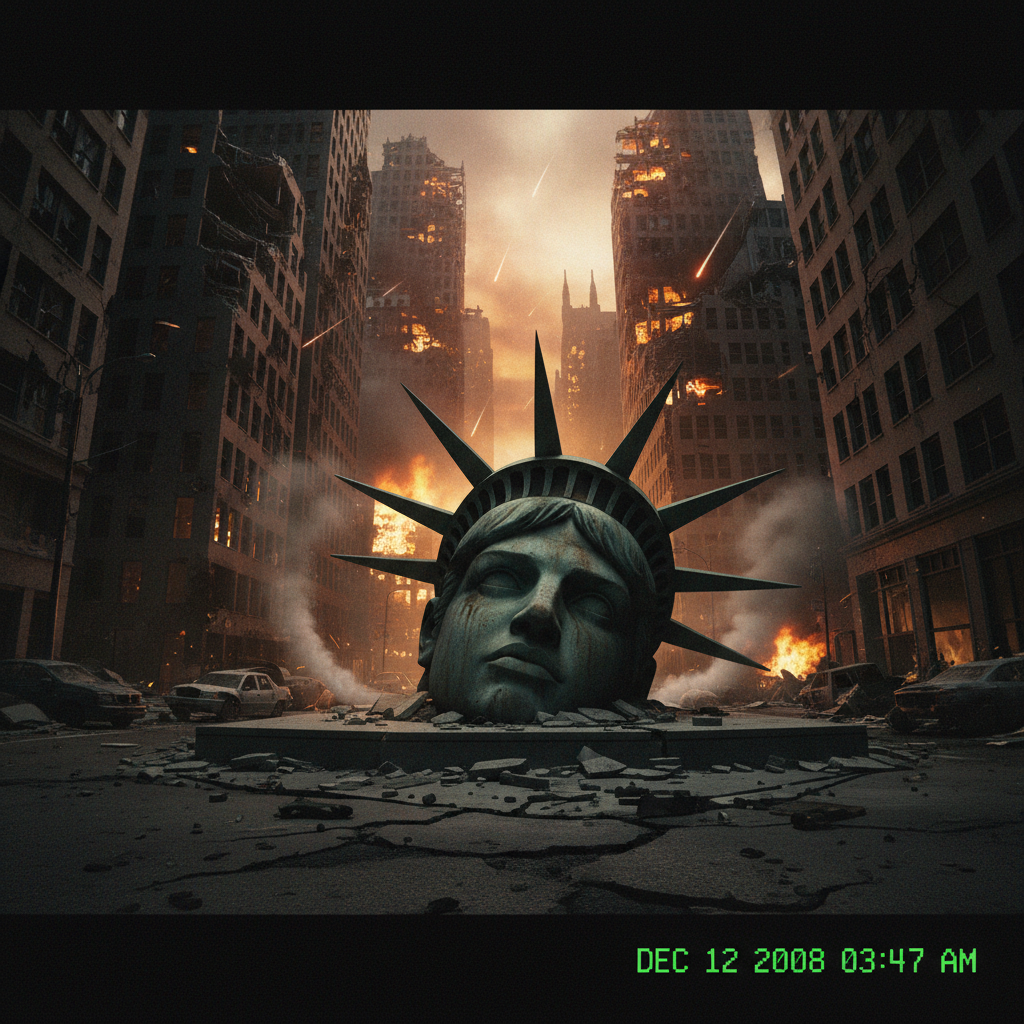
Cloverfield: The "Administrative" Monster Movie
What makes Cloverfield still work today—and what makes it fit the A Constantly Racing Mind vibe—is its focus on survival through documentation.

The Architect of the Unstoppable: Happy Birthday, John Carpenter
I think To celebrate the birthday of the Master of Dread, John Carpenter (born January 16, 1948), we can look at how he single-handedly built the blueprint for the "immortal serial killer" trope you’ve been analyzing for your channel. While modern horror like We Bury the Dead focuses on internal collapse, Carpenter’s genius was in making the external threat a relentless, unstoppable force of nature.